
Was Trump’s attack on Iran legal? Experts weigh in on US and international law
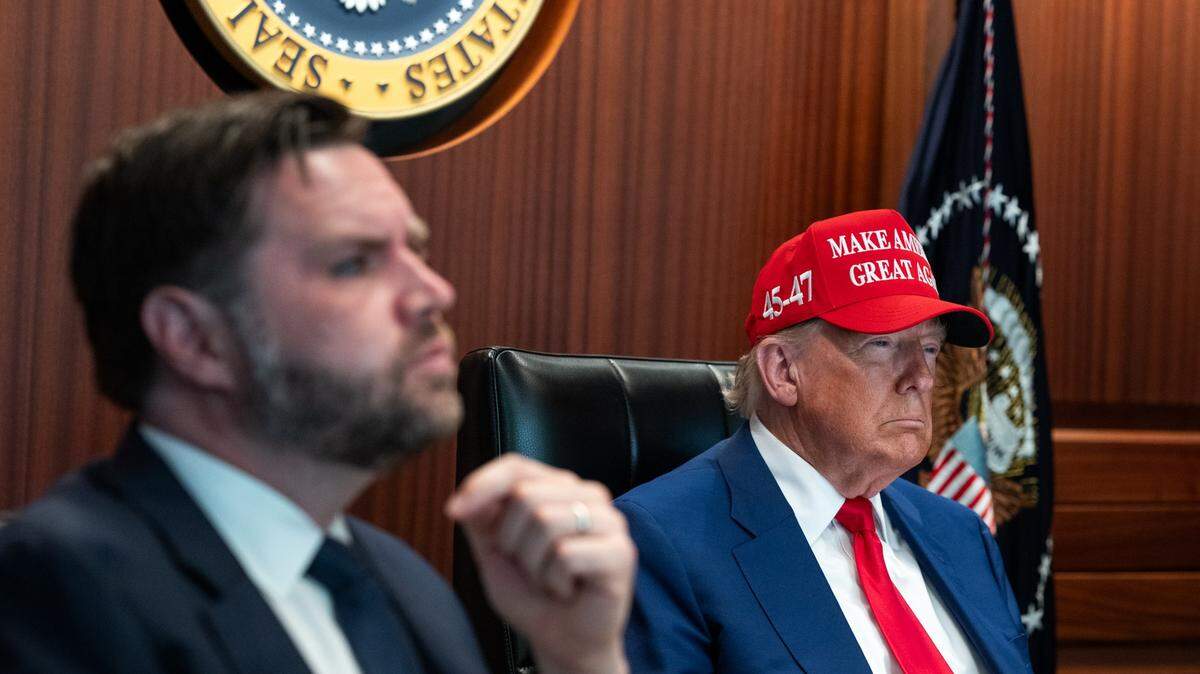
President Donald Trump’s decision to bomb Iran has reignited a decades-long debate over the legality of unilateral military action.
In response to the June 21 attack — during which U.S. stealth bombers struck three Iranian nuclear sites — Rep. Thomas Massie, a Kentucky Republican, labeled it “not constitutional.” Sen. Ed Markey, a Massachusetts Democrat, called it “illegal” and dangerous.
However, Speaker of the House Mike Johnson said Trump “made the right call, and did what he needed to do.” Numerous other elected Republicans echoed this statement.
McClatchy News has asked legal experts to clear the air and weigh in on whether the president’s actions were lawful under both U.S. and international law.
US law
Whether or not the president has the power to independently launch a military attack has been a hotly contested and largely unresolved issue for years.
“It’s been a longstanding situation of competing claims of authority between the Congress and the president,” Robert Goldman, a law professor at the American University Washington College of Law, told McClatchy News.
The debate stems from the U.S. Constitution, which divides wartime powers between both the legislative and the executive branch, Goldman said.
On the one hand, Article I grants Congress the power to declare war, while Article II designates the president commander in chief of the armed forces.
The consensus among legal scholars is that the authors of the Constitution “intended to separate the power to initiate a war from the power to run a war once it has begun, leaving the president able only to repel sudden attacks without first going to Congress,” experts told the New York Times.
In practice, though, presidents of both parties have frequently initiated military campaigns without the approval of Congress — and often with little pushback.
“The U.S. has been involved in numerous armed conflicts or wars since World War II,” Goldman said. “But the last time the U.S. Congress formally declared war was when Franklin Roosevelt, in 1942, came to them after the attack on Pearl Harbour.”
While Congress has not declared war in eight decades, it has, in some cases, granted a president’s request to use military force against specific targets through what is called an Authorization for Use of Military Force (AUMF).
For example, in 2001, following the Sept. 11 terrorist attacks, lawmakers passed an AUMF, permitting President George W. Bush to use force against “nations, organizations or persons” that took part in the attacks.
But, in multiple other instances, presidents have used military force without an AUMF, including in Kosovo in 1999, Libya in 2011, in Syria in 2014 — and now in Iran under Trump.
“This is something that’s gone on for ages,” Goldman said. “This is not something that is unique to this particular administration.”
International law
On the other hand, under international law, the rules are more cut and dry, experts said.
“By attacking Iran, the U.S. is breaking international law — there is no doubt about that,” Ian Hurd, a political science professor at Northwestern University, told McClatchy News.
“It is illegal to use military force against another country,” Hurd said. “This rule is the centerpiece of international law, written into the United Nations Charter at the end of World War II.”
Under the U.N. Charter, an attack on another nation is only permitted under a few circumstances — none of which apply to Trump’s bombing of Iran.
Firstly, Article 51 of the Charter recognizes the right of a state to respond to an armed attack for purposes of self defense.
“Quite clearly,” Goldman said, “we were not subject to an armed attack by Iran.”
Some legal experts also argue that anticipatory self defense — under which a state has not been attacked, but determines that a foreign attack is imminent — is legal under international law.
“Obviously, you couldn’t argue anticipatory self-defense because…Iran doesn’t have any weapons platforms capable of hitting the continental U.S.,” Goldman said.
Lastly, the charter permits the use of force against a state if it has been authorized by the U.N. Security Council — as it did during the First Gulf War in 1990. Such an authorization was not obtained for Trump’s bombing of Iran.
“So I would say the situation is fairly straightforward as to the legality,” Goldman concluded. “It may have been done politically for a reasonable reason, but that is distinct from international law.”
The U.S., though, is hardly alone in breaking international law. In recent years, numerous conflicts have violated the U.N. Charter, according to Amnesty International, including Russia’s invasion of Ukraine and Israel’s war in Gaza.
This story was originally published June 24, 2025 at 2:38 PM with the headline "Was Trump’s attack on Iran legal? Experts weigh in on US and international law."