Hundreds of whales trapped on same Australian beach as mass stranding two years ago
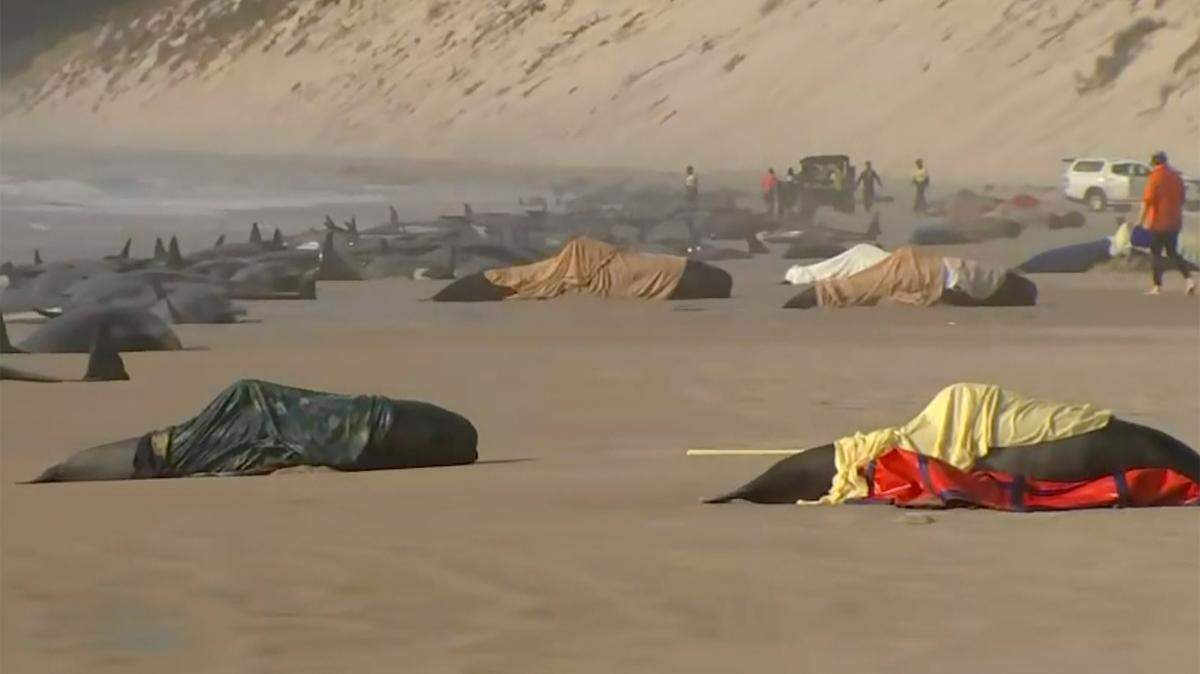
Hundreds of whales beached themselves along the coast of Australia, according to wildlife authorities.
A pod of about 230 pilot whales swam onto the sandy shores of Ocean Beach along the eastern coast of Tasmania on Wednesday, Sept. 21, the Tasmania Parks and Wildlife Service said in a news release.
About half of the whales were still alive, according to early estimates from authorities. Rescue efforts were underway, The Guardian reported.
A rescue worker told The Guardian that people were getting the stranded whales onto “special blankets” to move them.
“The biggest are over two to three tonnes. We are triaging the smaller ones,” the worker told the outlet.
Some whales made “growling and clicking” noises, The Guardian reported.
Photos of the beach showed the whales in a line along the surf, dark-colored shapes along the light-colored sand.
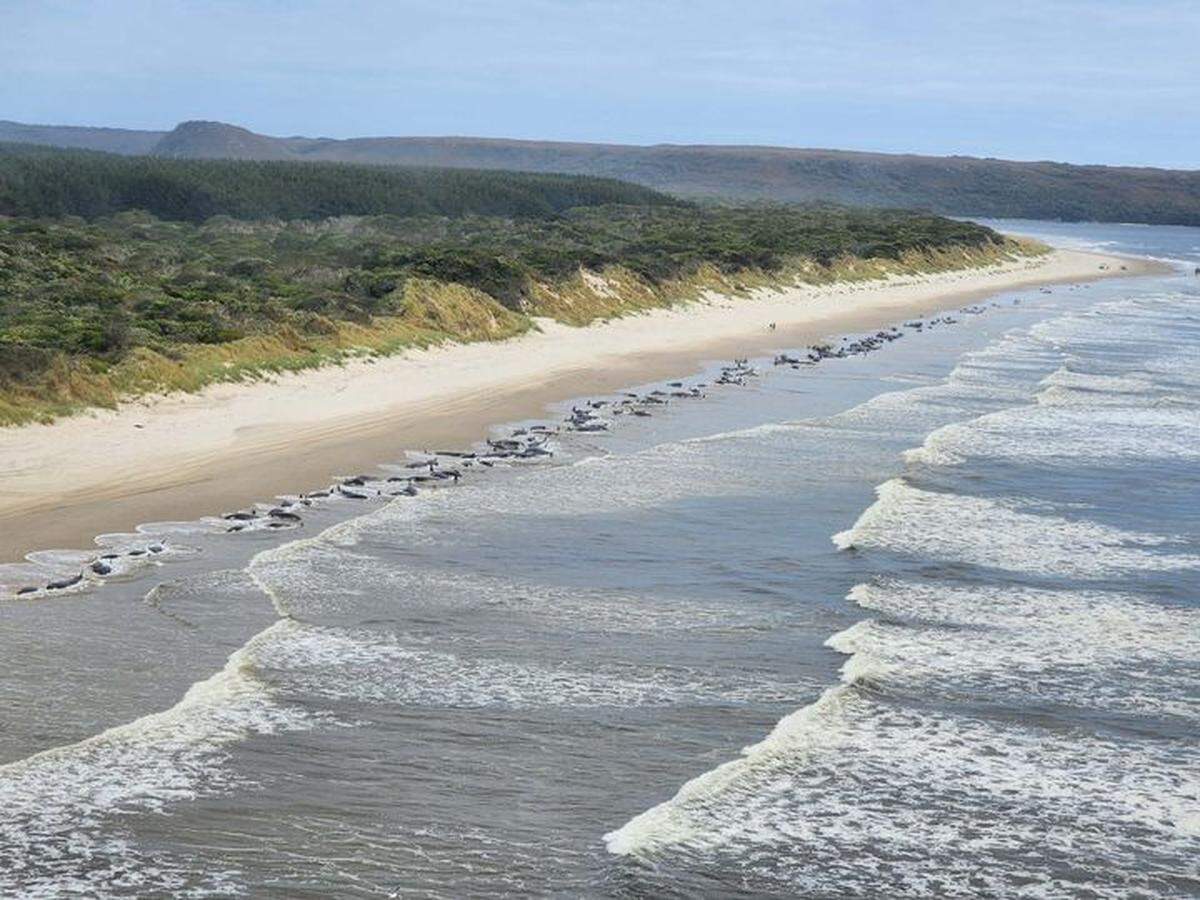
The new mass whale stranding took place exactly two years after Australia’s worst mass stranding at the exact same spot, ABC reported. About 470 pilot whales stranded themselves at Ocean Beach on Sept., 21, 2020, with only about 100 whales being rescued, the outlet reported.
Why do whales beach themselves in large numbers? Scientists are not entirely sure, but they’ve identified a number of reasons:
Navigational errors of whales’ echolocation can lead a pod of whales to enter shallow waters – such as a bay – but fail to find a way out, The Conversation reports.
Similarly, noise pollution or other loud underwater sounds, particularly those from human activity, can disorient whales, the Fish and Wildlife Foundation of Florida reported.
Diseases can impair the swimming and floating abilities of whales and lead a single whale or a pod to move toward shallower waters, eventually ending up on a beach, Whale Scientists reported.
Social bonds among a pod of whales can lead them to beach themselves together – even when some whales are healthy or otherwise unimpaired, The Conversation reported.
The cause of the most recent mass stranding is unclear, wildlife scientists told the Associated Press. Autopsy reports on the carcasses of recently beached whales usually help provide answers, Whale Scientists reported.
Tasmania is an island about 575 miles south of Sydney.
This story was originally published September 21, 2022 at 1:03 PM with the headline "Hundreds of whales trapped on same Australian beach as mass stranding two years ago."