Student stumbles upon ‘glossy’ jumping spider in Indian grasslands. It’s a new species
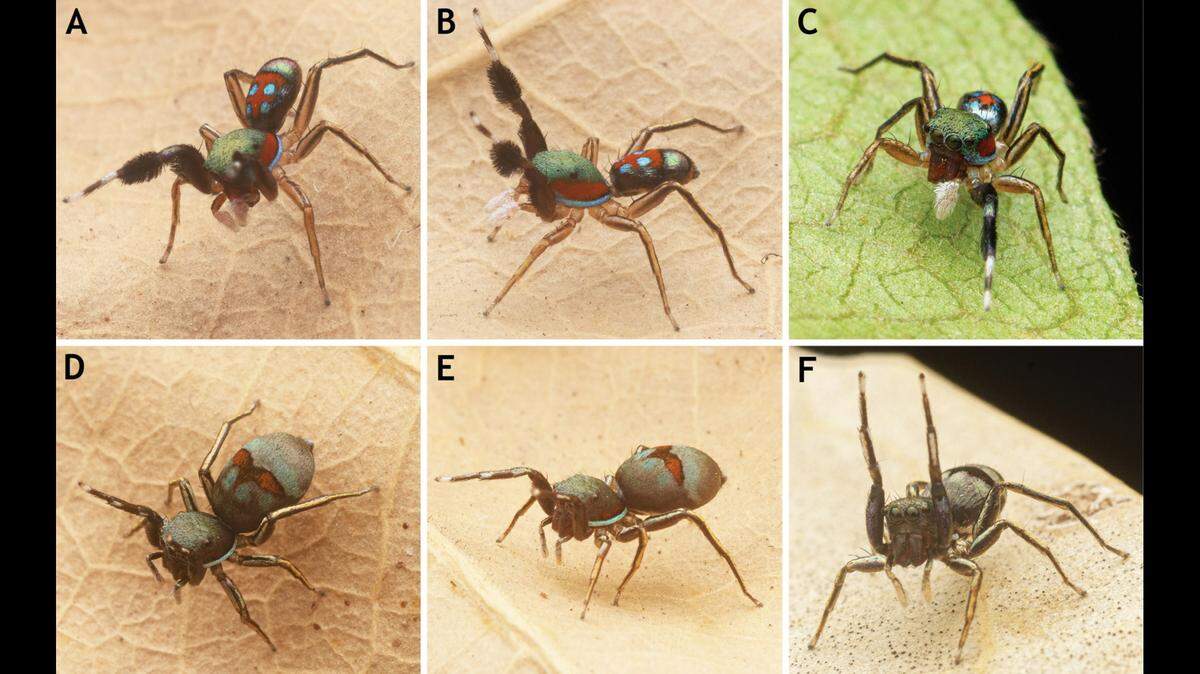
Ayush Parag has spent a lot of time in the grasslands of Odisha, India, over the past two years.
The Integrated Master of Science student has been studying spider biodiversity on campus at the National Institute of Science Education and Research (NISER). And recently, he discovered an unusual spider, according to a March 11 Facebook post from NISER.
The spider was a new species, the school said. Parag worked with his thesis supervisor, Aniruddha Datta Roy, and Indian jumping spider expert John T.D. Caleb to further study the species.
Officially named Siler niser — after the location where they were found — the spiders’ suggested common name is “glossy jumping spider,” according to a study published March 9 in Zoosystematics and Evolution. The male spiders have distinguishable patterns of iridescent scales and yellow legs while the females have reddish coloring lined by blue-white hairs.
Researchers were also interested in the spiders’ “intriguing” behavior, they said in the study.
“Both sexes bob their abdomens and wave their front pair of legs to produce a type of behavior termed as ‘antennal illusion,’” according to the study.
.jpeg "oo_82182_fitted (1).jpeg")
While the spiders don’t have a visual resemblance to ants — their preferred prey — experts said they might use this behavior to help them infiltrate ant colonies. The spiders might also have a chemical resemblance to ants, allowing them to stay close to ants.
Mimicking ants could also be a source of protection from predators, experts said in the study.
Datta Roy said the find is especially exciting because of its location in the grasslands on campus, which have previously been understudied.
“Discovering a new species is always exciting, especially when it comes from an area that has not been thoroughly explored before,” he said in the school’s Facebook post.
This story was originally published March 15, 2023 at 2:26 PM with the headline "Student stumbles upon ‘glossy’ jumping spider in Indian grasslands. It’s a new species."