Evidence of uprising against Nazis is found in the ruins of Warsaw ghetto, experts say
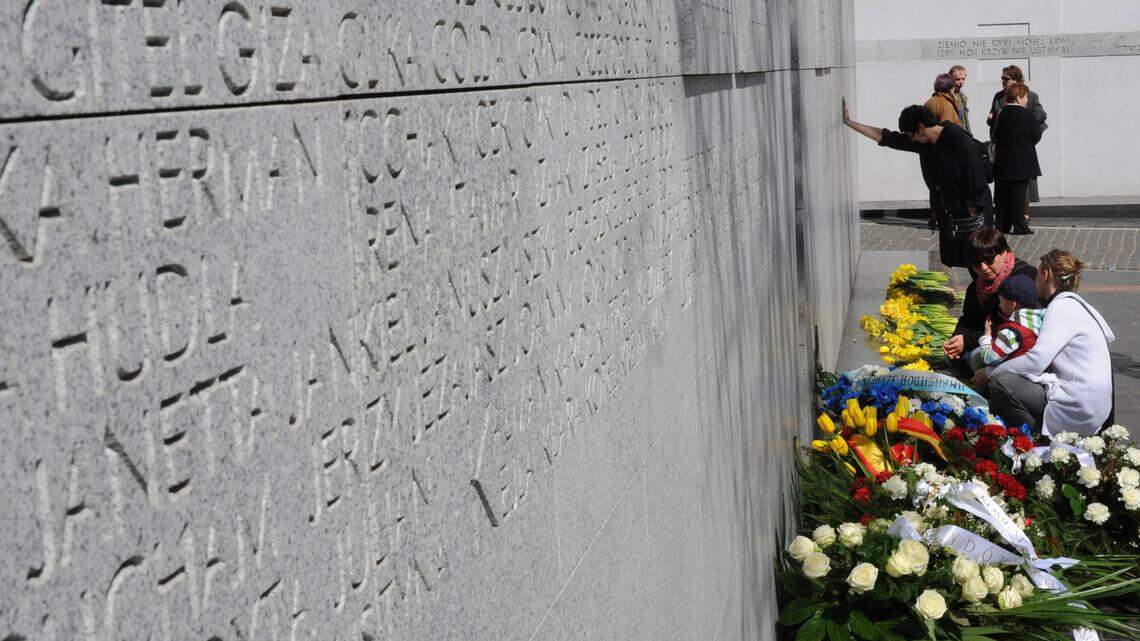
Archaeologists in Poland have discovered ruins of a tenement that was once part of the Warsaw ghetto during the Nazi regime, experts say.
The pre-war tenement was built on Gęsia Street around the turn of the 19th and 20th centuries, archaeologist Michał Grabowski said in an interview with the Polish Press Agency, according to Science in Poland. Experts uncovered the building’s basement, including lower fragments of wall.
Grabowski said that although the walls were not well-preserved, they indicate traces of the Warsaw Ghetto Uprising of 1943 and Germany’s destruction of the city.
Although the walls have significant damage, the building’s cobblestone courtyard remains in tact, Grabowski said. Archaeologists also uncovered several artifacts that likely belonged to residents of the ghetto, including beer stoppers, cutlery, ashtrays, perfume bottles, medicine bottles, stone tile fragments and old coins.
The excavation and research will continue for about two months, according to Grabowski.
The Warsaw ghetto and uprising
The Warsaw ghetto was established in Poland’s largest city — which was also home to both Poland and Europe’s largest pre-war Jewish population — in 1940 by German authorities, according to the United States Holocaust Memorial Museum.
At its peak, the ghetto was home to about 400,000 Jewish people who lived inside a 10-foot-high barbed wire wall, the museum said.
Between 1940 and 1942, one of the buildings on Gęsia Street functioned as a detention center known as Gęsiówka, experts said.
Starting in the summer of 1942, though, officials began mass deportations from Warsaw, transporting Jewish residents to concentration camps.
When police and troops arrived at the ghetto on April 19, 1943, to deport the remaining residents, an uprising ensued, according to the museum. The Warsaw ghetto uprising was the largest Jewish uprising during World War II, and it was the first real revolt to German occupation.
Within a month, the Germans had decimated the uprising and began setting the ghetto portion of the city ablaze, according to the museum.
At least 7,000 Jewish people died during the uprising. Another 42,000 were deported to forced-labor camps, and another 7,000 were captured by German forces, the museum said.
Google Translate was used to translate news articles from Science in Poland.
This story was originally published April 5, 2023 at 2:05 PM with the headline "Evidence of uprising against Nazis is found in the ruins of Warsaw ghetto, experts say."