Ancient woman had serious leg injury. Then she grew a ‘rope-like’ bone, experts say
Over 20 years ago, the people of Constância, Portugal, started a redevelopment project on their city square. The site was once the necropolis of the São Julião church, and their excavation led to the discovery of 151 skeletons under the street.
The bodies ranged from the early to mid-14th century to the mid-19th century, and included 106 adults and 45 children.
One of those skeletons was different.
In a study published in March in the International Journal of Paleopathology, anthropologists examined the skeleton of an adult female with a peculiar bone growth.
“I have never seen such [a] large bone formation,” lead author Sandra Assis told LiveScience on April 11. “I was really intrigued by its morphology.”
Assis told LiveScience she noticed something sticking out of the woman’s skeleton while it was being cleaned in a laboratory, having been excavated with the other 150 skeletons.
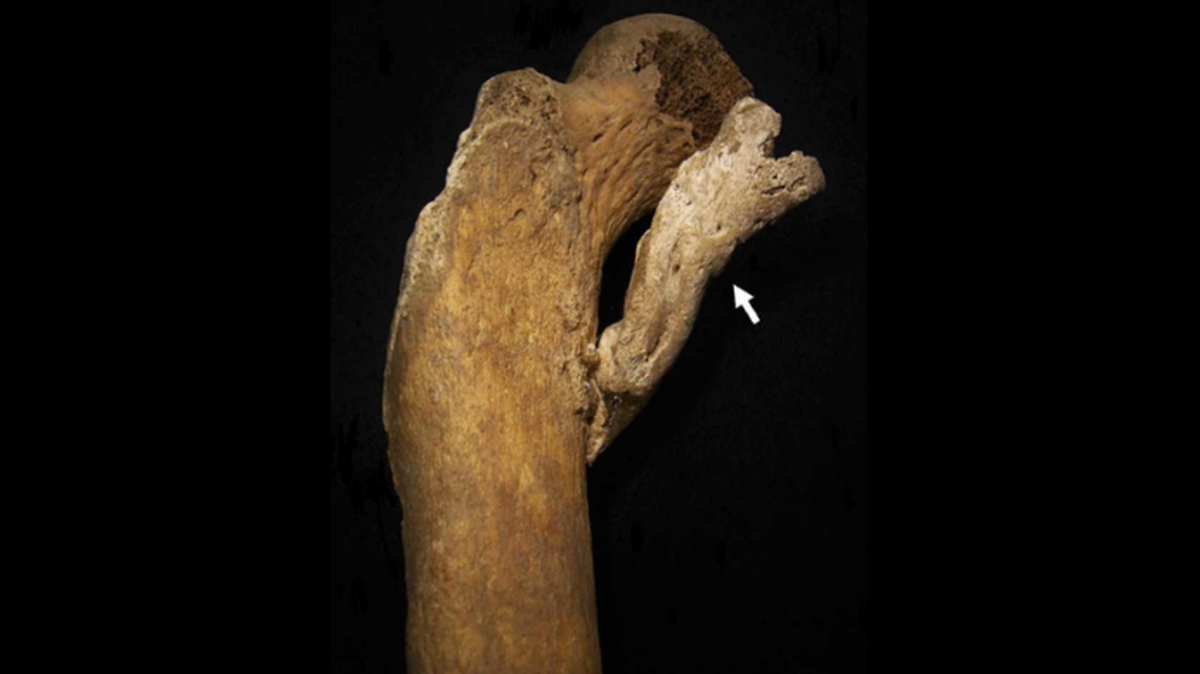
In the spot where the pectineus muscle, the muscle connecting the thigh bone to the pelvis, would have attached to the femur, a 3-inch long “rope-like” extra bone was growing.
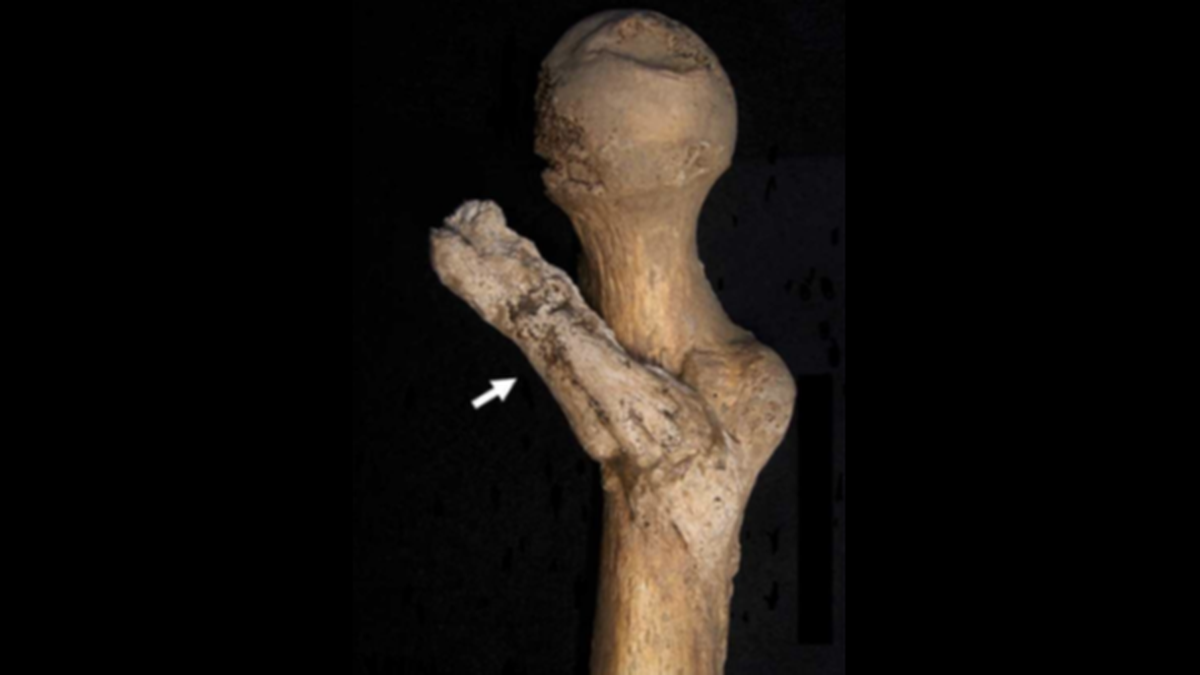
Heterotopic ossification, as was seen on this woman’s skeleton, occurs when bones grow outside the regular skeletal system, according to the study.
“It develops in soft-tissue where bone does not normally form or is needed, such as the skin, subcutaneous tissue, skeletal muscle, fasciae, ligaments and tendons, and walls of blood vessels,” the study said.
Today, heterotopic ossification can be a serious complication or side effect of surgery, according to the National Institutes of Health, but hundreds of years ago it would have formed from extreme trauma.
The researchers found that the extra bone growth was between 6 weeks and a year old, and would have been extremely painful and would have made it hard for the woman to move around.
“The appearance of the femoral bone suggests a longstanding process,” Assis told LiveScience. “We do not have the medical record of this female, but looking at similar clinical cases we can assume that this femoral lesion was quite debilitating.”
The find is the first documented case of myositis ossificans traumatica, or extra bone growth caused by trauma, on the area of the pectineus muscle, according to the study.
This story was originally published April 14, 2023 at 8:26 AM with the headline "Ancient woman had serious leg injury. Then she grew a ‘rope-like’ bone, experts say."