Perplexing sea swirls spotted off the coast of Poland — and experts finally know why
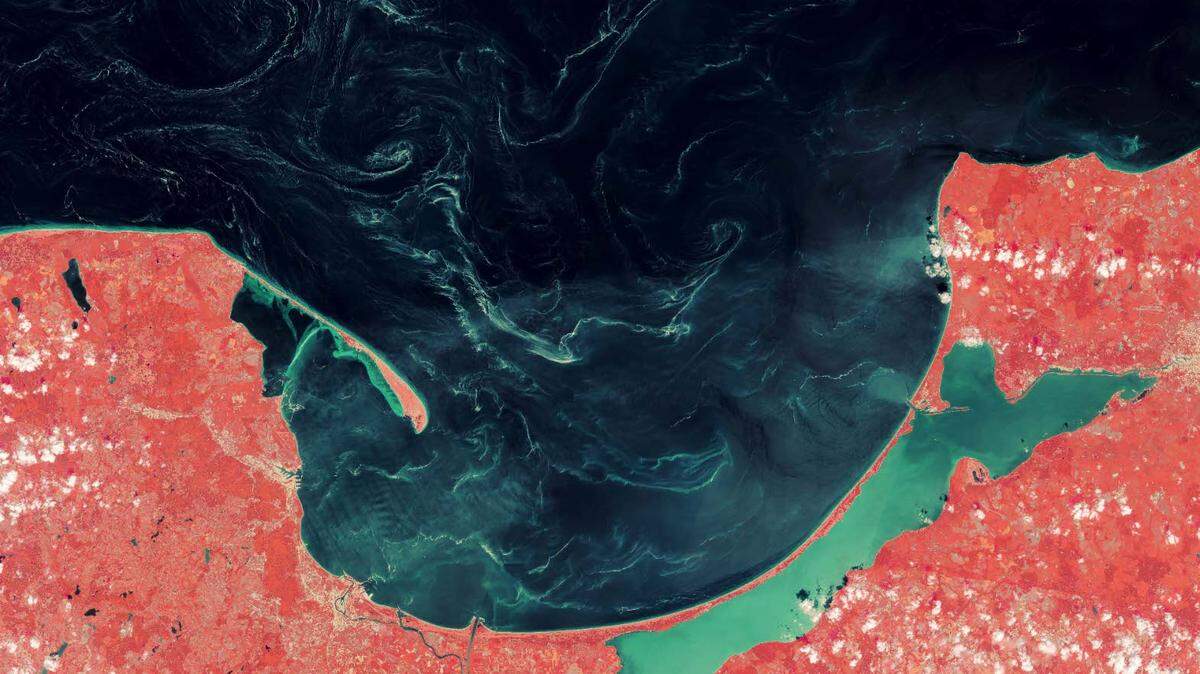
Looping and curving off the coast of Poland, large swirls repeatedly appeared on satellite imagery. The cause of these shifting shapes eluded researchers — until now.
Satellite images of sea swirls on the Baltic Sea first caught the attention of Chuanmin Hu in 2021, the study’s lead researcher told NASA in a May 1 article. The swirls reminded Hu of satellite photos of a “sea snot” event in Turkey’s Marmara Sea, he said.
Sea snot events are caused by phytoplankton releasing a slimy, snot-like substance that spreads across the water’s surface, NASA reported. While this gooey material swarmed the Marmara Sea, people on the ground never reported a similar event in the Baltic Sea.
So what were the perplexing sea swirls appearing on satellites?
Hu and his co-authors started looking for other explanations. They gathered historical satellite images of the Baltic Sea and realized these swirls had appeared repeatedly since 2000, according to a study published in the journal Remote Sensing of Environment.
The Baltic Sea is in northern Europe and surrounded by nine countries: Denmark, Estonia, Finland, Germany, Latvia, Lithuania, Poland, Russia and Sweden, researchers said.
Researchers noticed that all of these countries are “rich in pine trees and other conifer plants” and the sea swirls typically appeared from May to June.
A hypothesis began to form: Could these sea swirls be caused by pollen? To test this hypothesis, researchers conducted lab experiments on how pollen grains reflect light rays when floating on water and compared this to light reflections from other types of marine debris.
The reflectance of the pollen grains was “near-identical” to the shapes seen on satellite images, the study said.
Based on the historic satellite images, researchers noticed that the sea swirls were larger and more frequent in recent years, the study said. This corresponded with other studies showing increased pollen production during the same period due to warmer temperatures and larger concentrations of carbon dioxide.
The lines of evidence converged to one explanation for the sea swirls: “In certain years between May 10 and June 16, pine (Pinus sylvestris) pollen grains can be found in surface waters nearly everywhere in the Baltic Sea, well beyond nearshore or coastal waters,” researchers concluded.
The study was significant for more than just explaining an unusual observation.
“This is the first study to demonstrate that pollen on water can be detected and possibly quantified from space,” researchers said.
This story was originally published May 12, 2023 at 9:01 AM with the headline "Perplexing sea swirls spotted off the coast of Poland — and experts finally know why."