Rock tumbles from high cliff in Siberia — then prehistoric species discovered inside
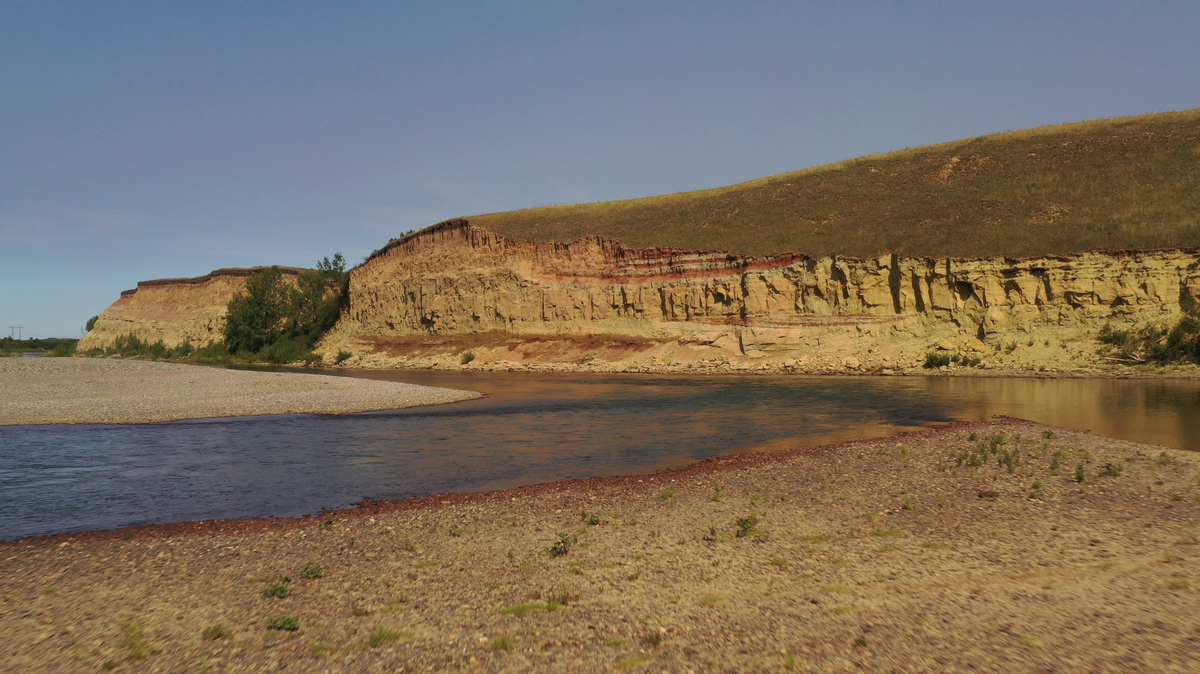
As a river carves the landscape of western Siberia, water slowly erodes the rocky cliffsides.
The current exposes layers upon layers of sediment that took millions of years to form, but just decades to wash away.
Recently, a large chunk of rocky matrix loosened from its layer near the top of the cliff, then tumbled down toward the water.
Inside, the fossilized remains of an undiscovered species were waiting 40 million years to be revealed.
The partial skeleton of a medium-sized theropod dinosaur, including vertebrae, ribs, legs, feet and part of the shoulder, were discovered sticking out from the rock, according to a study published May 15 in the journal Proceedings of the Royal Society B, and lead author Alexander O. Averianov, a researcher at the Russian Academy of Sciences.
“There are thousands of small bones (microvertebrate remains) of fishes, amphibians, lizards, crocodiles, tritylodontid synapsids, mammals, dinosaur teeth, but big dinosaur bones are quite rare,” Averianov told McClatchy News in an email. “(These) big bones come from the high level on the cliff and are collected mostly from the fallen blocks.”
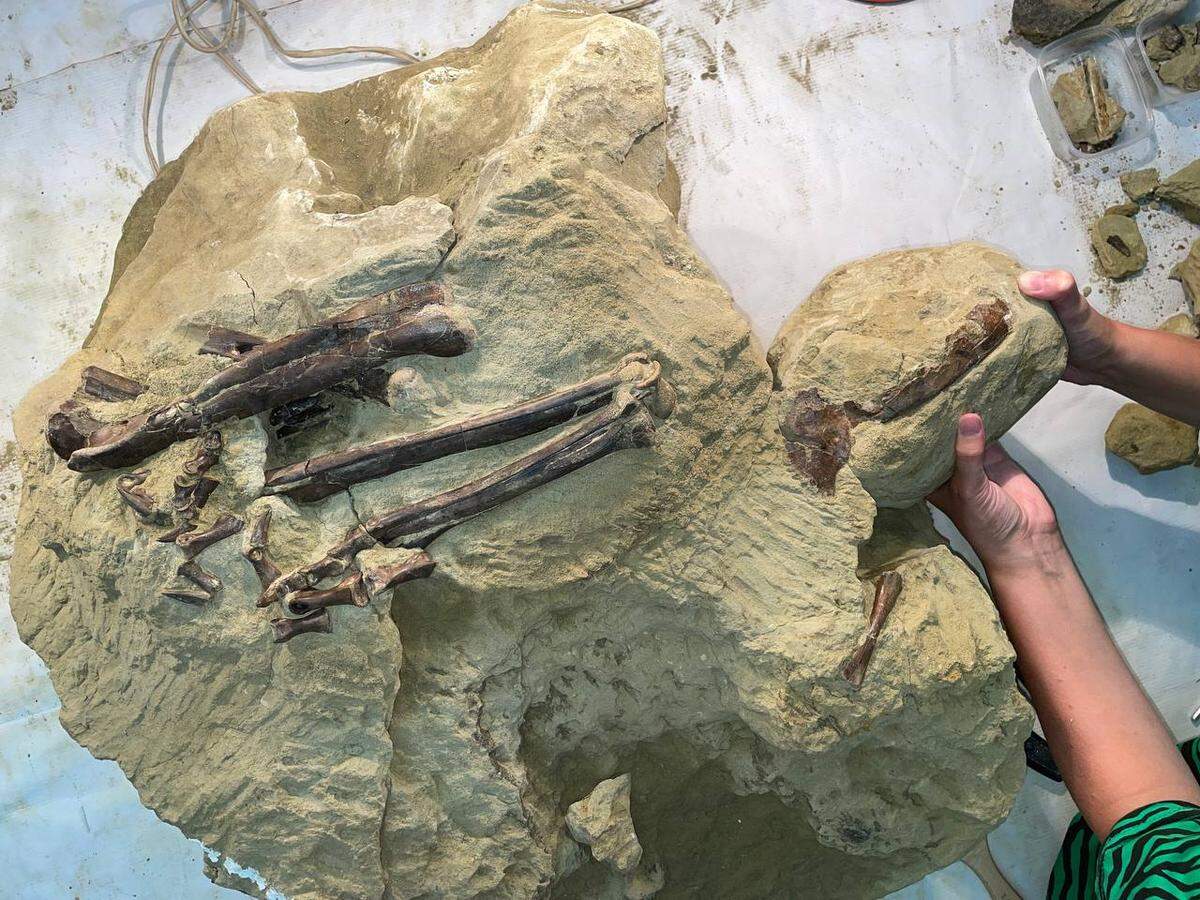
The pieces belong to a noasaurid ceratosaur, a kind of fast running, non-avian dinosaur that stands on two large legs with two smaller legs tucked on the front of its body, according to the study.
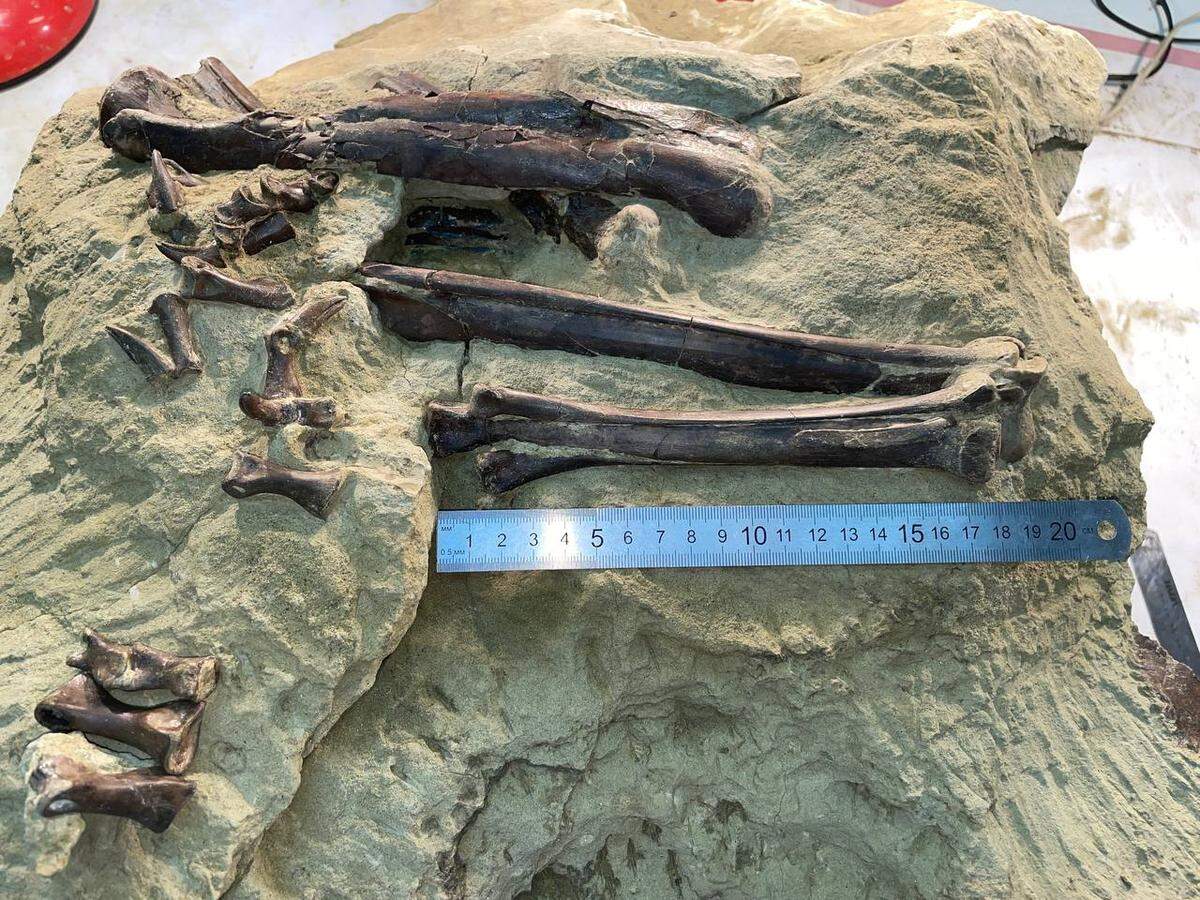
Researchers measured the leg bones and found the fossilized creature had “unique hind limb proportions” compared to other known species, according to the study.
The dinosaur also has “ostrich-like” feet, with the third toe extended and longer than the second, a feature that established the find as a new species, researchers said.
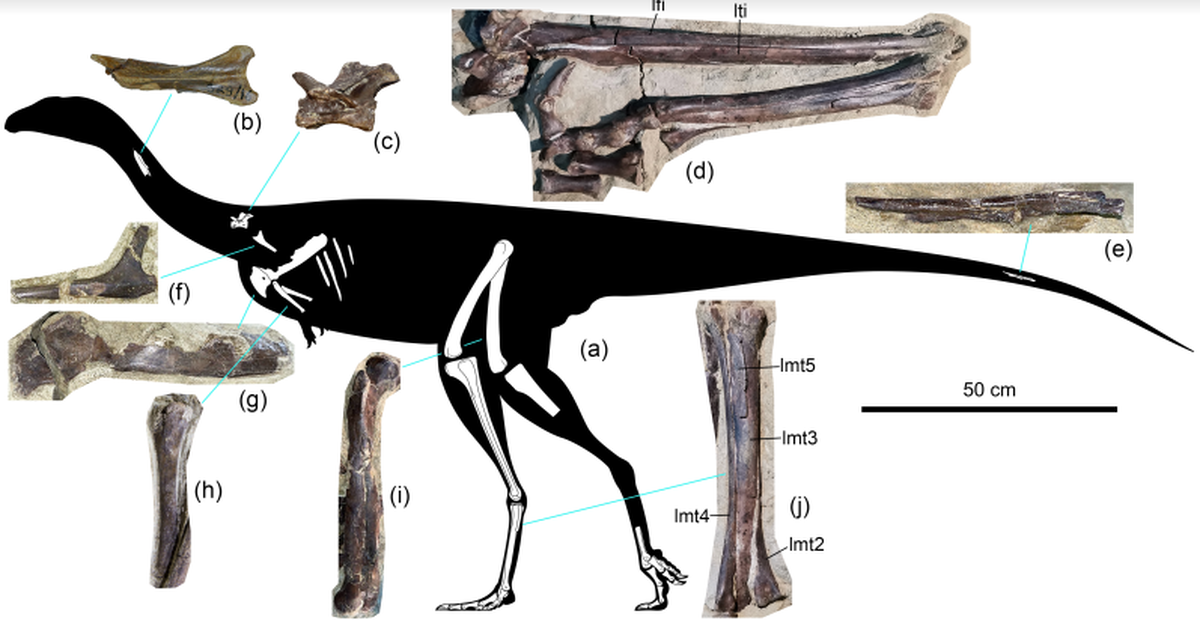
Named Kiyacursor longipes, or the long-legged Kiya River runner for its discovery along the Kiya River, the dinosaur is estimated to be just over 8 feet long from head to tail, according to the study. But it was not fully grown.
The medullary cavity, the inside of bones that hold bone marrow, had stopped expanding, meaning the dinosaur wasn’t a juvenile. And the bones showed signs of a slowing growth rate, suggesting it was more than 3 years old “but it did not reach adult size and it was still actively growing at the time of death,” researchers said.
The long-legged Kiya River runner lived during the early Cretaceous period, researchers said, a time about 100 million years ago directly following the Jurassic period.
Western Siberia is rich with paleontological evidence and other dinosaurs that lived around the same time are found in multiple periods, according to the study.
This means that, unlike other transitions between periods that started after mass extinction events, the transition from Jurassic to Cretaceous was “smooth,” and considered to almost be like “a real ‘Jurassic Park’,” researchers said.
The Kiya River is is western Siberia, in south-central Russia.
This story was originally published May 16, 2024 at 10:21 AM with the headline "Rock tumbles from high cliff in Siberia — then prehistoric species discovered inside."