Dozens of sea creatures seen glowing for the first time. See the vibrant ocean animals
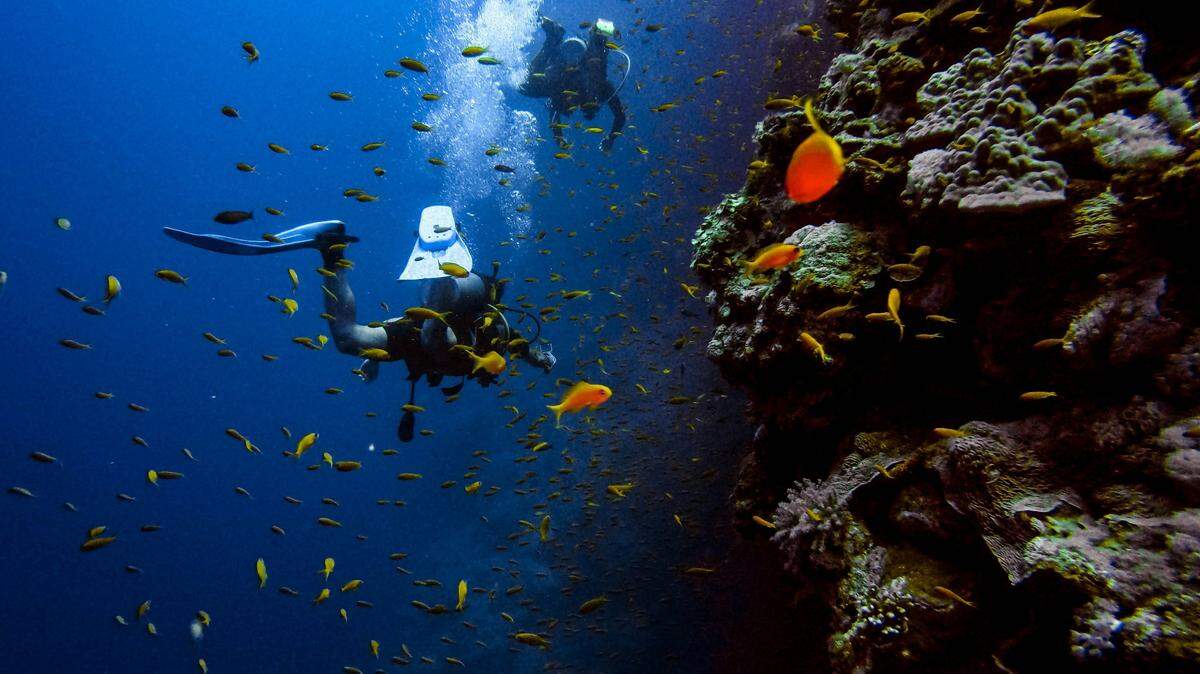
During recreational dives at night in two seas on opposite ends of the planet, divers decided to turn off their bright white lights and let the dark surround them.
Then, they pulled out their cameras and special colored lights and snapped a shot.
The sea below them was glowing.
Just like a mini-golf course under a blue light, some creatures have molecules in their body that glow under certain light conditions.
The phenomenon is called fluorescence, and it’s been observed in ocean animals from corals to jellyfish.
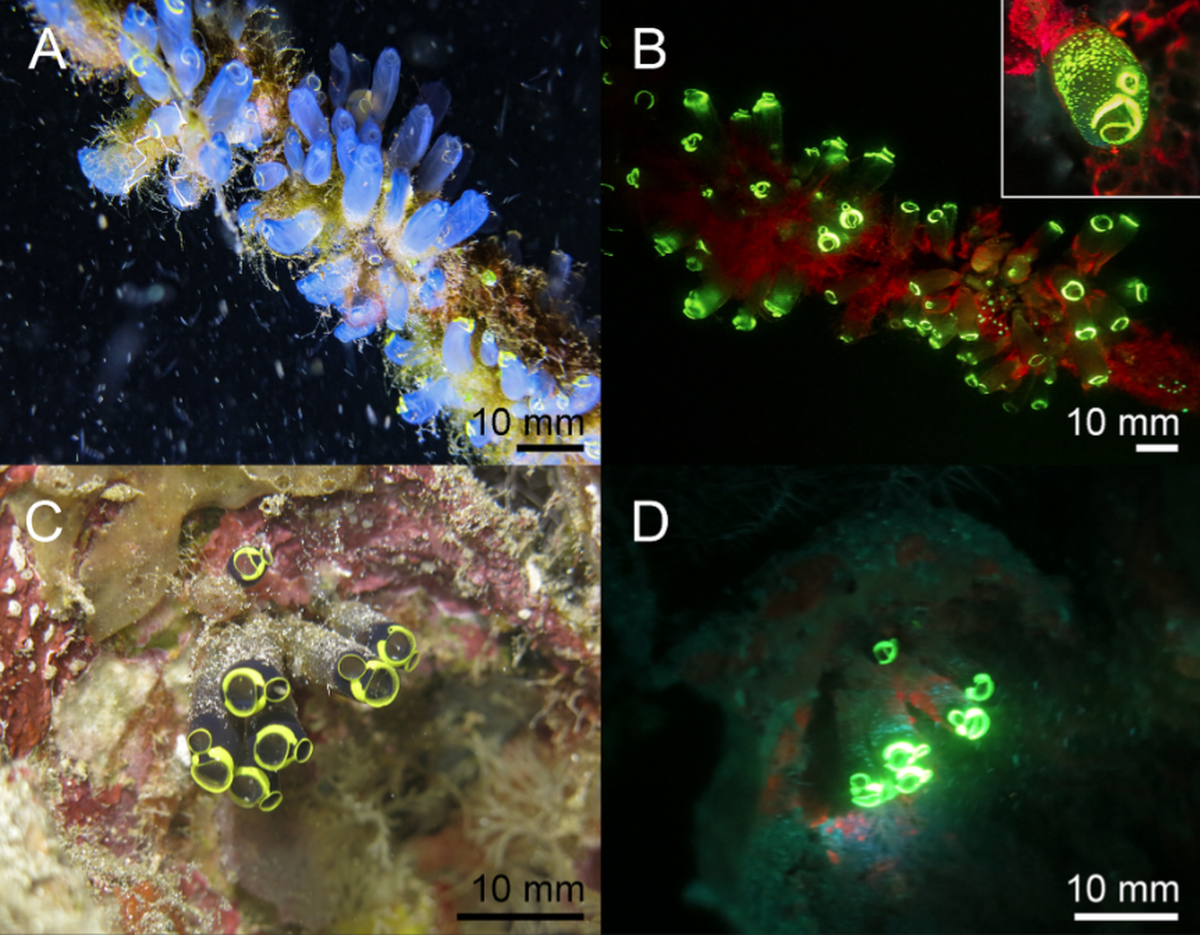
Not to be confused with bioluminescence, where the animal glows on its own, fluorescence occurs when a molecule absorbs a certain wavelength of light being projected on it and then re-emits the light at a slightly longer wavelength, according to a study published June 12 in the journal PLOS One. Animals with neutral colors can suddenly show a neon reflection.
In diving expeditions in the Banda Sea off Indonesia and the Red Sea off Egypt, researchers have now observed and identified fluorescence in 27 species for the first time.
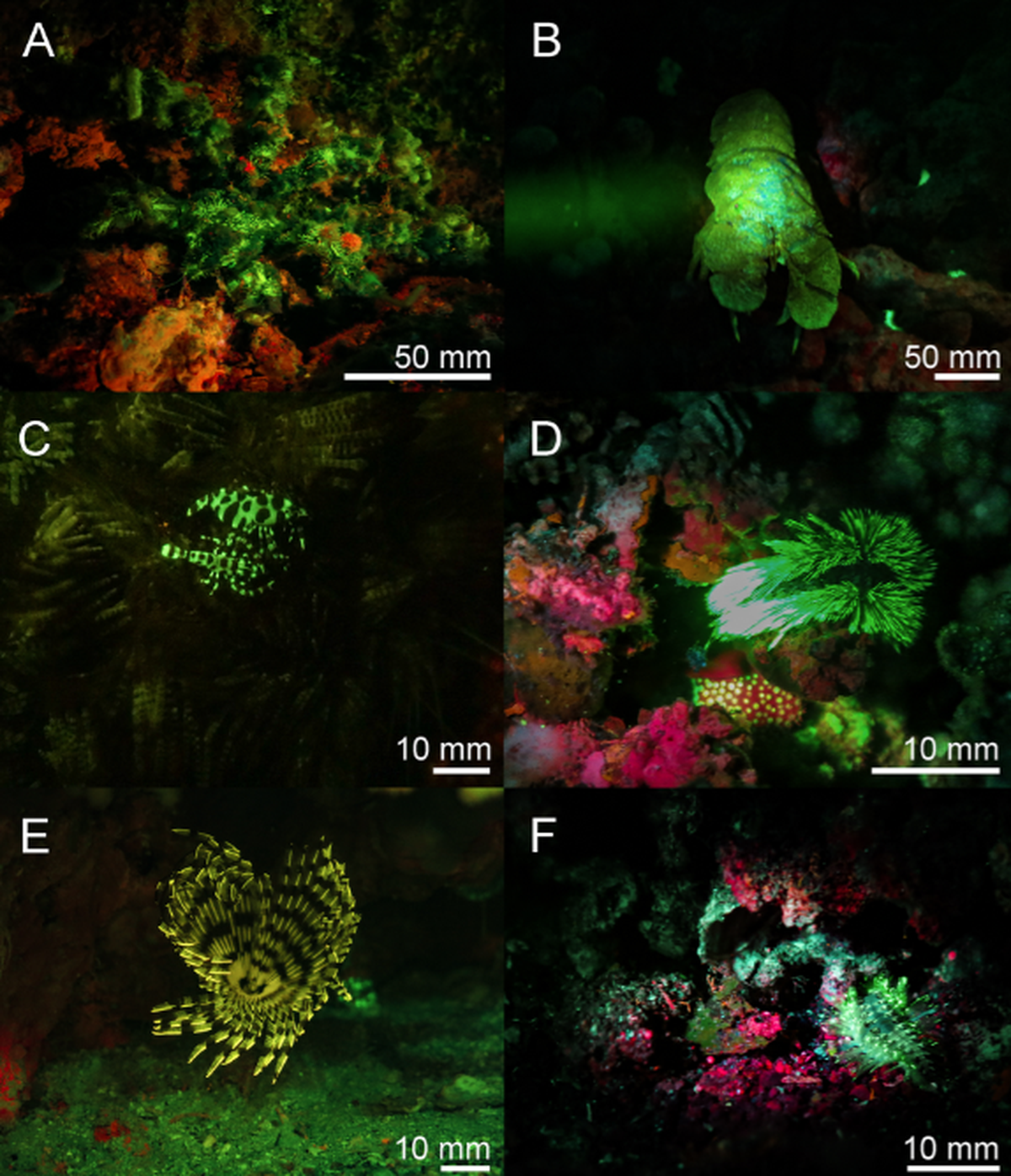
“Among various phyla we found fluorescence in sponges, molluscs, tunicates and fish,” researchers said. “Our study extends the knowledge on how many different organisms fluoresce in marine environments.”
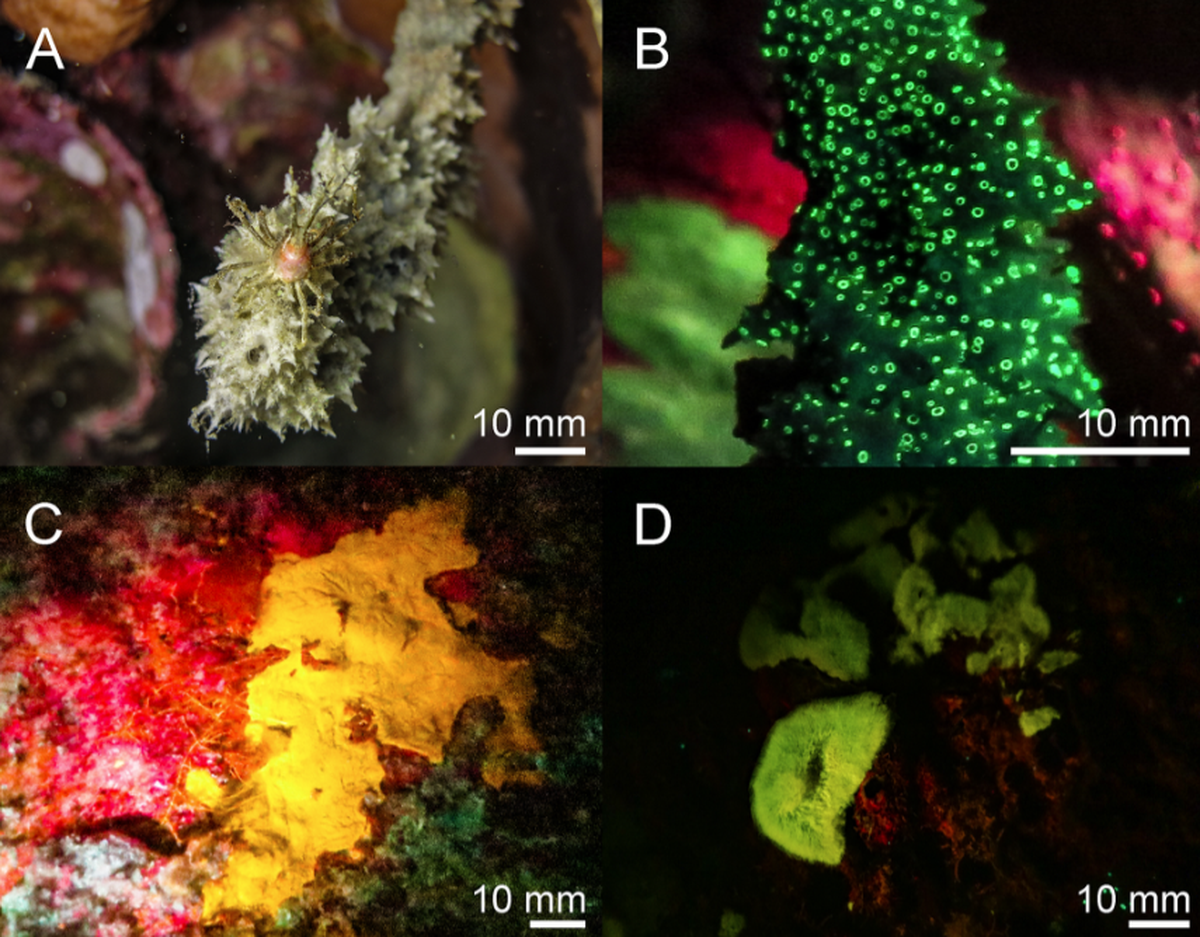
When the researchers photographed species of porifera, or marine sponges, they found that some pockets of the sponges glowed green, while other species turned yellow and orange behind the lens, according to the study.
Scleractinia, a group of stony coral species, shone yellow.
Some of the more identifiable species included an octopus, Abdopus aculeatus, which “revealed orange fluorescent markings on its body,” researchers said.
“Bright fluorescent patches were located below the yellow fluorescent eyes and on every arm,” according to the study.
A giant clam glowed bright red when exposed to the specialized light, according to the study, like bright, puckered lips on the seafloor.
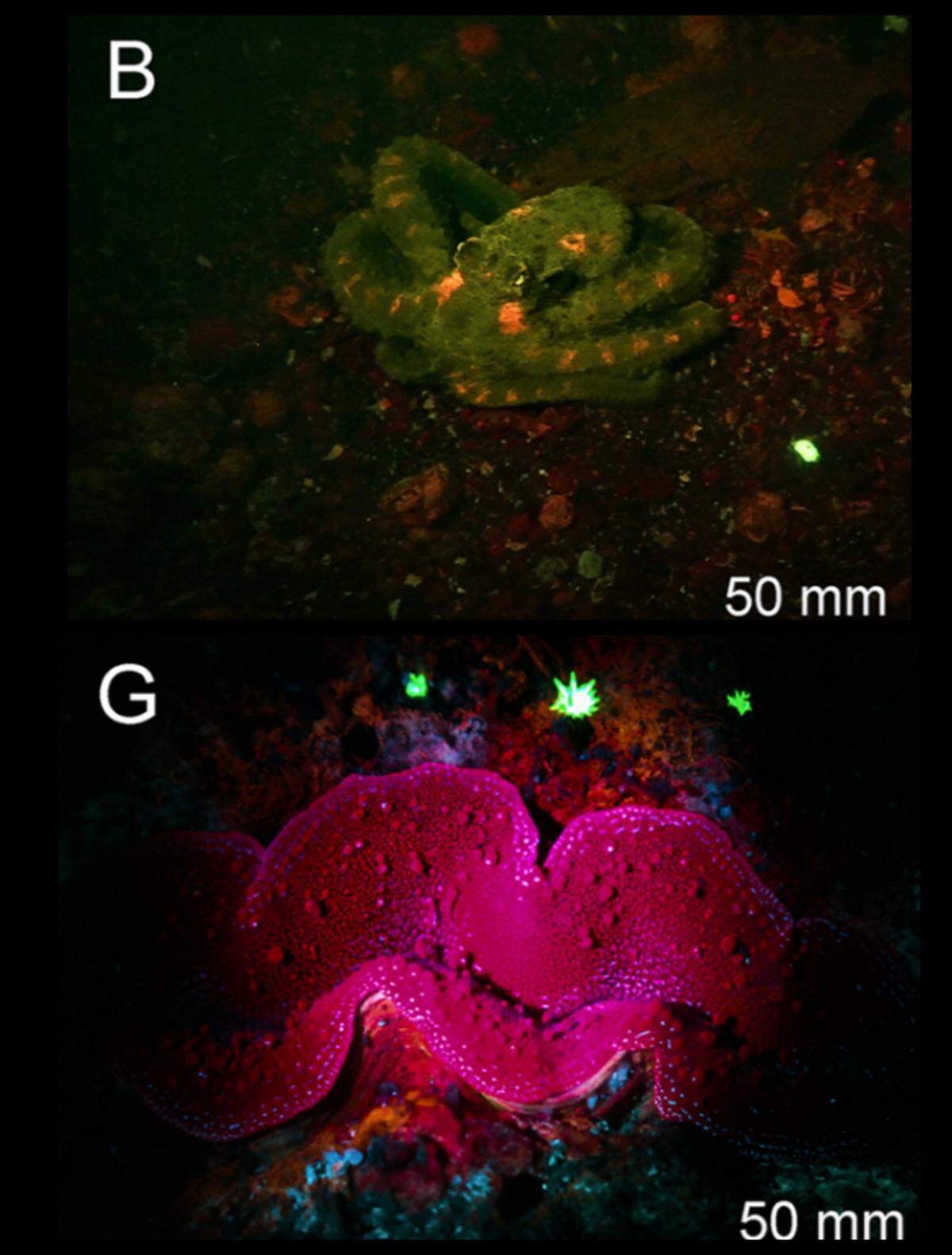
Some creatures showed more than just a single color reflection.
Lybia tessellata, a mosaic boxer crab, appeared like a stained glass window with thick black lines separating neon green hairs, yellow patches and bright red accents.
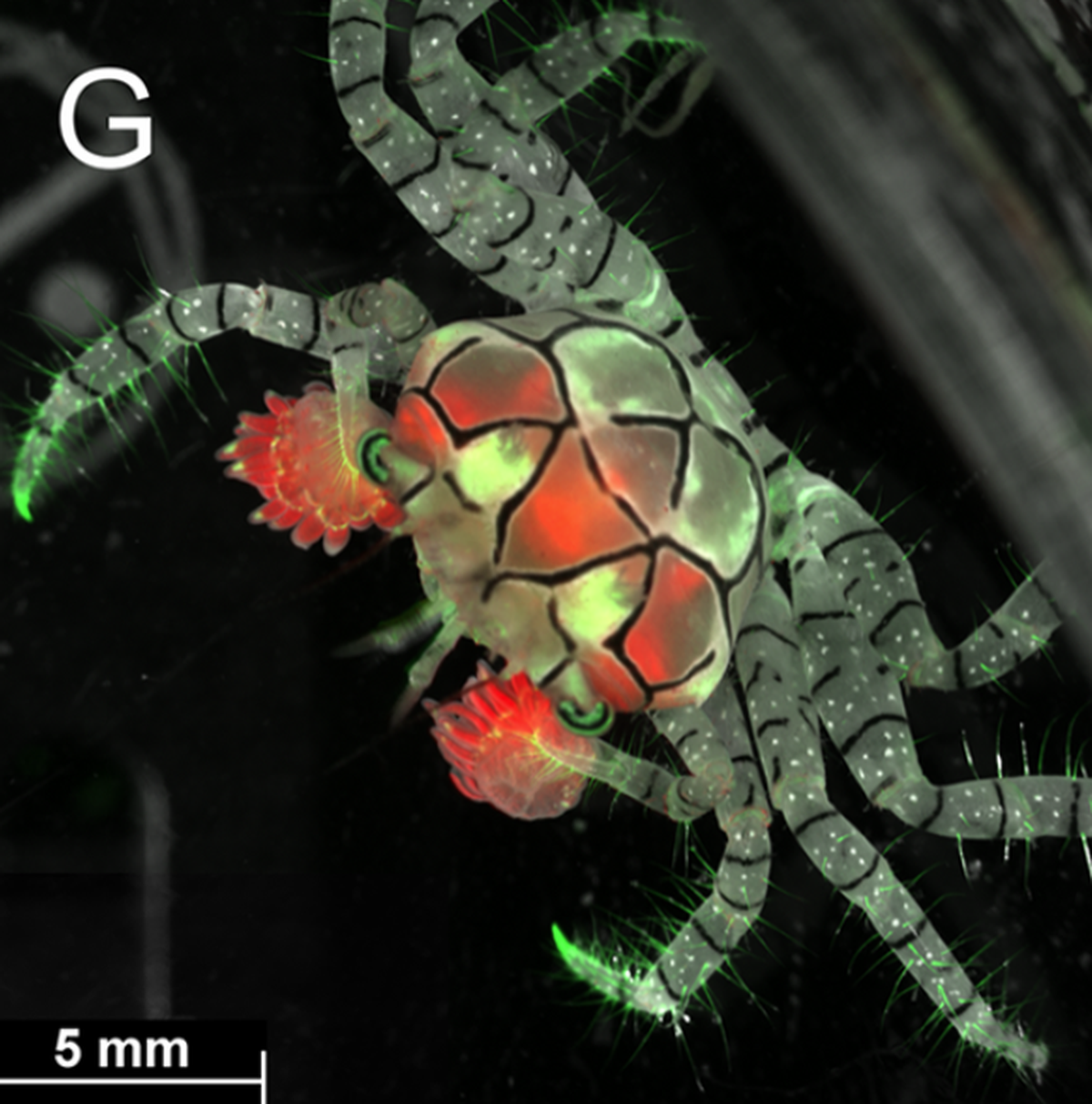
Different animals emit light through different biological pathways, researchers said, so it’s unclear what the exact evolutionary function of the glow may be.
For example, a species of marine snail eats an algae that is then excreted and leaves behind a weak fluorescence, according to the study. When the behavior of the snail was studied, researchers found that fish avoided eating those snails.
Another species, a deep-sea scarlet frogfish, fluoresce in a way that matches the surroundings, suggesting that it may be used for camouflage, researchers said.
“(This study) shows that fluorescence likely is a common phenomenon and that its diversity is not limited to cnidarians (jellyfish, anemones and corals),” researchers said. “Systematically searching marine biodiversity hotspots with blue or UV lights will, therefore, likely result in the discovery of more fluorescent species and molecules, which will help understand the diverse roles fluorescence may play in marine ecosystems.”
The Banda Sea lies in the center of the islands of Indonesia, north of Australia and west of Papua New Guinea. The Red Sea lies between Egypt and Saudi Arabia and extends south past Sudan, Eritrea, Yemen and Djibouti.
This story was originally published June 13, 2024 at 2:46 PM with the headline "Dozens of sea creatures seen glowing for the first time. See the vibrant ocean animals."