
3,000-year-old necropolis found for first time in Abu Dhabi. See ‘mystery’ site

A new discovery at one of the world’s oldest inhabited settlements has provided the “missing part of the puzzle” for life in the Iron Age in the United Arab Emirates, officials said.
A 3,000-year-old necropolis has been uncovered in the Al Ain region of Abu Dhabi, marking the “first major Iron Age cemetery” to be found there, according to an April 21 news release from the Department of Culture and Tourism.
There could be more than 100 burials across the necropolis, archaeologists said, some of which still contained ancient grave goods.
“This discovery promises to transform our understanding of the ancient Emirates,” director of the historic environment department, Jaber Saleh Al Merri, said in the release. “For years, the Iron Age burial traditions remained a mystery, but now we have tangible evidence that brings us closer to the people who lived here 3,000 years ago.”
Al Ain is considered an oasis as a large section of fertile land at the bottom of Jebel Ḥafīt mountain, surrounded by the arid desert environment.
In the 65 years of excavations in Al Ain, archaeologists have found “Iron Age villages, forts, temples, aflaj and ancient palm gardens,” but burials were noticeably absent, according to the release.
Now, archaeologists are seeing the burials for the first time.
“The cemetery’s tombs were built by first digging a shaft approximately (6.5 feet) deep and then digging sideways to create an oval burial chamber. After the body and grave good were placed in the chamber, the entrance was sealed with mudbricks or stones and the shaft was backfilled,” archaeologists said. “The lack of grave markers on the surface explains why Iron Age tombs have never been found before in (the) Al Ain region.”
Archaeologists noted that many of the tombs had been looted centuries or possibly thousands of years earlier, but a few items survived.
Human remains found in the tombs were fragile and will be analyzed to learn age, gender and health, according to the release.
“A few small pieces of gold jewelry that escaped looters’ attention suggest what might once have been found,” archaeologists said. “Despite this, impressive burial goods include richly decorated items as part of the afterlife package, displaying high-quality craftsmanship in a range of media including pottery, carved soft-stone and metalwork.”
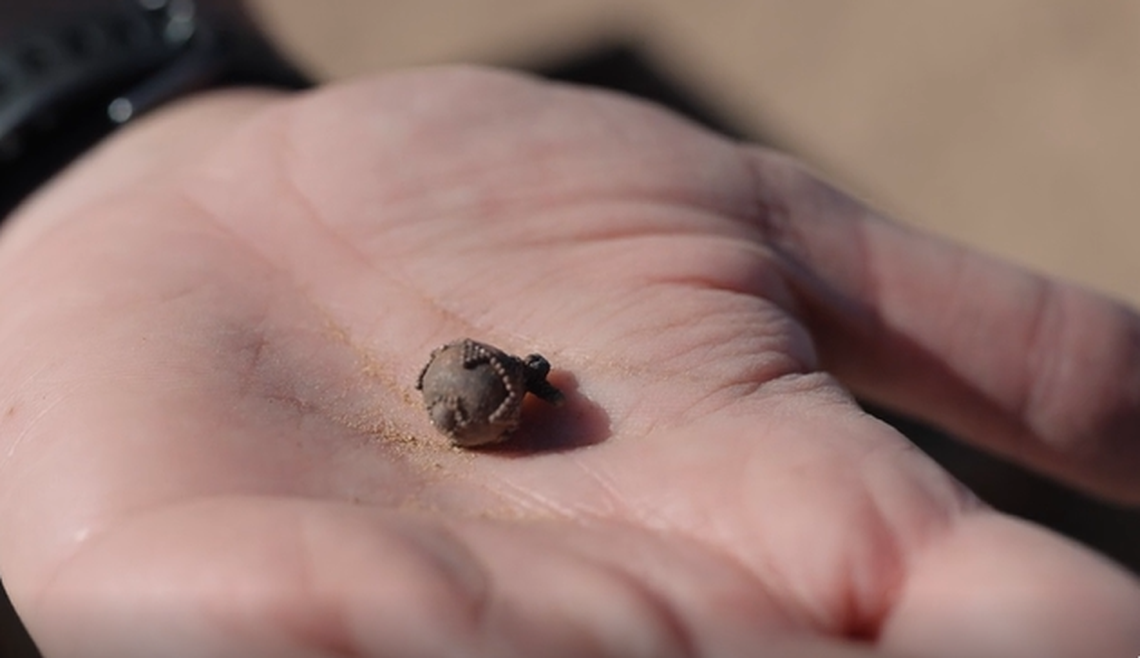
Archaeologists also uncovered spouted vessels, bowls, cups, copper-alloy weaponry, spearheads, arrowheads, shell cosmetic containers, bead necklaces, bracelets, rings and razors, according to the release.
The weapons have some preserved wood and filaments from their shafts, and one arrowhead appears to have traces of the quiver it once headed, archaeologists said.
The Al Ain region is special not only for its longstanding occupation, but also because of its role in the development of a falaj, according to the release.
A falaj is a kind of underground aqueduct invented around 3,000 years ago at the beginning of the Iron Age that “set in motion a sustained period of agricultural intensification and expansion that created the oasis landscape characteristic of the United Arab Emirates,” archaeologists said.
The graves were found as part of the Funerary Landscapes of Al Ain Project that began when prehistoric tombs were found during construction work, officials said.
“We know how people in the Bronze Age and Late Pre-Islamic period buried their dead, but the Iron Age has always been a missing part of the puzzle,” field archaeologist Tatiana Valente said in the release. “We are now in a position to understand the evolution of burial customs over time and learn what these changes might say about the beliefs and traditions of the people who lived here.”
Al Ain is in the eastern United Arab Emirates, along the border with Oman.
This story was originally published April 22, 2025 at 11:49 AM with the headline "3,000-year-old necropolis found for first time in Abu Dhabi. See ‘mystery’ site."
