
Cash flows into South Sound races with implications for state Senate margins
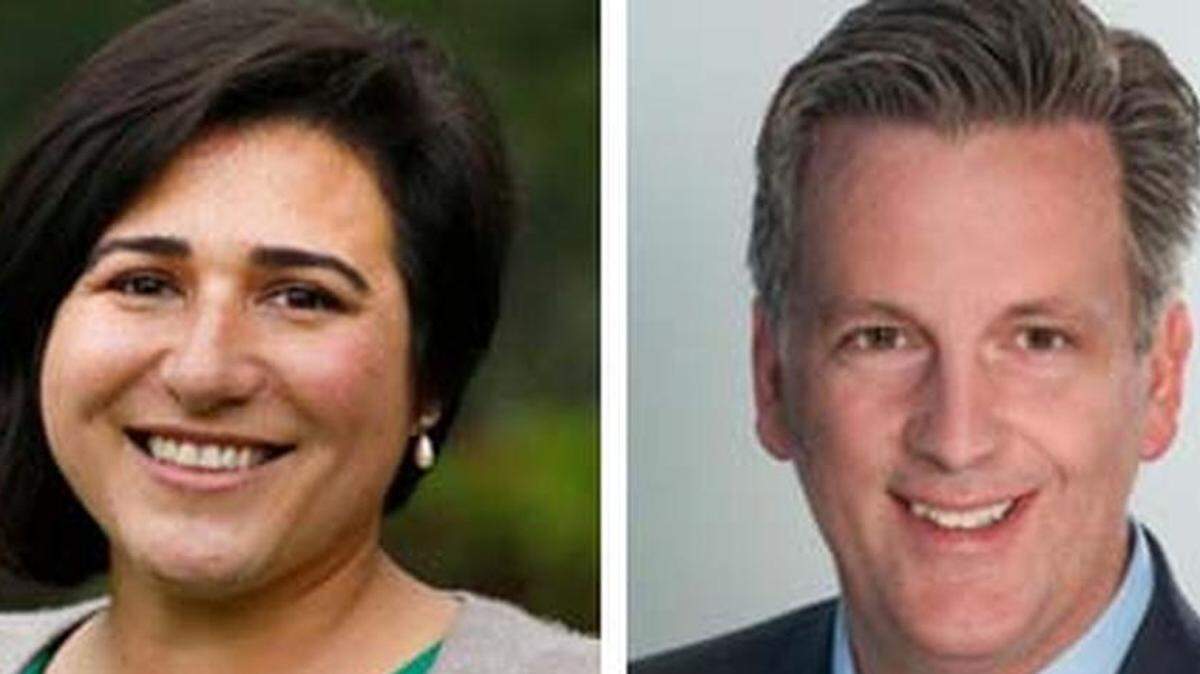
Democrats are pushing to flip two South Sound seats in Washington’s closely divided Senate, sending a tidal wave of money from both parties crashing into the battleground districts in recent weeks.
Political observers say the races in Federal Way’s 30th Legislative District and the 26th Legislative District, which includes Gig Harbor, Bremerton and Port Orchard, will be tough contests.
Republicans currently control the seats, meaning they are critical for the GOP to hold in order to win a Senate majority this fall. It also means the two South Sound seats are prime targets for Democrats in the November election as they work to widen their 25-24 voting advantage in the chamber.
With stakes so high, the Senate races are quickly becoming among the most expensive in the state.
“In two weeks all, this money came in,” said Sen. Mark Miloscia, R-Federal Way. “It’s unreal.”
Liberal political action committees have reported independent spending of more than $173,000 to unseat Miloscia, according to the state’s Public Disclosure Commission.
Conservative PACs also have poured money into beating his opponent, Claire Wilson, president of the Federal Way School Board. She has faced more than $278,000 in independent spending opposing her — the most of any candidate in the state.
In the 26th District, close to $187,000 in PAC money has been spent on independent expenditures in support of Democrat Emily Randall and another $203,000 has been reported against her. That’s far and away the most independent money spent on any one candidate in Washington.
Republican Marty McClendon, Randall’s opponent, has been the subject of far less PAC spending, but his campaign also is shaping up to be a big-money affair.
“What I say is that I am incredibly honored by the fact that somebody is spending over a quarter of a million dollars,” Wilson said in an interview Friday. “Because that apparently says that they’re afraid.”
Makings of a battleground
So what makes these elections worth the dough?
In the Federal Way district, one only has to look to 2016. Voters ousted Republicans in both House seats that year, and the district chose Hillary Clinton over Donald Trump for president by a healthy margin.
Miloscia wasn’t up for election in the Senate that year, but many Democrats say they are confident the 2016 trends will continue this fall.
“The 30th District has changed dramatically,” Wilson said, adding: “There’s no way we should have a Republican in the Senate seat.”
She has run on a platform of increased and equitable funding for education and criticized Miloscia as being out of touch with voters in the district, particularly for his stance against abortion. Wilson, a lesbian, also has made support for the LGBTQ community a prominent plank in her campaign.
A win is still no given for Democrats. Miloscia won his 2014 election by an 11-point margin and has held elected office in the 30th District for more than a decade. He was a Democratic state representative from 1999 to 2013 and then won election to the Senate in 2014 as a Republican.
Miloscia has touted himself as a moderate focused on warding off taxes — such as the carbon tax ballot measure on the November ballot — and branded Wilson as bringing Seattle-style progressive politics into a district that doesn’t match those policy goals.
Both candidates have pushed for various forms of relief from car-tab fees increased to pay for the Sound Transit 3 construction package.
“If you’re an idealogue either to the left or the right, you’re not going to do well in this district,” Miloscia said.
Democrat Tirzah Idahosa also is running for the seat but has not gained prominent support from her party or raised significant money.
The 26th District is considered by some to be more of a reach for Democrats.
While U.S. Rep. Derek Kilmer served in the state House and Senate there before winning election for his spot in D.C., Clinton barely won the district in 2016.
And Republicans recently have run the show, winning by solid margins in the 2016 state House races.
McClendon, the Republican in this year’s Senate race, said outgoing GOP Sen. Jan Angel’s legacy of winning elections and her accomplishments at the Capitol, paired with his experience in the district, will result in a Republican victory.
“They know what they’re getting,” McClendon said of voters. “I think that’s why we’re pretty confident we can keep the seat.”
McClendon was recently the chairman of the Pierce County GOP but resigned in order to run when Angel announced she would not seek re-election. He is also a real estate agent and a conservative radio host with a platform of increasing access to career and technical colleges, reducing congestion through highway projects and opposing new and increased taxes. McClendon lost a bid for lieutenant governor to Democrat Cyrus Habib in 2016.
Randall, a community organizer, said she is building a grassroots movement and winning people over by refusing money from corporate PACs. She has advocated for policy aimed at reducing the cost of health care, boosting jobs in the district to keep people off gridlocked highways and supporting apprenticeship programs for workforce development.
Randall has pushed back against McClendon for painting her as “too extreme” in a recent campaign advertisement and said the national political climate in which Trump is unpopular in large swaths of the country will help her win.
“I don’t think it’s radical to think that people in our district deserve health care, education and good jobs,” Randall said.
Independent Bill Scheidler has also filed in the race with Randall and McClendon but has not reported raising any money so far.
Following the money
Tracking the origin of campaign cash can be tricky, as it typically flows through two or more PACs before being spent on any candidate.
For example, much of the money pouring in to defeat Randall and Wilson is from the Washington Forward PAC. That PAC gets its money from the Leadership Council, which is tied to state Senate Republicans. In turn, the Leadership Council gets its money primarily from a smorgasbord of business and industry groups, such as the Building Industry Association of Washington, along with a hefty $325,000 donation from the D.C.-based Republican State Leadership Committee which funds campaigns around the country.
The group spending money to defeat Miloscia, the Federal Way senator, is a PAC called South King County Deserves Better, paid for by the Kennedy Fund, which is associated with state Senate Democrats.
The Kennedy Fund is largely bankrolled by unions. Labor groups, the Kennedy Fund and the House Democrat-affiliated Harry Truman Fund also are behind the New Direction PAC, which is spending money in favor of Randall.
Independent expenditures typically pay for ads, which have flooded the 30th and 26th districts. This year, the fliers have caused some consternation among candidates, who have expressed frustration over the lack of control they have in what independent groups say in ads.
One mailer in particular from the Leadership Council has drawn criticism from both parties. It attacked Randall for supporting Tarra Simmons, a woman who recently passed the bar exam to practice law in Washington despite a prior felony record. McClendon, Randall’s opponent, and some other Republicans have condemned the ad despite its sourcing from the Senate GOP.
“The nasty ads are the worst” part of the political system, Randall said. She is a first-time candidate for office. “The good stuff is getting out there and talking to your constituents.”
Despite occasional hemming and hawing, candidates said the money flowing in is still evidence they have a shot at winning in the fall.
“I think the left and Democrats see an opportunity, and Republicans don’t want to lose it,” McClendon said.
This story was originally published July 30, 2018 at 12:00 AM.