
Behavioral health bills would restrict placements of violent offenders
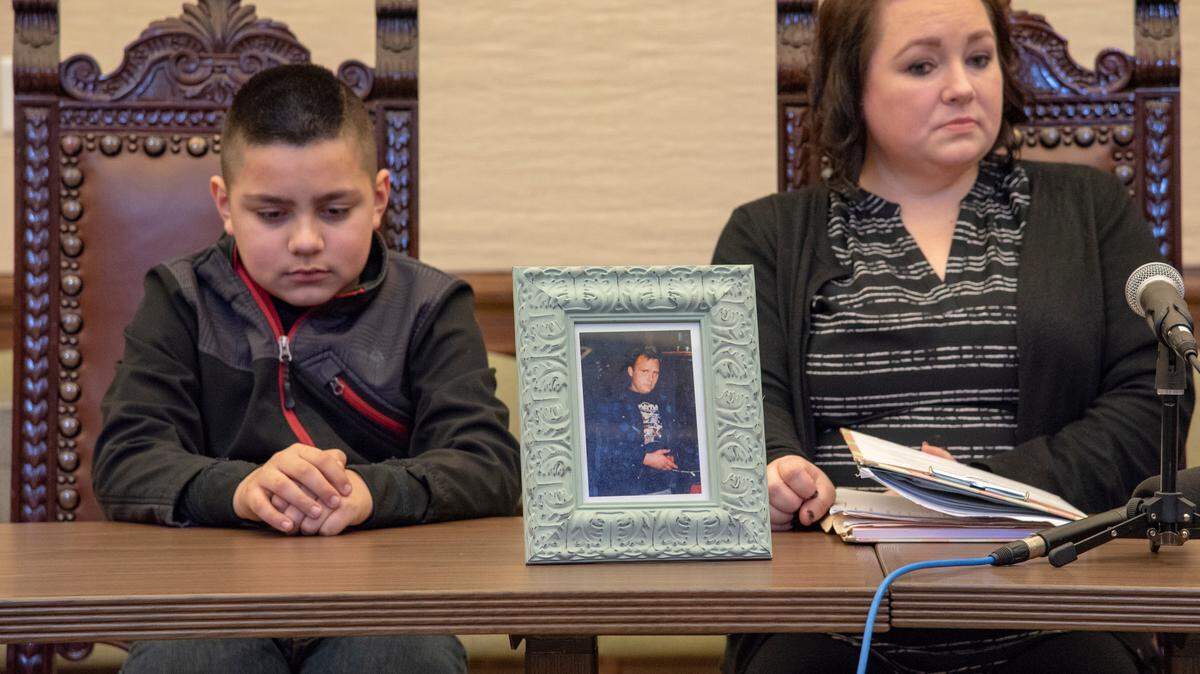
The daughter of a recently slain Lakewood man joined Sen. Steve O’Ban, R-University Place, on Friday (Feb. 15) for a press conference regarding a packet of behavioral health bills.
Freedom Nitschke, whose father was brutally attacked in a Lakewood adult family home last October, urged lawmakers to focus on legislation regarding behavioral health in order to protect other families.
“This shouldn’t have happened,” said Nitschke. “I do not believe they were equipped to handle a patient like that. My father didn’t deserve this — no one deserves this. This could have been avoided, and it should have been avoided.”
O’Ban prefiled SB 5038 and SB 5040 in December 2018 after Timothy Alan Nitschke, 57, was attacked at the senior living facility where he resided. Another resident with a history of violence struck Timothy Nitschke with a coffee mug. Nitschke died from his injuries at Madigan Army Medical Center.
Following the press conference, the two bills were subject to a public hearing before the Behavioral Health Subcommittee to Health & Long Term Care.
SB 5038 would prohibit the Department of Social and Health Services from placing someone in an adult family home if they have committed acts that constitute violent felonies or if they are considered sexually violent predators.
Those residents would instead be placed in facilities that have enhanced services and adequate supervision. O’Ban said Washington currently has two facilities and that he would ensure the funding to build more facilities.
“Adult family homes were designed for seniors and disabled individuals such as Timothy Alan Nitschke,” said O’Ban. “They were never intended for those who have a violent criminal past.”
Not all who attended the public hearing were in favor of SB 5038.
Sonja Hardenbrook is a lawyer who spoke on behalf of several different organizations, including the Washington Defenders Association and the King County Public Defenders Association. She urged lawmakers to consider creating a work group for stakeholders because the bill could have impacts on other policies, such as ADA requirements.
SB 5040 would require DSHS to construct discharge plans with the assistance of community behavioral health agencies for patients who have committed violent felonies prior to release. DSHS would be required to send patients back to their county of origin. In the event that individuals could not be released back to their own county, DSHS would be responsible for finding an alternative.
The bill also prevents counties from being forced to take discharged patients who were not residents when they committed felonies and who were considered mentally incompetent to stand trial.
O’Ban specifically referred to the disproportionate number of patients who have been released to Pierce County following hospitalization.
“These individuals should have been released to the counties where they were charged with crimes,” said O’Ban. “Pierce County should not be the place where these individuals are automatically released.”
Some had problems with the bill.
Devon Gibbs, who spoke on behalf of multiple organizations including the Snohomish County Public Defender’s Association, is concerned that it could create arbitrary obstacles.
“This bill creates obstacles for clients being able to be released on very safe and comprehensive less restrictive alternatives, and it creates incentives for clients to choose to be released unconditionally instead,” Gibbs said.
That means they could live anywhere without any monitoring, other than having to remain registered, explained Gibbs.
A number of people urged the importance of the committee putting together work groups for further discussion.
SB 5038 and SB 5040 have not yet been scheduled for executive session.
This story was originally published February 15, 2019 at 5:35 PM with the headline "Behavioral health bills would restrict placements of violent offenders."