
GOP lawmakers say Democrats’ proposed budget increases can’t survive next recession
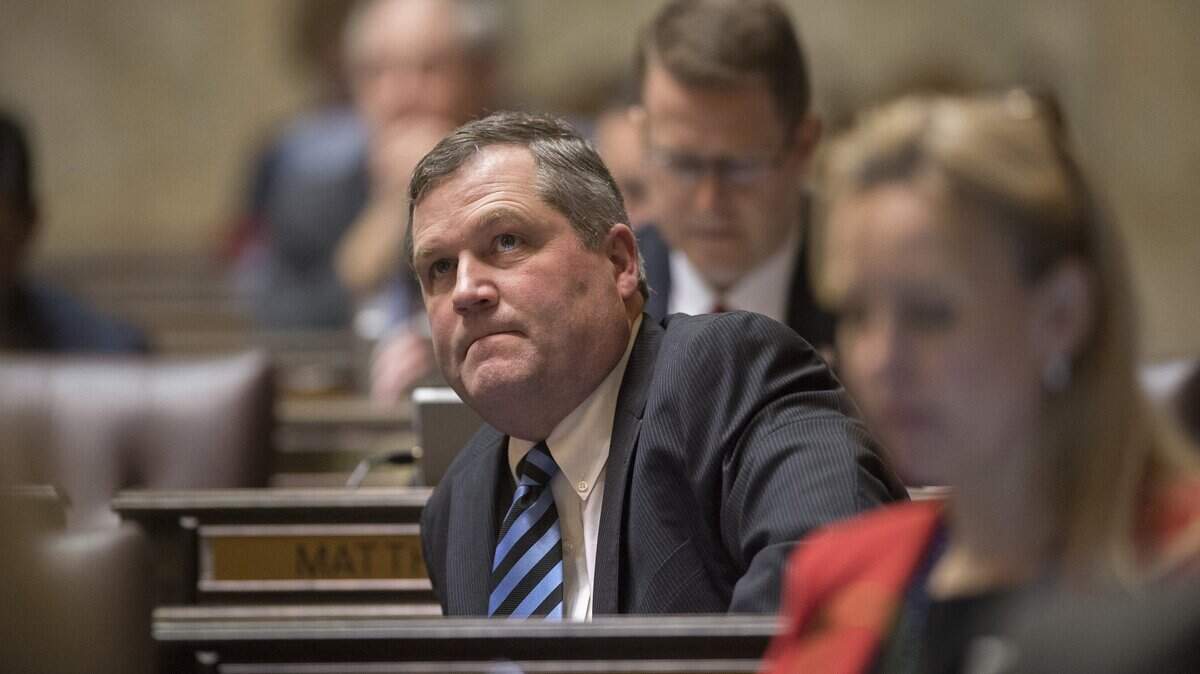
Republican legislators on Tuesday took aim at the Democrats’ budget proposals, saying the party that controls the House and Senate is risking budget cuts when the next economic downturn strikes.
“There’s a real danger of coming to a crashing halt in the future, either near or far, because we know the kind of budget growth that we are going to be seeing is not going to be sustainable,” said House Republican Leader J.T. Wilcox of Yelm.
On Monday, House and Senate Democrats released their proposed supplemental budgets, which make changes to the two-year spending plan that ends June 30, 2021. House Democrats would increase spending by $1.2 billion to $53.7 billion. Senate Democrats propose new spending of nearly $1 billion, to $53.6 billion.
Democrats stressed that their operating budget proposals do not rely on new taxes or fund transfers. Legislative leaders said spending is focused on needs that have emerged in battling homelessness and providing affordable housing, affordability of child care, and health care access. Even with the spending, the “rainy-day” fund is projected to total $2.2 billion in the House Democrat plan; $2.9 billion in the Senate Democrat budget.
House Republicans are pushing for a nearly $1 billion tax cut for the state’s residents over four years. State Rep. Drew Stokesbary, R-Auburn, said the House Transportation Committee has scheduled a public hearing Saturday on the tax cut bill, HB 2946.
The bill would cap car tabs at $30, and eliminate the sales taxes on prepared food items sold at grocery stores and personal necessities like feminine hygiene products, breast pumps, and diapers.
State Sen. John Braun, R-Centralia, said the spending increase in the two-year operating budget will reach 20 percent under the Democrats’ budgets.
“Our colleagues on the other side of the aisle in the Senate talk about ‘putting people first.’ I always say this is about ‘putting government first,’ “ Braun said. “We are growing the state government at twice the rate of people’s personal income. That’s just wrong. We shouldn’t do that.
“We should look for a way to acknowledge their vote on car tabs, look for other ways to give them tax relief and instead, we spent lots of money,” he said.
Braun acknowledged there are “some good things” in the budget that the Senate Democrats have proposed, including shoring up funding for behavioral health organizations over four years.
State Sen. Randi Becker, R-Olympia, said when she began to serve in the Senate in 2009, the state faced a $8.9 billion budget shortfall.
“My concern with the way the budget has been written and the way we are spending right now that, when we go into the next recession — which will happen at some point — we will do all of the same things that we did in my first year here, where we had to cut services. And who are we going to cut? It will be all of the people that we have given what I would consider false promises,” Becker said.
Speaking to reporters Tuesday, House Speaker Laurie Jinkins, D-Tacoma, said the House is expected to vote Friday on the operating budget.
“Our budget is so good that people are going to want to talk about a lot of the really great stuff that’s in that budget. I started here in the middle of the Great Recession, and all I have ever been part of really is either slashing services to people in this state or slowly, incredibly slowly adding small things back in.
“This is the first time since I’ve been here, this coming up budget year, when we’ve been able to make major investments in housing, major investments in child care and early learning, major investments in health care and addressing costs there,” Jinkins added.
This story was originally published February 26, 2020 at 5:45 AM.