
House Democrats’ $58 billion budget plan aims to balance out uneven economic recovery
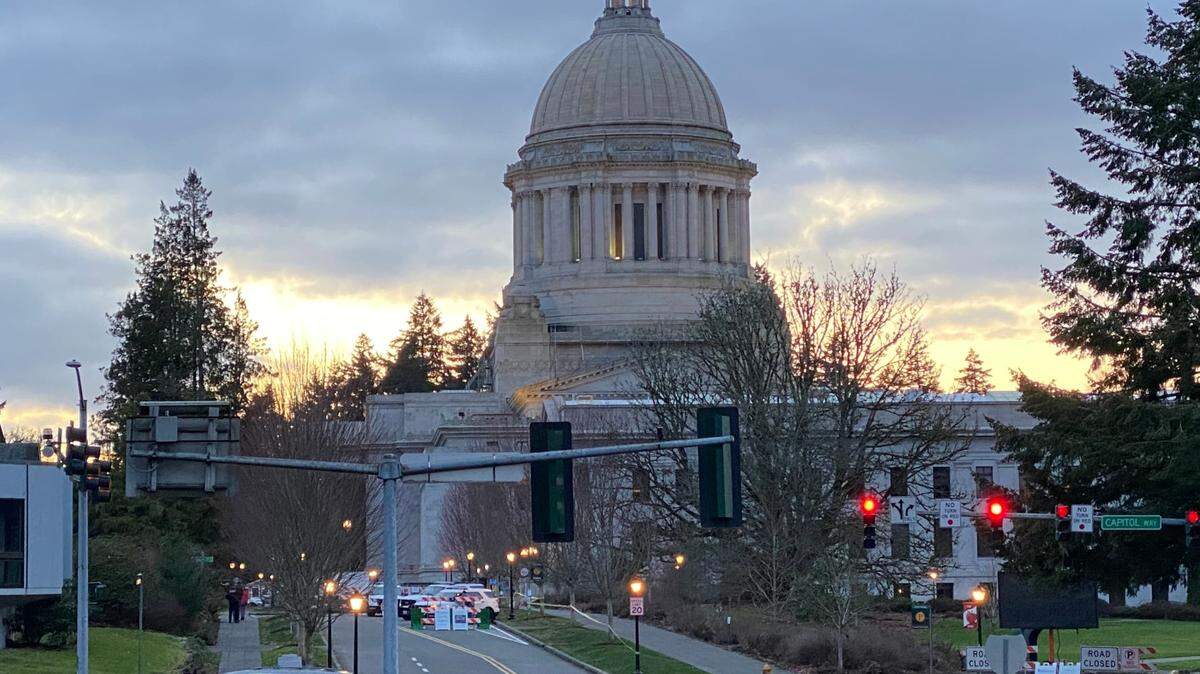
Majority Democrats in the Washington state House of Representatives proposed a roughly $58 billion two-year operating budget Friday, on the heels of a roughly $59 billion proposal issued Thursday by their Senate colleagues.
Both 2021-23 operating budget proposals include a 7 percent tax on capital gains over $250,000 and distribute billions of additional dollars in federal funding from the recently enacted American Rescue Plan Act.
The two chambers will negotiate a final plan as the 105-day legislative session approaches its scheduled end April 25.
“What we did with this budget, with those additional federal dollars and strategic state investments, is acknowledge that the economy is uneven — that some aren’t recovering like those that are doing very well,” said House Majority Leader Rep. Pat Sullivan in a briefing.
“And so we tried to push out money to the people who are most in need and work with trusted partners to ensure that every corner of the state got the resources necessary in order to recover.”
Both the House and Senate propose tapping the state’s “rainy day fund” for roughly $1.8 billion. The House plan sends that money into a new account for future use rather than spending it.
The intent is to free it from the constraints of the rainy day fund so the Legislature can be more nimble as it faces an uncertain future, according to Rep. Timm Ormsby, who chairs the House Appropriations Committee.
The Senate’s plan sets aside $2.3 billion in federal funding for future use, while the House holds onto $750 million.
Much of the federal stimulus money will head to predetermined destinations. However, the use of about $4.3 billion of the stimulus money is flexible, lawmakers say, and the House proposes using $2.2 billion of that flexible money in its operating budget while the Senate proposed using $500 million.
Ormsby said there hasn’t yet been time to unpack the differences in the two spending proposals. But he generally understands the Senate approach, he said, and thinks there are similarities that reflect “shared Democratic values.”
The House is particularly proud of its work on rental assistance and housing, behavioral health, and business assistance, he said.
Spending items in the House proposal include billions in federal funding for K-12 schools and COVID-19 vaccination and response efforts. There’s more than $1 billion for rental assistance that House lawmakers estimate could erase owed rent that has accumulated over the course of the pandemic.
“Our goal is to wipe the slate clean for landlords and tenants,” Rep. Nicole Macri said Friday.
Other big spending items in the budget include $600 million to offset unemployment insurance tax rate increases for businesses, $340 million for the Immigrant Relief Fund, $415 million to temporarily increase rates for long-term care providers and providers for people with developmental disabilities, and $204.7 million to temporarily expand eligibility for the Paid Family and Medical Leave program.
The plan also includes $125 million for forest health, money for K-12 schools to add five school days to the upcoming school year, and much more.
The capital gains tax in both plans would use some revenue to expand access to affordable childcare and some to a “Taxpayer Fairness Account” that could be used to fund the working families tax exemption.
The House passed a bill on a broadly bipartisan vote earlier this month that would expand that exemption, meant to offset sales taxes paid, and ensure it’s available to taxpayers for the first time since its creation in 2008.
Republicans vocally oppose the idea of a capital gains tax, in part arguing it’s an income tax and unconstitutional. Because state revenues have improved and the state has received an influx of federal funding, leaders in the minority party have called for no new taxes.
But Democrats emphasize a need to tip the balance of a tax system that requires low-income residents to pay a disproportionate amount of their income in taxes.
“While the revenue forecast is certainly positive for writing the budget, it’s important to acknowledge where that revenue is coming from,” Rep. Noel Frame of Seattle said.
“It is coming from working families. Families that, because of this pandemic, are often struggling to keep a roof over their head and food on the table. They are the ones responsible for this return of revenue, and that of course is because we have ... the nation’s most upside-down tax code.”
The Senate Democrats’ operating budget bill had a public hearing Friday, and the House Democrats’ bill has a hearing scheduled in the House Appropriations Committee Saturday morning.
This story was originally published March 26, 2021 at 6:16 PM.
.jpg)