Tacoma Fire says it needs more money to handle rising EMS calls. Voters will decide
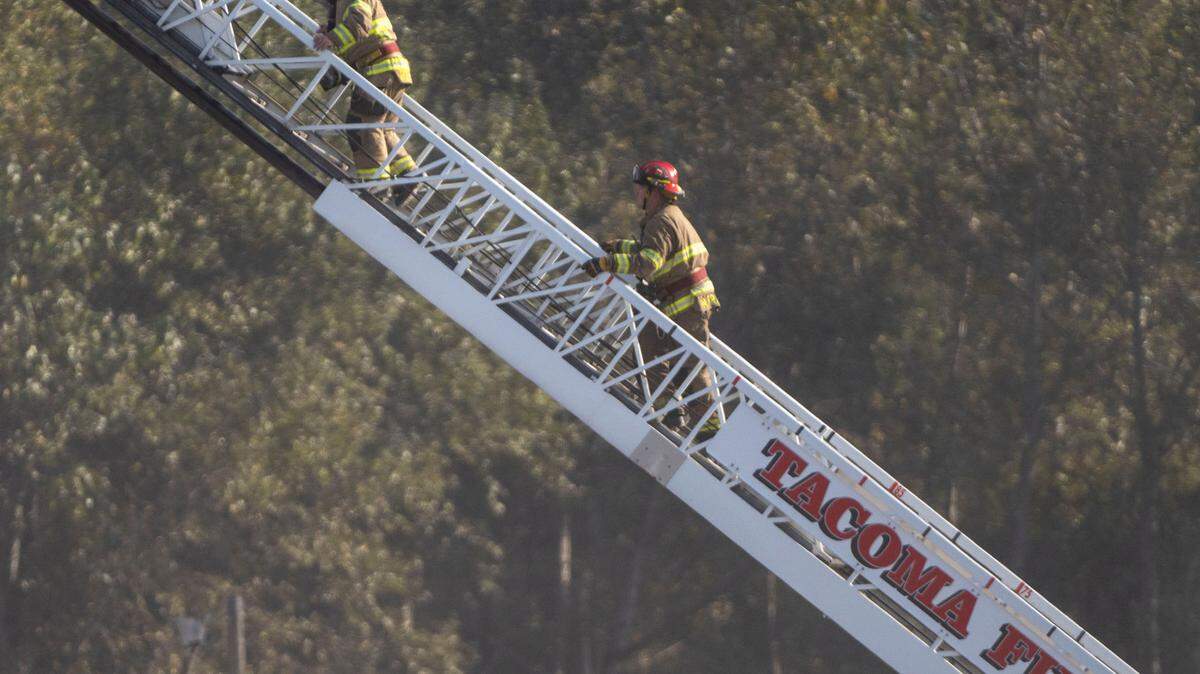
Voters will decide Aug. 1 whether to increase the levy lid for the Tacoma Fire Department and Emergency Medical Service.
The last time the levy was increased was in 2006. Since then, the rate has dropped, despite higher call volumes and more demand for services, which has put a strain on the department, Fire Chief Tory Green said.
An opponent of the levy increase said additional property taxes have put an undue burden on residents and landlords.
EMS accounts for 80% of all emergency calls in the city. A majority of the emergency medical services budget is funded by the city’s general fund, which is used to support fire suppression services and fire code inspections. Additional grants and the voter-approved EMS levy supplements the EMS budget as well, Green said. As of 2022, the fire department’s total budget was $245 million.
Over time levy rates may fall as property value rises. Voters last approved an EMS levy at $0.50 per $1,000 of assessed property value in 2006, and since then the rate has dropped to $0.28 per $1,000.
The Tacoma City Council unanimously approved the EMS levy lid lift to appear on the August ballot, which means voters can choose to return to the EMS levy of $0.50 per $1,000 and keep it at that rate for six years. The levy will also pay for charges incurred by qualified city residents for all Tacoma Fire Department hospital transports.
Restoring the property tax levy rate to $0.50 per $1,000 in assessed value would add about $9 million to the annual EMS budget, allowing the department to hire additional firefighters and EMS units to reduce response times and increase capacity city-wide, as well as fund Basic Life Support transport costs, Green said.
The owner of an average property (defined as $493,000 in assessed value) would pay an additional $9.04 per month in 2024 compared to 2023, according to the city. The total annual cost for the same property is $246.50 per year for continued 24-hour emergency medical service, according to the city.
More calls, fewer resources strains fire staff
The current demand on the fire department “is exceeding the resources we have,” Green said. “We’re at a critical point where we’re really struggling to get to people in a period of time that’s actually going to save lives.”
According to a community risk assessment study published in April on the Tacoma Fire Department, the time it takes first responders to arrive on the site of an emergency has increased in recent years. In 2018, the response time for crews department-wide to arrive on site after an emergency call averaged 7 minutes. In 2022 that response time was 7 minutes and 45 seconds, on average. For most urban jurisdictions, a 4-minute travel time 90% of the time is considered best practice for positive outcomes, “significantly slower” than how the Tacoma Fire Department currently operates, according to the study.
In 2006, the department received about 28,500 EMS calls. In 2023, that volume had risen to 40,500, a 42 percent increase, said Joe Meinecke, the department’s public information officer. Population growth was a main driver of the call volume increase, Meinecke said.
In 2006 there were 402 budgeted commissioned firefighters and 35 non-commissioned support staff on the force. In 2023 the department has 451 budgeted commission firefighters and 60 non-commissioned support staff, Meinecke said.
The department began providing basic life support transport in 2021 instead of using private ambulances. As a result of a new federal Medicaid program, which reimburses public agencies between 50-90% of expenses related to the transportation of Medicaid patients, 45 commissioned firefighters and 15 non-commissioned positions were added to the budget, paid for through the Ground Emergency Medical Transport, Meinecke said.
“80% of our work is emergency medical services. The ability for us to show up when someone has a heart attack or stroke or a car accident is dependent upon our resources and their availability,” Green said. “As the call volume continues to increase – and it does every year – just like pay for firefighters goes up, just like costs for fire engines, ambulances goes up, … when we don’t have enough money to pay for those things, that means that we’re doing more work with not enough resources.”
Green said a lack of resources and funding can make life-threatening situations worse.
“In very practical terms, when someone calls 911 for a heart attack, you may not get the fire engine that’s supposed to be closest to you. You may get the fire engine that’s the next fire response area away from you because the fire agent in your neighborhood is already on the call,” he said. “The longer it takes for someone to get to your emergency, the less likely you are to do well.”
If the levy is approved, Green said the fire department would be able to put three additional rapid first responder units on the street. Meinecke said first responder units are currently fire engines or fire trucks staffed with three firefighters/EMTs. The rapid-response squad vehicles outfitted with equipment cost about $150,000 each, Meinecke said.
“If approved, the EMS Levy Lid Lift would allow us to add three rapid response squad units (small trucks staffed with two firefighter/EMTs) to our first response deployment, reducing the current workload on existing emergency response resources (engines and ladder trucks) and helping improve response times to those calling for emergencies,” Meinecke said in an email Friday. “We will also add one full-time and one peak-time ambulance to our secondary response deployment.”
Green said these additions would reduce response times and improve residents’ outcomes in the event of an emergency.
Additional language in the levy would also ensure Tacoma residents would not have to pay out of pocket costs for any ambulance transport within city limits, which can be a significant financial liability for residents, Green said.
“A basic life support transport bill can be $1,000,” Green said. “That’s a significant financial liability for something that you really don’t have a whole lot of control over. Once you call 911, the ball rolls and the machine moves you to a hospital and then you get a bill. Having this levy approved and having the ability to write the language in a way that covers all of that would mean that people in Tacoma would not have to worry about that.”
In emergency situations, time is essential, Green said. A fire’s size doubles every minute, and in the case of heart attacks and strokes, if oxygen doesn’t reach the brain in four to six minutes it could result in permanent brain damage, he said.
Currently the department is averaging a six to eight minute response time from receiving a 911 call to being on site, Green said.
“Thinking about the time it takes to recognize an emergency, call, all those things – you’re using up most of that time … and then you add into it the fact that the engine that’s supposed to be closest to you is already on a call, because we’re so busy in our system – the time to actually make a difference is diminished,” Green said. “We are already at that point. So, it’s really a question of whether the community is really willing to take on that kind of a risk or not.”
Firefighters are feeling the strain of demand first-hand, and lack of resources is perpetuating trauma, Green said. Last year the Tacoma Fire Department released a documentary film about PTSD in the fire service amid an unprecedented call volume increase called “The Call We Carry,” available to watch for free on YouTube.
“Firefighters see things that most people never have to see in their life. And they live with that for the rest of their lives. And they go on call after call after call and see that. And the more calls you go on, the more psychological damage that does,” Green said. “One of the leading cause of death for firefighters is suicide … the more calls you go on, the more predisposed you become to serious issues like PTSD.”
Idea of more taxes weighs on residents
Tacoma resident Donna Walters told The News Tribune she sympathizes with the issues the fire department is facing, but said the burden on property owners and citizens to continue paying additional taxes is heavy.
Walters said she was the sole person who applied to be a member of the committee opposed to the tax levy. As a landlord who tries to keep rents lower than market rate to help her tenants, Walters said she has had to increase rent to keep up with the number of taxes and fees that are adding up.
“I just was shocked they just want to enact another tax … it never goes away,” Walters said. “They shouldn’t be asking the property owners to pay for every ill of our city. It’s on our shoulders and it’s getting heavier, the burden is getting heavy.”
She said $9 a month doesn’t seem like a lot, but if “you start on top of everything else that we’re paying for … the change adds up.”
Walters said she supports EMS workers, but doesn’t believe taxpayer funds are being used properly to address homelessness when that funding could be used to support EMS services. In addition, Walters said she believes voting yes on proposition one will increase rent, increase homelessness and increase crime, which will in turn increase EMS calls.
On the City of Tacoma’s informational web page about the EMS levy lid lift, the city cites many factors as the reason for the increase in call volume, including population growth, increasing lack of access to health care and mental health services in the community and the inability to hire additional first responders.
“Those experiencing homeless[ness] also experience many of the same health conditions as their housed counterparts, but in extreme conditions and with fewer resources, resulting in a heavy reliance upon emergency services,” according to the city.