
‘I can’t imagine living without guns.’ For some, dementia is forcing that choice
With a bullet in her gut, her voice choked with pain, Dee Hill pleaded with the 911 dispatcher for help. “My husband accidentally shot me,” Hill, 75, of The Dalles, Oregon, groaned on the May 16, 2015, call. “In the stomach, and he can’t talk, please …”
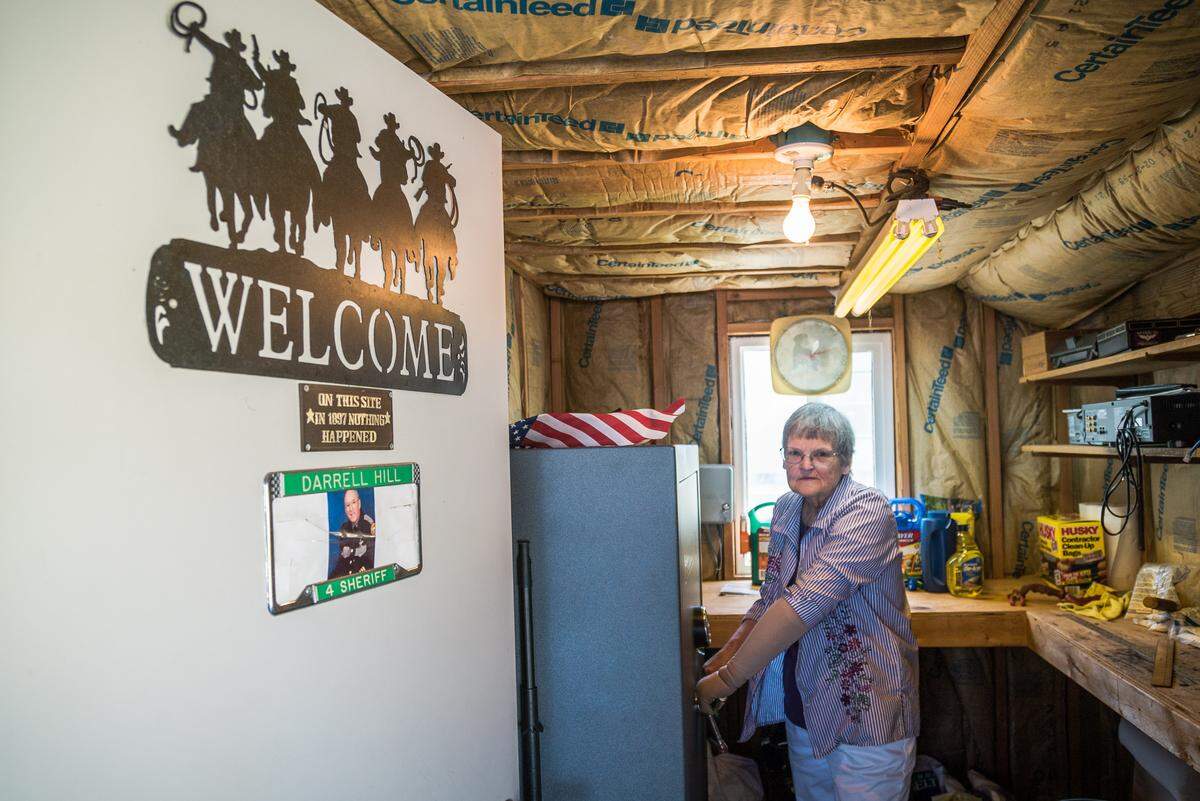
Less than 4 feet away, Hill’s husband, Darrell Hill, a former local police chief and two-term county sheriff, sat in his wheelchair with a discharged Glock handgun on the table in front of him, unaware he’d nearly killed his wife of almost 57 years.
The 76-year-old lawman had been diagnosed two years earlier with a form of rapidly progressive dementia, a disease that quickly stripped him of reasoning and memory.
“He didn’t understand,” said Dee, who needed 30 pints of blood, three surgeries and seven weeks in the hospital to survive her injuries.
As America copes with an epidemic of gun violence that kills 96 people each day, there has been vigorous debate about how to prevent people with mental illness from acquiring weapons.
But a little-known problem is what to do about the vast cache of firearms in the homes of aging Americans with impaired or declining mental faculties.
In Washington, an analysis of government-survey data found about 5 percent of respondents 65 and older reported both some cognitive decline and having firearms in their home. The assessment, conducted for Kaiser Health News by a state epidemiologist, suggests about 54,000 of the state’s more than 1 million residents 65 and older say they have worsening memory and confusion — and access to weapons.
About 1.4 percent of those respondents 65 and older — representing about 15,000 people — reported both cognitive decline and that they stored their guns unlocked and loaded, according to data from the state’s 2016 Behavioral Risk Factor Surveillance System survey.
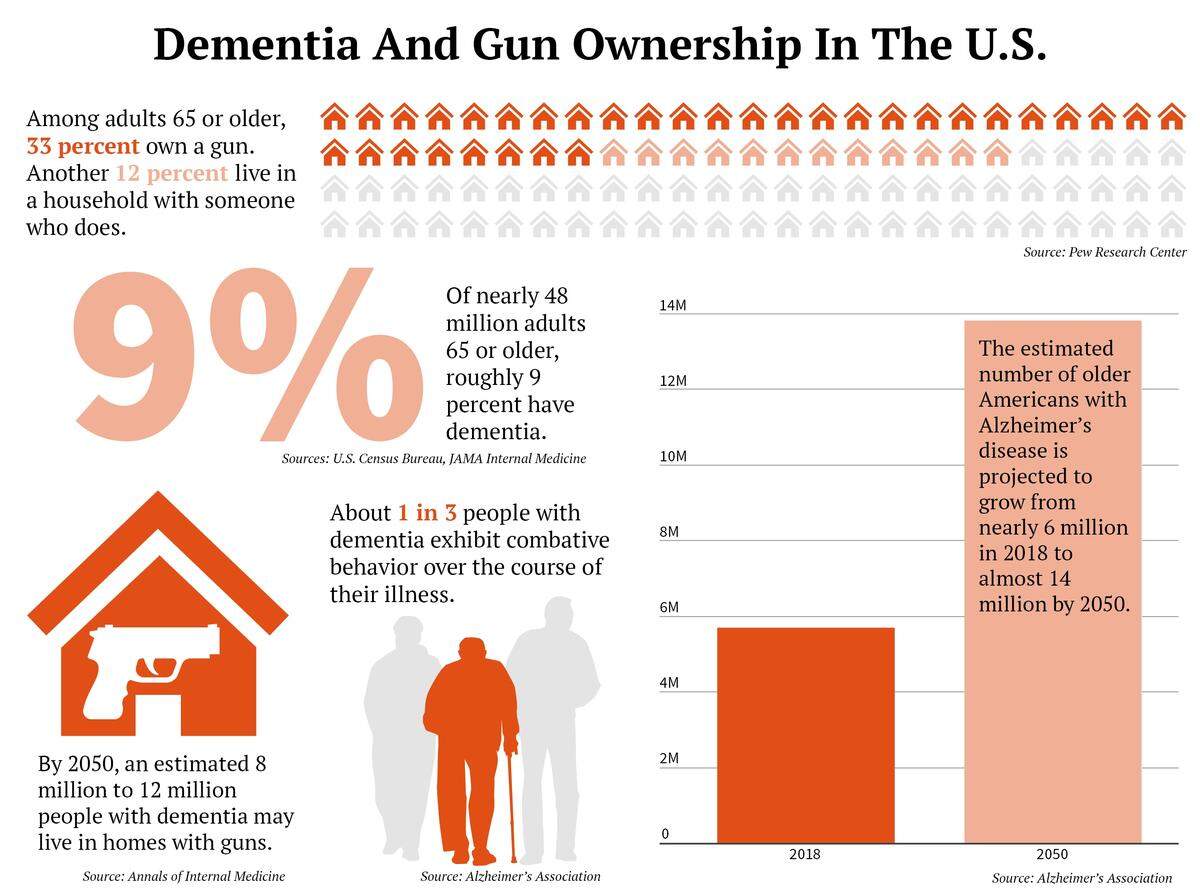
Nationwide, an estimated 9 percent of Americans 65 and older are diagnosed with dementia, a group of terminal diseases marked by mental decline and personality changes. Many are gun owners and supporters of Second Amendment rights. Forty-five percent of people 65 and older have guns in their household, according to a 2017 Pew Research Center survey.
But no one tracks the potentially deadly intersection of those groups.
A four-month Kaiser Health News investigation has uncovered more than 100 cases across the United States in which people with dementia used guns to kill or injure themselves or others.
From news reports, court records, hospital data and public death records, the investigation found 15 homicides and more than 95 suicides since 2012, although there are likely many more. The shooters often acted during bouts of confusion, paranoia, delusion or aggression — common symptoms of dementia.
They killed people closest to them — their caretaker, wife, son or daughter. They shot at people they happened to encounter — a postal worker, a police officer, a train conductor. At least four men with dementia who brandished guns were fatally shot by police. In cases where charges were brought, many assailants were deemed incompetent to stand trial.
Many killed themselves. Among men in the United States, the suicide rate is highest among those 65 and older; firearms are the most common method, according to the Centers for Disease Control and Prevention.
These statistics do not begin to tally incidents in which a person with dementia waves a gun at an unsuspecting neighbor or a terrified home health aide.
In a politically polarized nation, where gun control is a divisive topic, even raising concerns about the safety of cognitively impaired gun owners and their families is controversial.
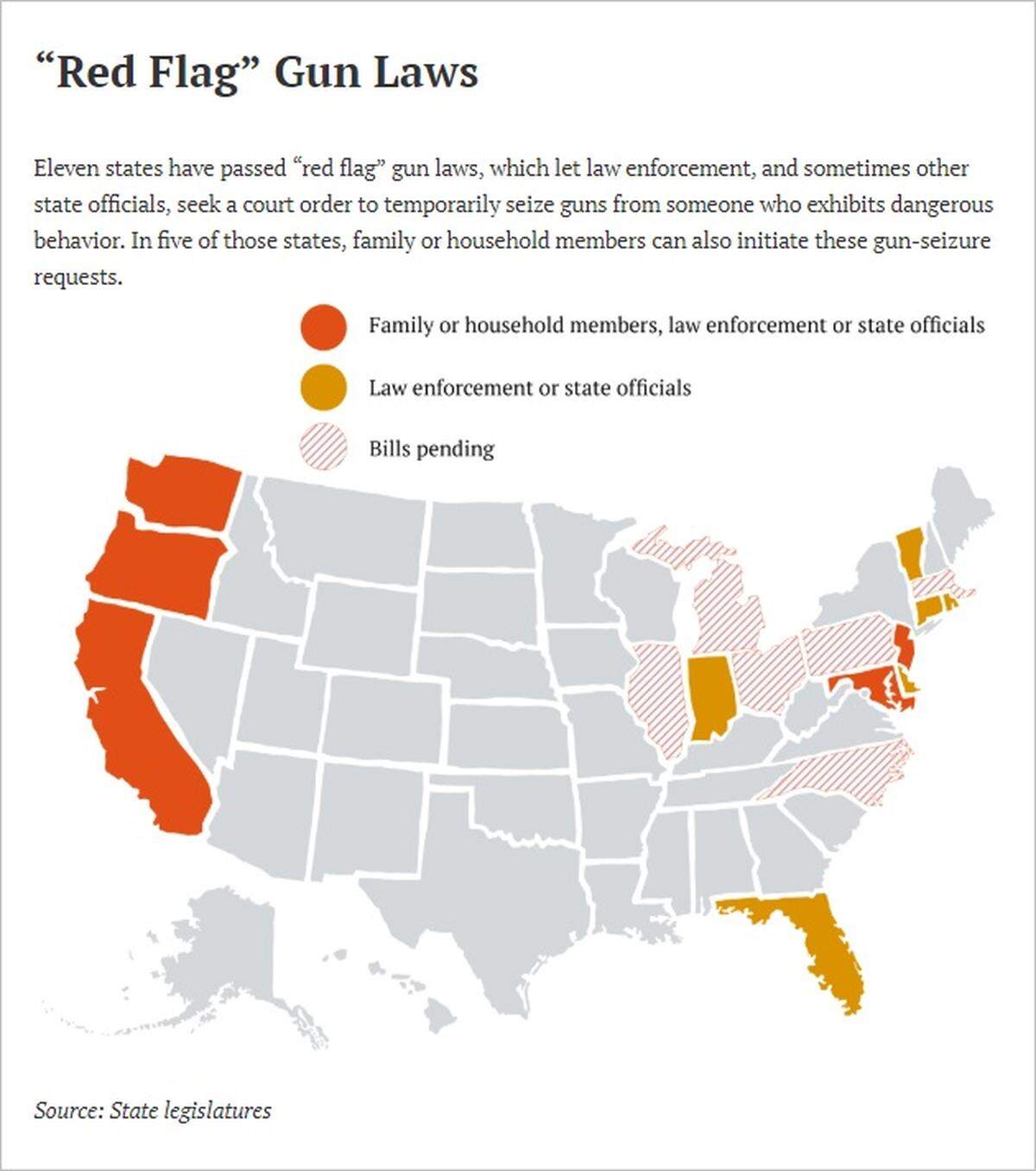
Relatives can take away car keys far easier than removing a firearm, the latter protected by the Second Amendment. Only five states have laws allowing families to petition a court to temporarily seize weapons from people who exhibit dangerous behavior.
But in a country where 10,000 people a day turn 65, the potential for harm is growing, said Dr. Emmy Betz, associate research director at the University of Colorado School of Medicine, a leading researcher on gun access and violence. Even as rates of dementia fall, the sheer number of older people is soaring, and the number of dementia cases is expected to soar as well.
By 2050, the number of people with dementia who live in U.S. homes with guns could reach between roughly 8 million and 12 million, according to a May study by Betz and her colleagues.
No intent to harm
Dee Hill had ignored her husband’s demands and sold his car when it became too dangerous for him to drive. Guns were another matter.
“He was just almost obsessive about seeing his guns,” she said of Darrell, who died in 2016.
He worried that the weapons were dirty, that they weren’t being maintained. Though she’d locked them in a vault in the carport, she relented after Darrell had asked, repeatedly, to check on the guns he’d carried every day of his nearly 50-year law-enforcement career.
She intended to briefly show him two of his six firearms, the Glock handgun and a Smith & Wesson .357 Magnum revolver. But after he saw the weapons, Darrell accidentally knocked the empty pouch that had held the revolver to the floor. When Dee bent to pick it up, he somehow grabbed the Glock and fired.
An investigation classified the incident as an assault and referred it to Wasco County District Attorney Eric Nisley, who concluded it was “a conscious act” to pick up the gun, but that Darrell didn’t intend to harm his wife.
“I evaluated it as if a 5- or 6-year-old would pick up the gun and shoot someone,” Nisley said.
Dee was outraged at the suggestion she consider pressing charges.
“I didn’t want anyone to think it was intentional,” she said. “Nobody would have believed it anyway.”
‘I can’t imagine living without guns’
Proponents of gun ownership say guns are not to blame for shootings involving those with dementia.
The National Rifle Association (NRA) declined to comment for this story.
Dr. Arthur Przebinda, who represents the group Doctors for Responsible Gun Ownership, said researchers raising the issue want to curtail gun rights guaranteed by the U.S. Constitution, and are “seeking ways to disarm as many people as possible.”
“I’m not disputing the case that it happens. I know it can happen,” Przebinda said. “My question is how prevalent it is, because the data is what should be driving our policy discussion, not fear or fearmongering.”
Two decades of NRA-backed political pressure that quashed public-health research into the effects of gun violence partly explain the lack of data, experts said. But that doesn’t mean there’s no problem, said Dr. Garen Wintemute, director of the Violence Prevention Research Program at the University of California, Davis.
“[Critics] are arguing as if what we have is evidence of absence,” he said. “We have something quite different, which is absence of evidence.”
Even some families grappling with the problem are wary about calls to limit gun access.
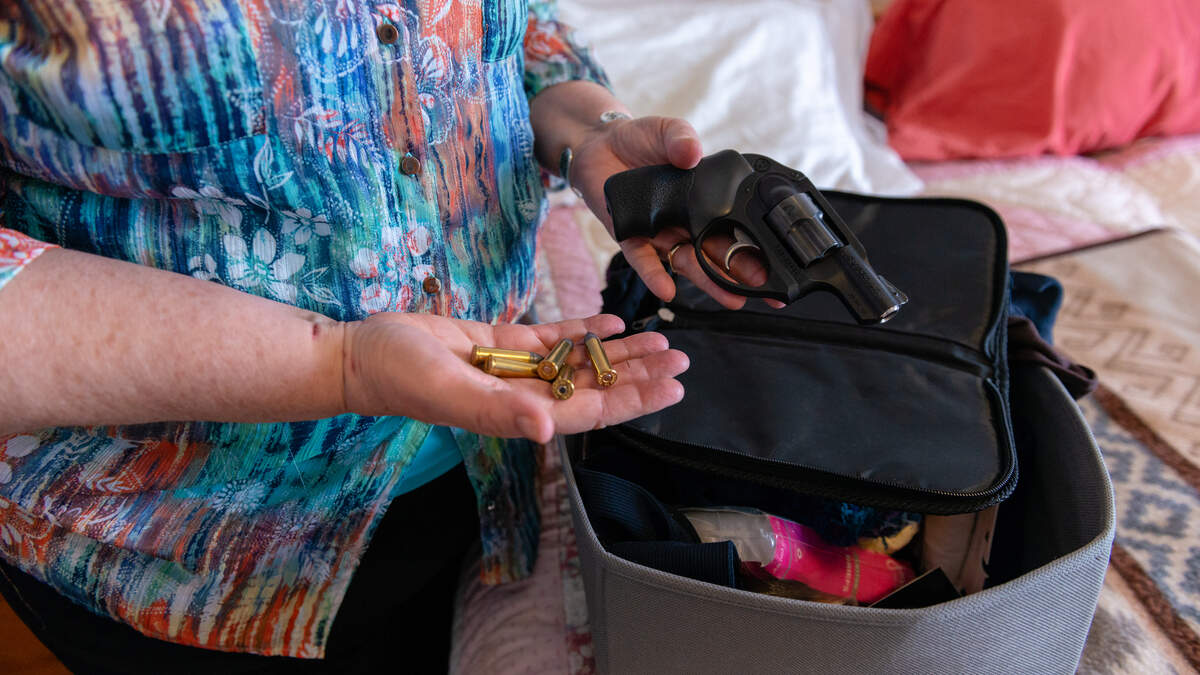
“I hope your intent is not to ‘bash’ us for our beliefs and actions with guns,” said Vergie “Verg” Scroughams, 63, of Rexburg, Idaho, who showed how she hid a loaded gun from her husband, who developed dementia after a stroke in 2009.
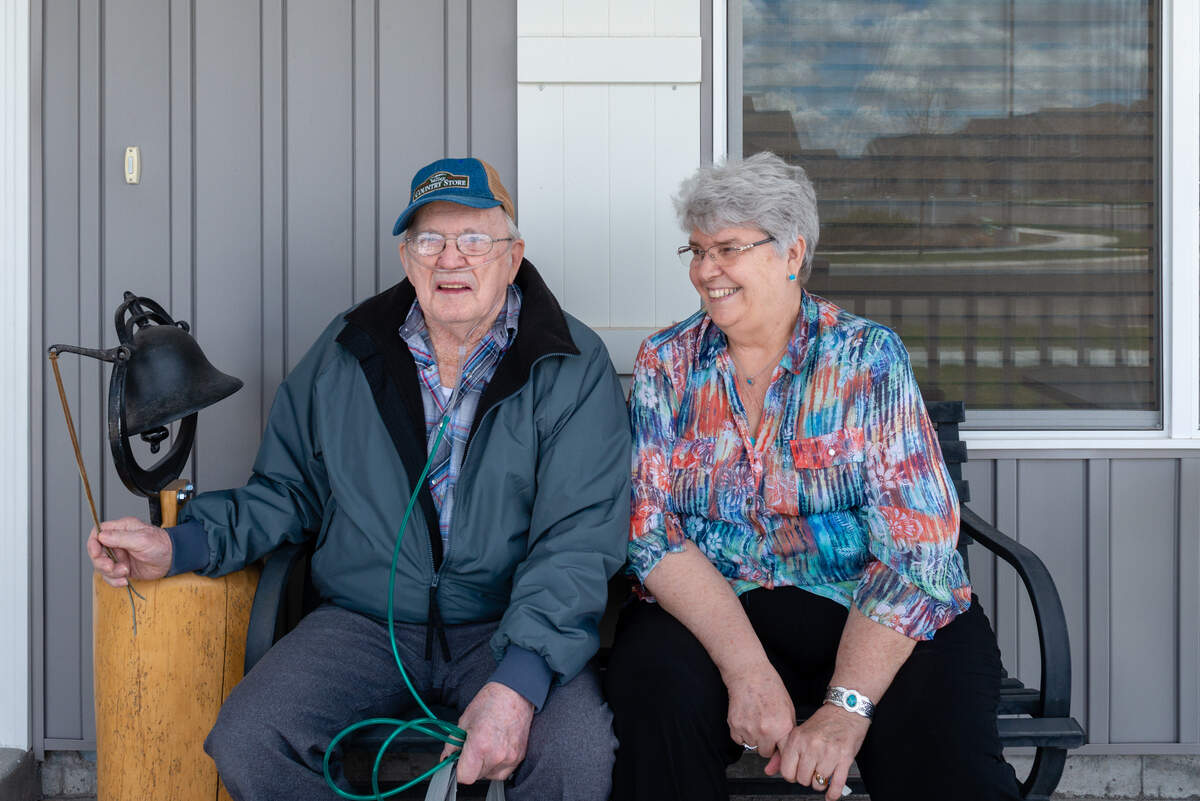
Verg became worried after Delmar Scroughams, 83, grew angry and erratic this year, waking up in the night and threatening to hit her. It was out of character for the former contractor who previously built million-dollar Idaho vacation homes for families of politicians and celebrities.
“In 45 years of marriage, we’ve never had a big fight,” she said. “We respect each other and we don’t argue. That’s not my Delmar.”
Six months ago, Verg took the loaded .38-caliber Ruger from a drawer near Delmar’s living-room recliner, removed the bullets and tucked it under socks in a box on a high shelf in her closet.
“He’ll never look there,” she said.
She doesn’t want Delmar to have access to that gun ― or to his collection of six shotguns locked in the bedroom cabinet. But Verg, a real-estate agent who shows homes in remote locations, doesn’t want to give up the weapons she counts on for comfort and protection. She carries her own handgun in her car.
“We live in Idaho. Guns have been a big part of our lives,” said Verg, who got her first rifle at age 12 and recalls hunting trips with her two sons among her fondest memories. “I can’t imagine living without guns.”
Guns under the pillows
Federal law prohibits people who are not mentally competent to make their own decisions, including those with advanced dementia, from buying or owning firearms.
But a diagnosis of dementia does not disqualify someone from owning a gun, said Lindsay Nichols, federal policy director at the Giffords Law Center to Prevent Gun Violence. If a gun owner were reluctant to give up his arsenal, his family typically would have to take him to court to evaluate competency.
Since the school shooting in Parkland, Florida, in February, more states are taking action to make it easier for families ― including those with a loved one with dementia ― to remove guns from the home.
Eleven states, including Washington, have passed “red flag” gun laws that allow law enforcement or other state officials, and sometimes family members, to seek a court order to temporarily seize guns from people who pose a threat to themselves or others.
Red-flag bills have proliferated across the country since the Parkland shooting; six were passed this year and six more are pending.
In Connecticut, which in 1999 enacted the nation’s first red-flag law, police used the measure to seize guns from five people reported to have dementia in 2017, according to a KHN records review.
Last summer, an 84-year-old man with dementia alarmed his neighbors at a senior-living community in Simsbury, Connecticut, by announcing that he had a gun and planned to shoot a bear. The man later reported that his .38-caliber Colt revolver was missing; police found it, loaded, in the console of his car. Police got a court order to seize that gun and a rifle he had in his closet.
In December, police seized 26 guns from the Manchester, Connecticut, home of a 77-year-old man with dementia who was threatening to kill his wife. She told police that he was a danger to himself, and that his threats were “normal baseline behavior.”
Guilt, denial and false belief In the Appalachian Mountains of West Virginia, Malissa Helmandollar, a 46-year-old assistant in an optometrist’s office, regrets not taking her father’s guns away.
Her dad, Larry Dillon, loved to hunt. Even after a coal-mining accident left him paralyzed from the waist down at age 21, Dillon would shoot turkey, squirrel and deer from the seat of his four-wheeler. For as long as she could remember, her father kept a gun under the cushion of his wheelchair.
“He felt he couldn’t take care of us, or himself, without it,” she said.
In June 2017, when her father was 65, she began to notice strange behavior.
“He would see people crawling out of the washing machine,” she said. He forgot how to tell time. Sometimes he would just stare at his dinner plate “like he didn’t know what to do.”
Every night for weeks, Dillon grew scared that people were trying to break in and burn his house down, Helmandollar said. Dillon slept with a 9mm semiautomatic Glock pistol at his nightstand in the double-wide mobile home he shared with his wife, Sandy, in Princeton, West Virginia.
Helmandollar made him an appointment with a neurologist, but he never made it to the doctor.
Five days before his appointment, on July 6, 2017, Helmandollar’s 9-year-old daughter was sleeping over at her Mamaw and Papaw’s house, as she loved to do. That evening, Helmandollar got a frantic call from her daughter.
Helmandollar sped to the house with her son. She found her stepmother, Sandy, dead in an armchair with several bullet wounds. Helmandollar heard her father tell police that he saw intruders breaking in to the house, so he grabbed his Glock and started shooting in the bedroom where his wife and granddaughter were watching TV.
But there had been no intruders that night. Dillon, who was deemed incompetent to stand trial for murder, was diagnosed with Lewy body dementia, a disease whose early symptoms can include vivid visual hallucinations.
Helmandollar said her father never understood what he had done. Before he died in April, he kept asking Helmandollar why his wife never visited him. She could never bring herself to tell him.
Meanwhile, Helmandollar’s daughter and 18-year-old son are in counseling for the trauma they experienced.
“It crossed my mind that maybe I should’ve taken the guns, and I didn’t,” Helmandollar said. “It’ll be a guilt that I’ll never ever get away from.”
‘These conversations that need to take place never take place until it’s too late’
Belated diagnoses of dementia are too common, said Dr. Melissa Henston, a geriatric psychologist in Denver who administers cognitive exams that can confirm impairment. She said many of the patients she sees have moderate or even severe dementia before being diagnosed.
“There’s denial and a false belief that a lot of cognitive problems are just normal for age,” she said. “These conversations that need to take place never take place until it’s too late.”
For Alzheimer’s disease and other dementias, there are limited treatments and no cure. About one-third of people with the disease become combative during the course of their illness, according to the Alzheimer’s Association. And more than 20 percent who develop dementia become violent toward their caretakers, a 2014 study showed.
Advocates have long warned patients and families about the potential risk of guns, said Beth Kallmyer, the Alzheimer’s Association vice president of care and support.
“The reality is, there’s no way to know who’s at risk for becoming agitated or even violent,” she said.
Removing guns from the home is the best way to prevent violence, the Alzheimer’s Association and other experts advise. But Dr. Diana Kerwin, director of the Texas Alzheimer’s and Memory Disorders program at Texas Health Dallas, said that’s not the answer for all families.
“I don’t do a blanket ‘guns are bad, you can’t have guns in the home,’ ” she said.
Instead, she advocates storing guns safely — locked up, unloaded, with the ammunition kept separate from the guns. Firearms can also be disabled or, in some cases, replaced with a decoy, although that raises the risk of them being mistaken for a real weapon in an emergency.
Giving up the guns
For families grappling with these decisions, one option is to establish a “gun trust” that outlines how the weapons will pass to family members once a person becomes incapacitated or dies.
These trusts might make it easier for people who must give up firearms to move into a nursing home, for instance, said David Goldman, an estate-planning lawyer in Jacksonville, Florida, who said he has drawn up more than 20,000 gun trusts. The process works best when the gun owner complies, but “they rarely want to give up their guns,” Goldman said.
Another obstacle is that gun trusts must be drawn up before dementia becomes too advanced.
Ideally, families should discuss firearm access soon after a diagnosis of dementia and consider setting a “firearm retirement date,” akin to an advance directive for guns, Betz and colleagues advise. It’s similar to discussions about taking away the car keys when driving becomes dangerous, she said.
“One of the tricky things is, for driving, there are some assessments you can do,” Betz said. “They’re not perfect, but they’re helpful. There isn’t anything for firearms.”
Doctors who routinely ask dementia patients about driving should also ask about guns, Wintemute said. Too often, though, they don’t.
“Docs say: ‘I don’t know enough about the risks and benefits, I don’t have the time,’ ” Wintemute, with the University of California violence-prevention program, said. “Only about one-third do it with any frequency.”
Critics of gun restrictions argue that the essential difference between driving and guns is that one is a privilege and the other is a protected constitutional right.
“The two are not the same,” Przebinda said. “You do not have a right to conveyance. You have a right to self-defense, you have a right to protecting your home and your family that’s intrinsic to you as a human being.”
He balks at any formal assessment of firearm use among people with dementia, saying it could lead to “a totalitarian system that decides when you can have rights and when you cannot.”
Instead, the decision should be left to families, Przebinda said.
“People who own guns know what measures are available to them,” he said.
Even that knowledge, however, might not be enough. Dee Hill of Oregon said it was “strictly an accident” that her husband, the retired sheriff, shot and critically wounded her. To this day, she doesn’t regret showing him the guns.
“That sounds stupid, but, no, I don’t,” she said. “He spent … almost 50 years in law enforcement and a gun was always with him, and so to deprive him of not even seeing them, in my heart of hearts, I couldn’t deny him.”
Kaiser Health News is a national health-policy news service. It is an editorially independent program of the Henry J. Kaiser Family Foundation which is not affiliated with Kaiser Permanente.
This story was originally published July 21, 2018 at 2:33 PM with the headline "‘I can’t imagine living without guns.’ For some, dementia is forcing that choice."