
Here’s one thing COVID-19 hasn’t shut down: the state’s move to greener ferries
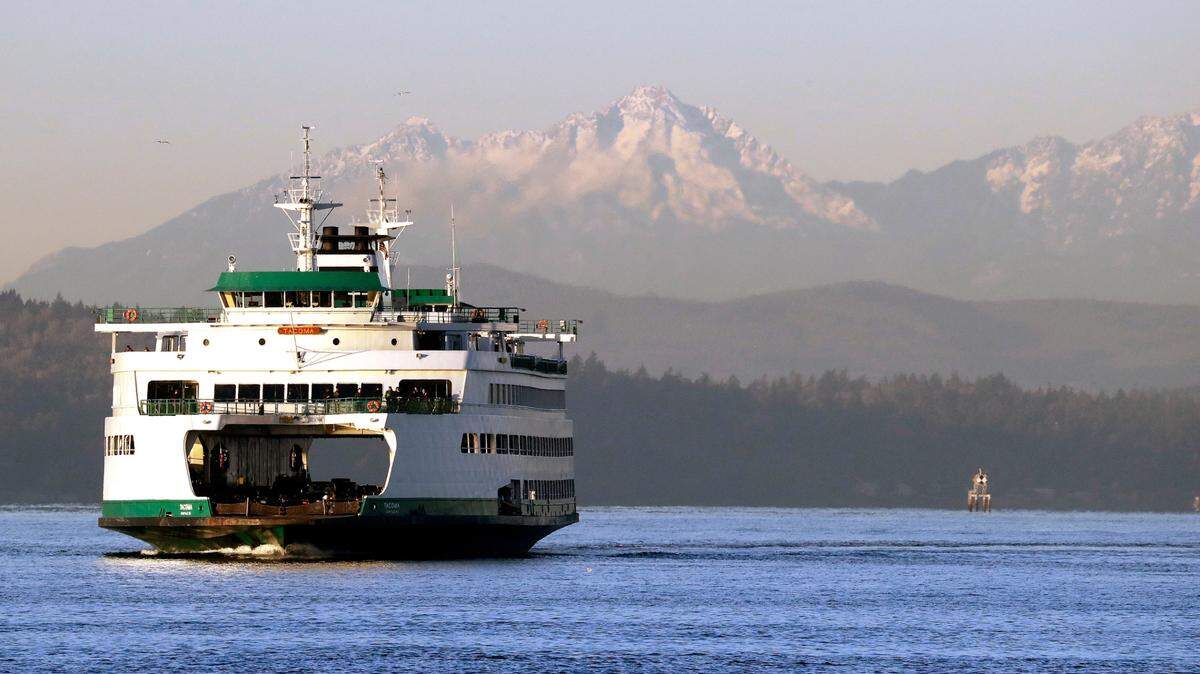
COVID-19 hasn’t shut down the state’s efforts to modernize its ferry fleet.
Washington State Ferries plans to add five new fully electric Olympic-class ferries as well as install new hybrid-electric propulsion systems on the three existing Jumbo Mark IIs. The projects to make the ferries more sustainable have seen minor or no delays due to COVID-19.
In September, WSF announced it had chosen Siemens to create the new hybrid-electric propulsion systems for the Jumbo Mark IIs. According to WSF, the design of the propulsion systems is supposed to be completed by this summer, with work beginning in October 2021 and concluding in March 2022.
Jane Walker, senior marketing communications manager at Siemens, said the project has not been delayed.
“The hybridization portion of the project to upgrade the Wenatchee is still on track to start next year,” Walker told The News Tribune. “With both WSF and Siemens engineering teams working from home, there have been changes to the way the teams communicate, specifically shifting almost all in-person meetings to virtual ones.”
Walker said that despite working remotely, the teams have continued their work as planned.
Vigor, the Seattle-based company designing the five new Olympic-class ferries, also has been able to keep working.
According to Jill Mackie, senior vice president of public affairs at Vigor, the new ferries are in the design and engineering phase, and construction will not begin until summer 2021. Vigor recently announced that it chose ABB, a Swiss-Swedish engineering company, to make the hybrid-electric propulsion systems for the new Olympic-class ferries.
“In terms of there being a delay, I mean, yes, I would say minimal to slight delays,” Mackie said. “Washington State Ferries has a long-range plan, and in their long-range plan, they projected or hoped to have the first of the new five Olympic-class hybrid ferries come into service in 2023.”
Mackie said that the current expectation is that the new ferries will be ready for service by very late 2023 or early 2024.
“Our suppliers that are being specified during the design and engineering phase are complex domestic and global supply chains,” Mackie said. “And virtually all global businesses have had some impact during COVID.”
Since Vigor is an essential business, design and engineering have been able to continue through remote work.
Ferry service is a major polluter in Washington state.
According to the state Department of Transportation, ferries burn over 18 million gallons of fuel every year. As of 2013, all 22 ferries in service use a diesel blend with 5 percent biodiesel to reduce airborne particulates. The fuel blend does not address other types of air pollution. The ferries account for 74 percent of total greenhouse gas emissions from state-run transportation. Converting just one Jumbo Mark II ferry creates a reduction in emissions equivalent to removing 20 diesel trucks from service.
Dana Warr, deputy director of communications at WSF, said the first Olympic-class ferry will be assigned to the Mukilteo-Clinton route, and the second tentatively will run the Seattle-Bremerton route. All five ferries will be equipped to run the longest route, Seattle to Bremerton, since ferries often switch routes. Currently, WSF has four Olympic-class ferries in service: The Tokitae, Samish, Chimacum, and Suquamish, which launched between 2014 and 2018.
According to a press release from WSF, the three Jumbo Mark II ferries, the Tacoma, Puyallup and Wenatchee, were constructed in the 1990s. They currently serve the Seattle-Bainbridge Island and Edmonds-Kingston routes.
The ferries are projected to stay in use for the next 30 to 40 years, so WSF decided that converting the propulsion system was a fiscally viable and environmentally responsible option. The hybrid-electric upgrade will reduce total emissions from the fleet by 25 percent.
A press release from WSF said funding for the new propulsion system for the Jumbo Mark IIs consists of $35 million from the federal Volkswagen settlement, a $6.5 million Congestion Mitigation and Air Quality Improvement grant, and a $1.5 million MARAD Marine Highway Project Designation and grant award.
Mackie said $99 million was allocated by the state Legislature in 2019 for the five new ferries. That covers design and engineering, long lead items (materials that take a long time to design or make) for two of the five new ferries, and the beginning of construction of the first ferry.
Additional funding is needed to complete the first and subsequent ferries. Mackie said Vigor expects the Legislature to address the second round of funding in the January 2021 legislative session as part of a larger transportation package.
“This capital project should not be impacted. We expect it to proceed,” Mackie said.
She said Vigor will be staying updated on budget considerations, but since WSF will need to replace the propulsion systems on the ferries in the next few years to stay operational, she thinks the funding is unlikely to be an issue.
“This project is not providing new service of any sort,” Mackie said. “It’s allowing them to maintain and sustain service.”
This story was originally published June 23, 2020 at 12:00 PM.