
Energy secretary dedicates Richland site of $75M building to win ‘battery arms race’
The nation’s energy secretary was in Richland on Friday to dedicate the site of what will be Pacific Northwest National Laboratory’s newest state-of-the-art facility — a center for advancing storing energy in batteries at the electricity grid scale.
The yet-to-be-named facility will help the Department of Energy begin to scale up energy storage technology from the laboratory to the marketplace to increase domestic manufacturing, said Energy Secretary Dan Brouillette.
Having batteries that could store energy, not just for hours, but economically for days or weeks, would modernize the nation’s electric utility grid to make it more resilient, secure, reliant and flexible, according to PNNL.
The facility eventually could attract more research funding and jobs to PNNL, and supporters see the potential for also creating significant numbers of new jobs in Washington state as the facility helps research advance to a commercial use.
PNNL was picked by an independent review team a year ago as the site of the nation’s new facility for a project called the Grid Storage Launchpad.
Currently, cost effective ways are not available for storing energy for long periods of time, either because it is produced when demand is not needed or as a backup if delivering electricity on the grid is interrupted.
Construction on the $75 million building could begin as soon as late 2021, with an opening in 2023.
“Our administration is determined to lead the world in development, utilization and exportation of energy storage technologies and we’re going to do it through efforts such as this Grid Storage Launchpad facility,” Brouillette said.
The world is in a “battery’s arm race,” said Sen. Maria Cantwell, D-Wash., who sent videotaped remarks to the dedication event. “That is every country wants to create new clean energy jobs and they know the race to get battery storage right is well worth pursuing.”
“We’re talking about 10s of 1,000s of jobs eventually in the United States around energy storage,” Cantwell said. “I hope some of those will be right in the Tri-Cities.”
Construction start
PNNL was picked by an independent review team a year ago as the site of the nation’s new facility for a project called the Grid Storage Launchpad.
Several responses to a request for proposals for design and construction were received by a due date of Aug. 12, with plans to shorten the list and request more information by late fall.
Affordable energy storage could help ensure that electricity supplies can recover rapidly, whether the delivery of electricity on parts of the grid is disrupted by malicious tampering, severe weather or natural disasters.
Better energy storage technologies also could help bring significantly more renewable energy, such as intermittent wind or solar that is dependent on weather conditions, onto the grid.
The Grid Storage Launchpad facility would enable independent testing of the next generation of grid energy storage materials and systems under realistic grid operating conditions.
New technologies, from basic materials through prototype devices, could be validated under grid operating conditions and any improvements made before the technologies are scaled up for use by utilities.
The new facility also would help accelerate development of energy storage by using rigorous grid performance requirements to remove risk from new projects, according to PNNL.
And it would provide coordination across other DOE labs, academia and private entities to help solve cross-cutting challenges.
WA takes national lead
The new grid energy storage facility would be a key part of a larger enhanced energy project proposed by DOE, the Advanced Energy Storage Initiative.
It also will support the DOE’s Energy Storage Grand Challenge, new comprehensive program to accelerate the development, commercialization and utilization of next-generation energy storage technologies, the energy secretary said.
In addition to $75 million in federal funding, an additional $35 million worth of resources will be needed.
The state of Washington has committed $8.3 million from the Clean Energy Fund for the purchase of battery characterization instrumentation, and PNNL and Battelle will contribute to equipment and project costs.
Congress provided $5 million to begin planning and design work on the new building this fiscal year, and President Trump’s proposed budget for the coming fiscal year includes $40 million for the building.
Washington state’s Department of Commerce signed a memorandum of understanding with the DOE Office of Science on Friday to promote partnerships to advance grid energy storage technologies. The agreement also promotes sharing best practices with other states.
The state of Washington has a goal of reducing carbon emissions from electricity generation to zero by 2045, said Lisa Brown, the director of the state Department of Commerce.
“We also see clean energy as good business,” she said. “We have a long history of high tech manufacturing so we hope to develop and manufacture the technology right here in Washington state, here in central and eastern Washington, of course.”
The lessons learned, best practices and recommendations from Washington state will be shared with other states to advance the national grid modernization, Brouillette said.
Brouillette and other officials attending the dedication, including Reps. Dan Newhouse and Cathy McMorris Rodgers, both R-Wash., signed a poster that will hang in the new building.
They also signed the I-beam that will be visible when another major construction project is completed nearby on the PNNL campus in north Richland.
Another new PNNL building
Construction began on the $90 million Energy Sciences Capability laboratory in March.
Researchers could start moving into the building’s 140,000-square-feet of labs and workstations by late 2021. There will be space for about 200 PNNL and visiting scientists, engineers and research support staff.
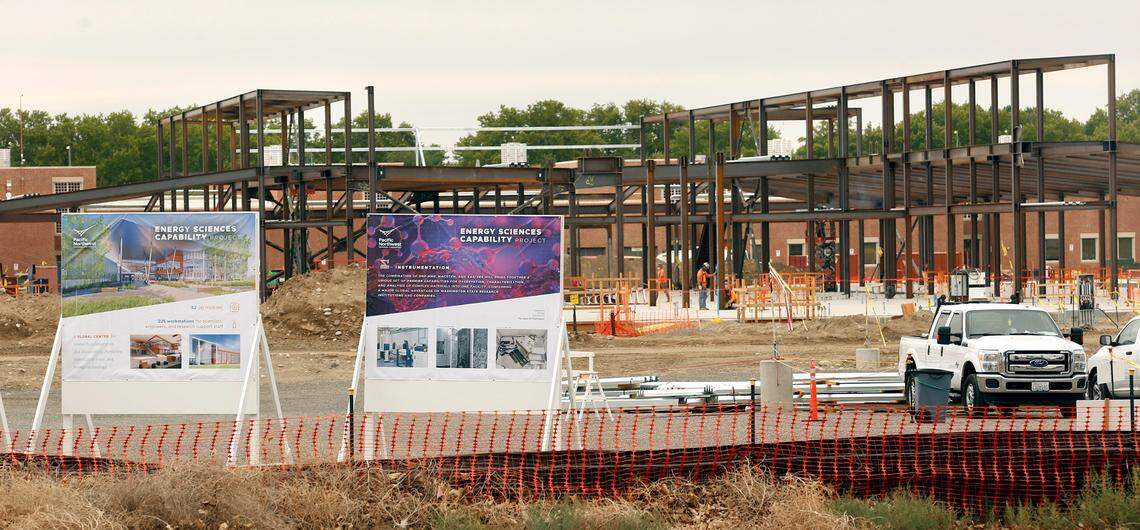
The building, part of an ongoing strategy to provide the modern facilities needed for cutting-edge research, was designed to promote collaboration.
It is expected to boost Washington state’s capability and visibility as a leader in energy sciences research, as it becomes a regional center for research collaborations, including with the University of Washington and Washington State University.
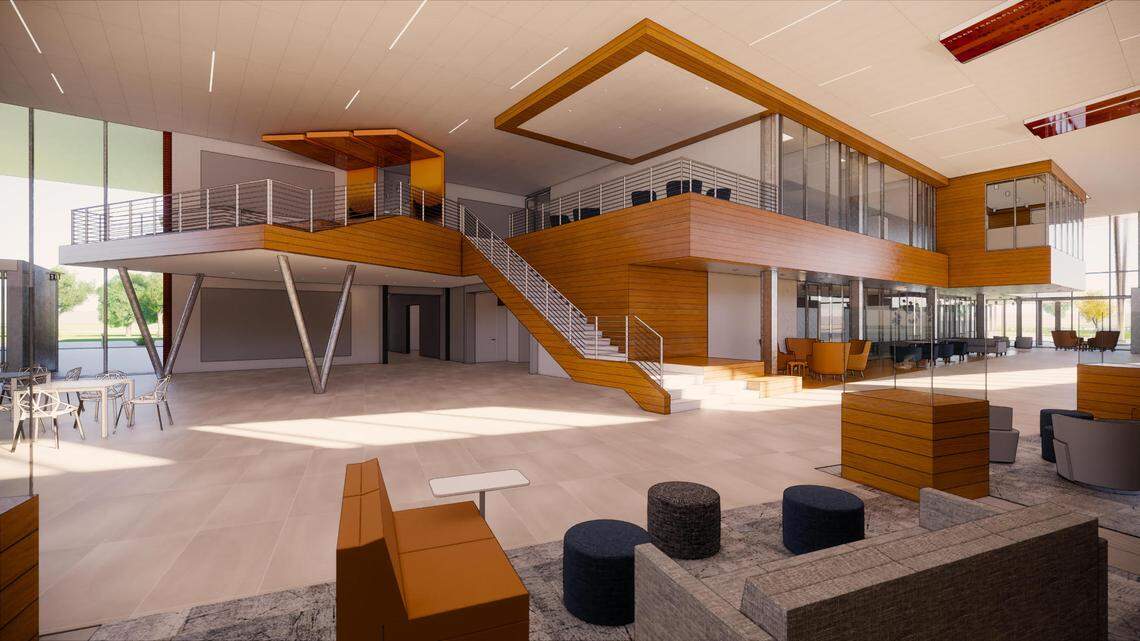
Work in the laboratory will focus on fundamental research in advanced chemistry, materials science and computing.
Researchers will use their findings to develop faster, safer and more efficient chemical processes, which could be used to reduce vehicle emissions and turn waste into fuels.
Federal money is being used to pay for the design and construction of the building.
The Washington state Legislature encouraged Congress to appropriate money for the project by agreeing to provide $8 million from the state’s Clean Energy Fund to match spending for advanced scientific instruments needed for research in the building.
This story was originally published August 14, 2020 at 12:57 PM with the headline "Energy secretary dedicates Richland site of $75M building to win ‘battery arms race’."