WA residents who lost money with LuLaRoe to get a piece of $4.75 million settlement
LuLaRoe, a California-based multi-level marketing business that sells dresses, leggings and other apparel through individual sales people, will pay $4.75 million to settle a consumer protection lawsuit brought by the Washington state Attorney General’s Office.
In January 2019, the AG’s Office filed a lawsuit against LuLaRoe and several of its executives, asserting that the defendants made unfair and deceptive misrepresentations regarding the profitability of being an independent retailer for LuLaRoe.
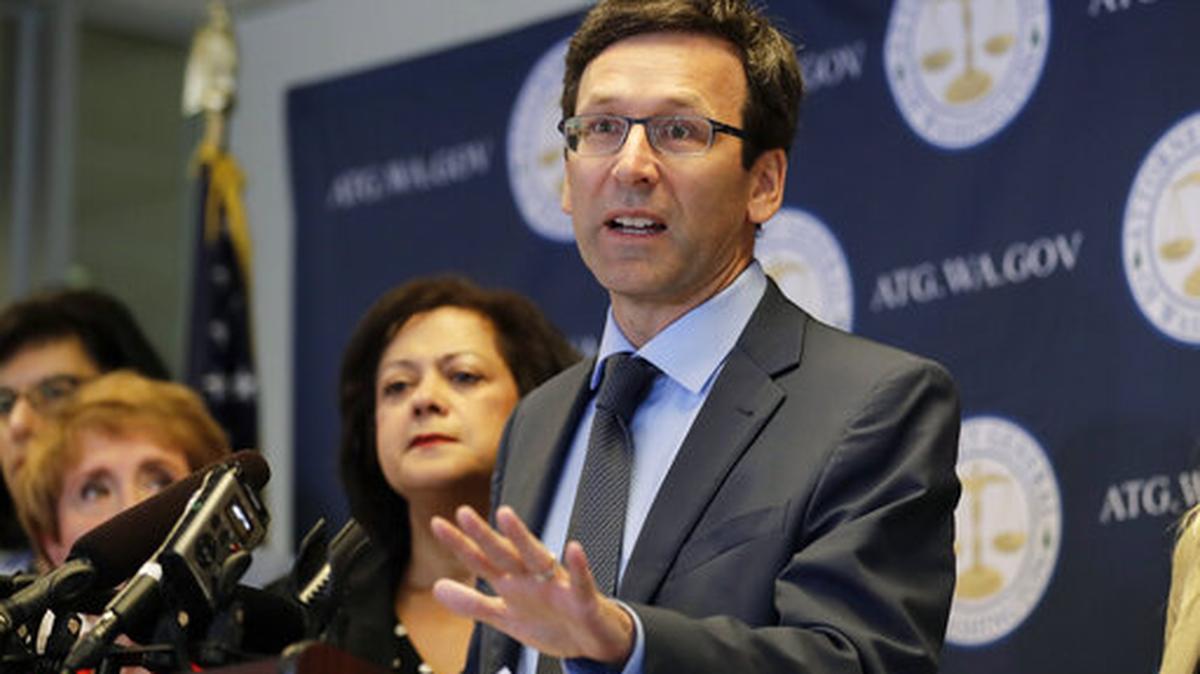
“LuLaRoe tricked Washingtonians into buying into its pyramid scheme with deceptive claims and false promises,” Ferguson said. “As a result, thousands lost money and two individuals made millions from their scheme. Washingtonians deserve fairness and honesty — and accountability for those who don’t play by the rules.”
According to the Attorney General’s Office, since 2014, more than 3,600 Washingtonians have joined the LuLaRoe network. LuLaRoe required new retailers to purchase an “onboarding” package costing between $500 to $5,000, depending on the amount and type of inventory included. Retailers could not choose specific sizes or prints of the inventory they bought, the lawsuit said.
The AG’s office contended LuLaRoe and its executives made unfair and deceptive misrepresentations regarding the profitability of being an independent retailer. One LuLaRoe executive claimed “a huge number of people” sell $15,000 to $20,000 each month stressed to prospective recruits that LuLaRoe “is a crazy and incredible opportunity for you.”
However, LuLaRoe’s structure ensured that the highest-ranking retailers would earn income by recruiting retailers in the lower categories. This allowed two LuLaRoe retailers — who each had hundreds of recruits in their “downlines” — to make more than $5 million in profit collectively between 2016 and 2019, while more than a third of retailers reported losses. Many were left unsold merchandise they could not return without taking a loss.
LuLaRoe’s repurchase policy allowed retailers who wished to stop selling its merchandise to receive a 90 percent refund for certain unsold inventory purchased within the last year.
The process was so complex, and the refund amounts were so arbitrary and unpredictable, that retailers began referring to refund calculations as “LuLaMath.” Many retailers who returned items waited for months before receiving their refunds, according to the lawsuit.
In addition to the financial penalty, here’s what else LuLaRoe agreed to in settling the lawsuit:
Publish an income disclosure statement that accurately details retailer income potential.
Calculate bonuses based on retail sales, not on the amount of merchandise purchased by independent retailers.
Conduct random and targeted audits to determine whether sales are to genuine consumers, rather than an effort to manipulate the compensation system.
Allow new retailers to return all inventory for a full refund, including shipping costs, within 45 days of becoming a new retailer.
Return inventory not eligible for a refund to the retailer.
Prohibit certain types of deductions from refund requests.
Warn retailers when the inventory they are purchasing is seasonal or otherwise does not qualify for return and refund.
Ferguson will provide $4 million to Washingtonians who were deceived by LuLaRoe’s business practices. The Attorney General’s Office estimates that approximately 3,000 Washingtonians will receive checks. Every Washington retailer who lost money under LuLaRoe’s pyramid structure will receive restitution.
The remaining $750,000 will partially reimburse the Attorney General’s Office for the cost of investigating the conduct and bringing the lawsuit.
LuLaRoe retailers with questions about the restitution can contact the office at llrrestitution@atg.wa.gov.
This story was originally published February 8, 2021 at 5:45 AM.