U.S. Interior Secretary sees climate change effects on coastal tribal communities
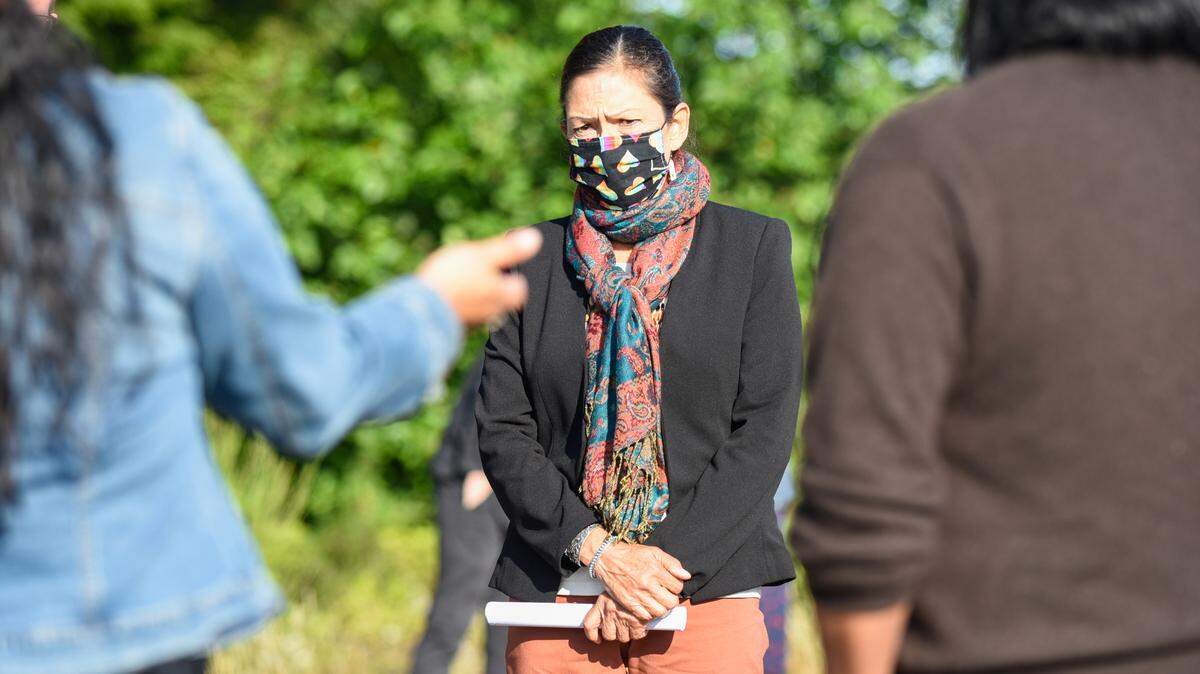
Funding for climate resilience projects, broadband internet access and Bureau of Indian Education schools were among the Biden-Harris administration’s investments in tribal communities that U.S. Interior Secretary Deb Haaland spoke with tribal leaders about Monday morning on the Washington coast.
Haaland and U.S. Rep. Derek Kilmer traveled Aug. 9 to Taholah, Wash. — located on the Quinault Indian Reservation in Grays Harbor County — to see first-hand the challenges of coastal tribal communities feeling the effects of climate change.
“As coastal communities face the increasing threat of rising seas, coastal erosion and storm surges, our focus must be on bolstering climate resilience,” said Sec. Haaland. “The investments discussed today are central to the Biden-Harris administration’s all-of-government approach to building more resilient communities and protecting the natural environment.”
Sec. Haaland highlighted the bipartisan infrastructure deal — an unprecedented $466 million investment for the Bureau of Indian Affairs that includes funding for transition and relocation assistance to support the most vulnerable tribal communities. The deal allocates $216 million for tribal climate resilience, adaptation and community relocation planning, design and implementation of projects that address climate challenges facing tribal communities across the country. The other $250 million is allotted for construction, repair, improvement and maintenance of irrigation and power systems, safety of dams, water sanitation and other facilities.
The Quinault tribe and many other coastal tribal communities are actively relocating to higher ground due to rising sea levels.
“It is truly a historic moment for our tribes to know that the administration in Washington, D.C., cares enough about tribes to send their delegation here to talk with us and hear our concerns, to hear what matters to tribes. And that’s our people, our safety, our health, our environment, our homes,” said Quinault Indian Nation President Guy Capoeman. “Moving from the lower villages to up on the hill will protect our membership.”
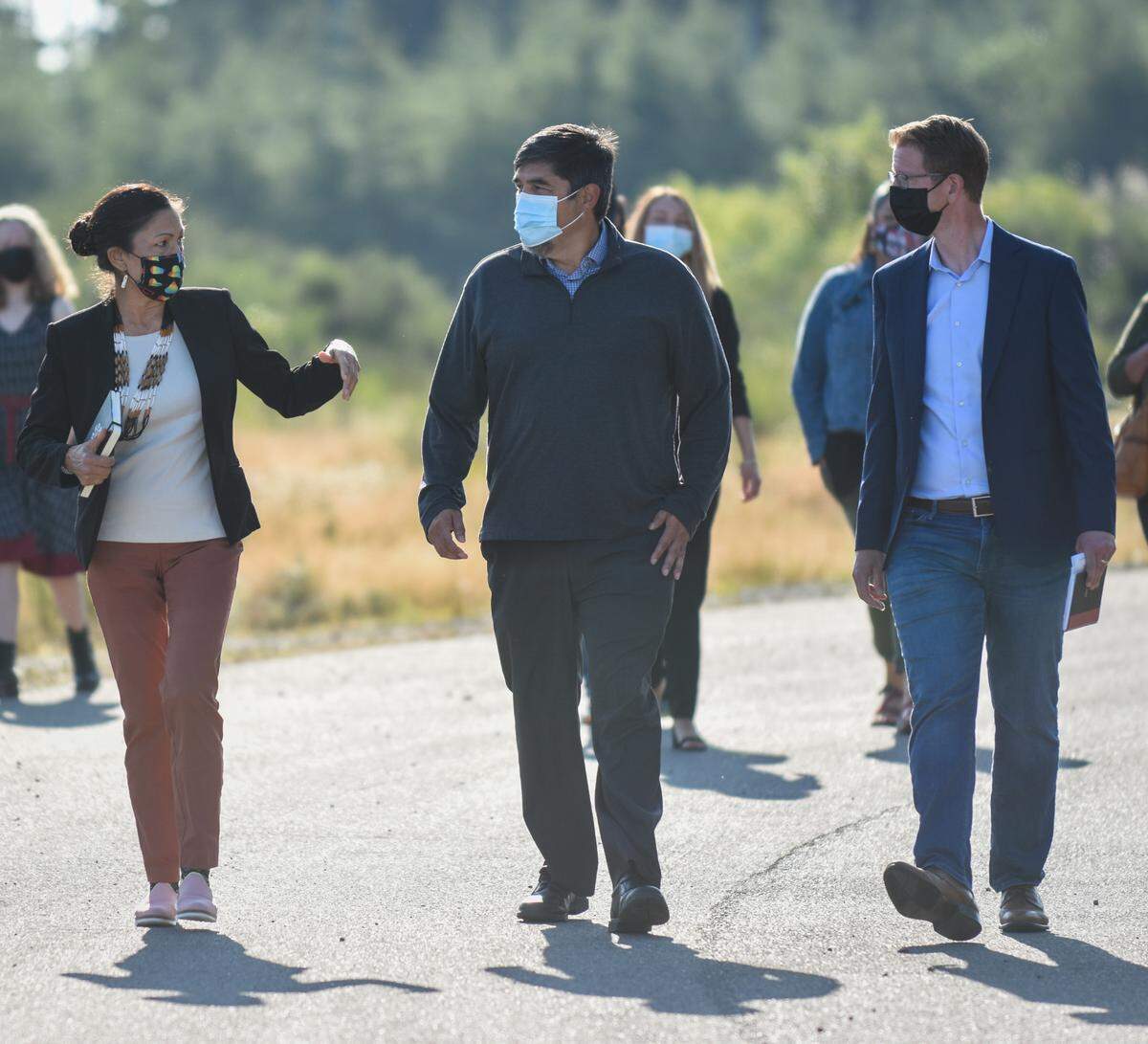
The tribe, which sees about 110 inches of rain annually, has begun construction on a new housing development out of the tsunami zone for approximately 70 families.
“When we see that ocean breach up to our only store, our community center, our jailhouse, our courthouse — every one of these is a reminder that we are in harm’s way… We have a duty to protect our community,” said Fawn Sharp, vice president of the Quinault Indian Nation and president of the National Congress of American Indians.
Rep. Kilmer discussed his sponsorship of the Tribal Coastal Resiliency Act. He represents Washington state’s sixth district encompassing the Olympic Peninsula, including most of the Kitsap Peninsula, most of Tacoma and four coastal tribes.
The act provides federal resources to tribes living in coastal areas and modernizes the National Oceanic and Atmospheric Administration’s Coastal Zone Management Grant Program to dedicate funding to support key projects that will protect their people and landmarks from changing landscapes and weather events.
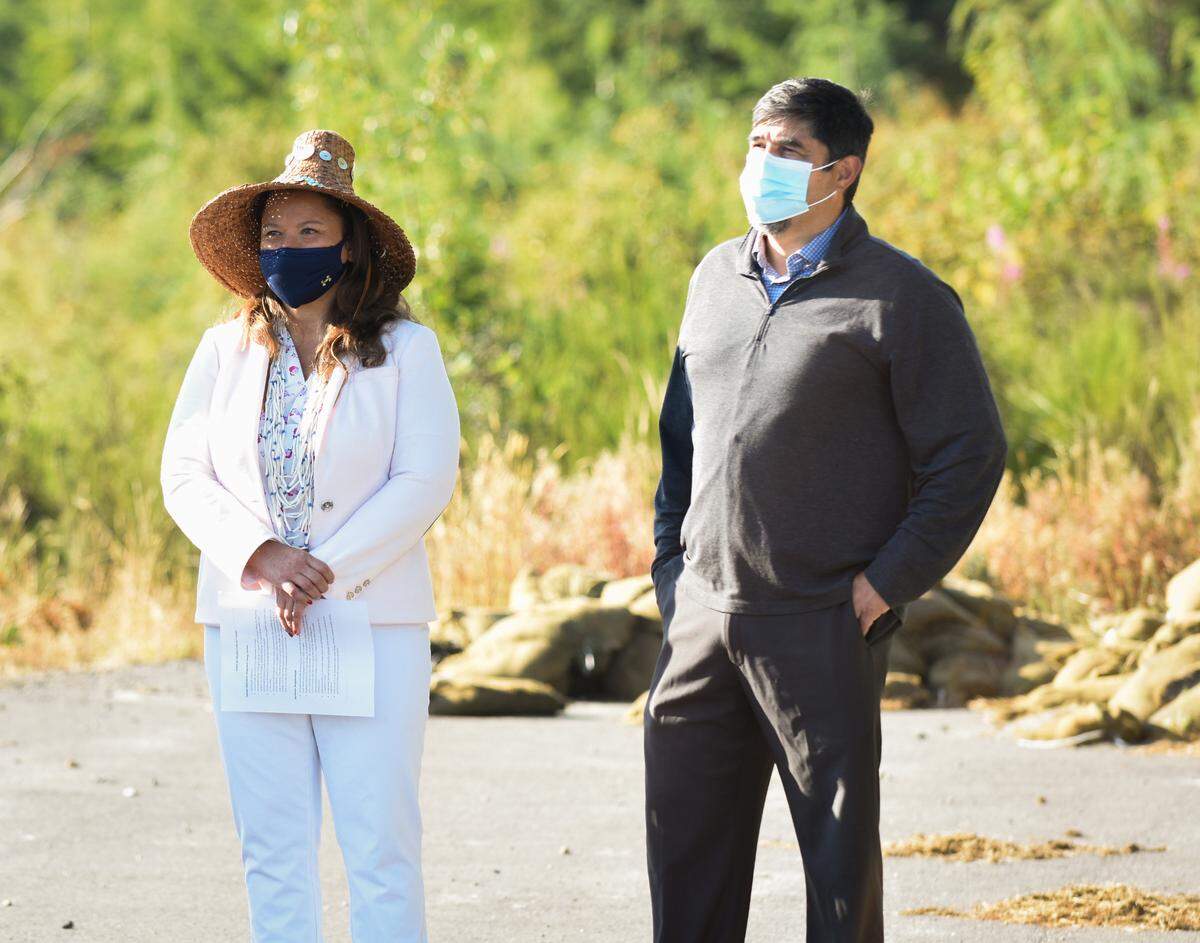
“When you have a childcare center that’s just a stone’s throw away from the ocean, your community’s at risk. When your community’s only health center is literally in the tsunami inundation zone, your community is at risk... When 100-year floods — floods defined as so bad they should only occur once every 100 years — become a regular occurrence, your community is at risk,” said Rep. Kilmer.
Sec. Haaland later sat down with leaders of the Quileute Tribe, Hoh Tribe, Makah Tribe, Lower Elwha Klallam Tribe, Jamestown S’Klallam Tribe, Port Gamble S’Klallam Tribe, Suquamish Tribe, Skokomish Tribe, Squaxin Island Tribe, Chehalis Tribe and Puyallup Tribe to discuss other issues Washington tribes are facing.
She spoke to closing the digital divide via federal investments to ensure tribes have the resources to fully participate in today’s economy. Haaland pointed to the nearly $1 billion in U.S. Department of Commerce’s National Telecommunications and Information Administration grants to expand broadband access announced by Haaland, Vice President Kamala Harris, Secretary of Commerce Gina Raimondo in June.
Sec. Haaland will continue her West Coast tour in California, where she will be speaking with tribal leaders about the clean energy economy, wildfires and drought.
BEHIND THE STORY
MOREPlease help support this reporting
Natasha Brennan covers Washington state tribes’ impact on our local communities, environment and politics, as well as traditions, culture and equity issues, for McClatchy media companies in Bellingham, Olympia, Tacoma and Tri-Cities.
She joins us in partnership with Report for America, which pays a portion of reporters’ salaries. You can help support this reporting at bellinghamherald.com/donate. Donations are tax-deductible through Journalism Funding Partners.
You can sign up for her weekly newsletter here.
This story was originally published August 9, 2021 at 11:49 AM.