Washington Tribes share these environmental concerns with Biden representative
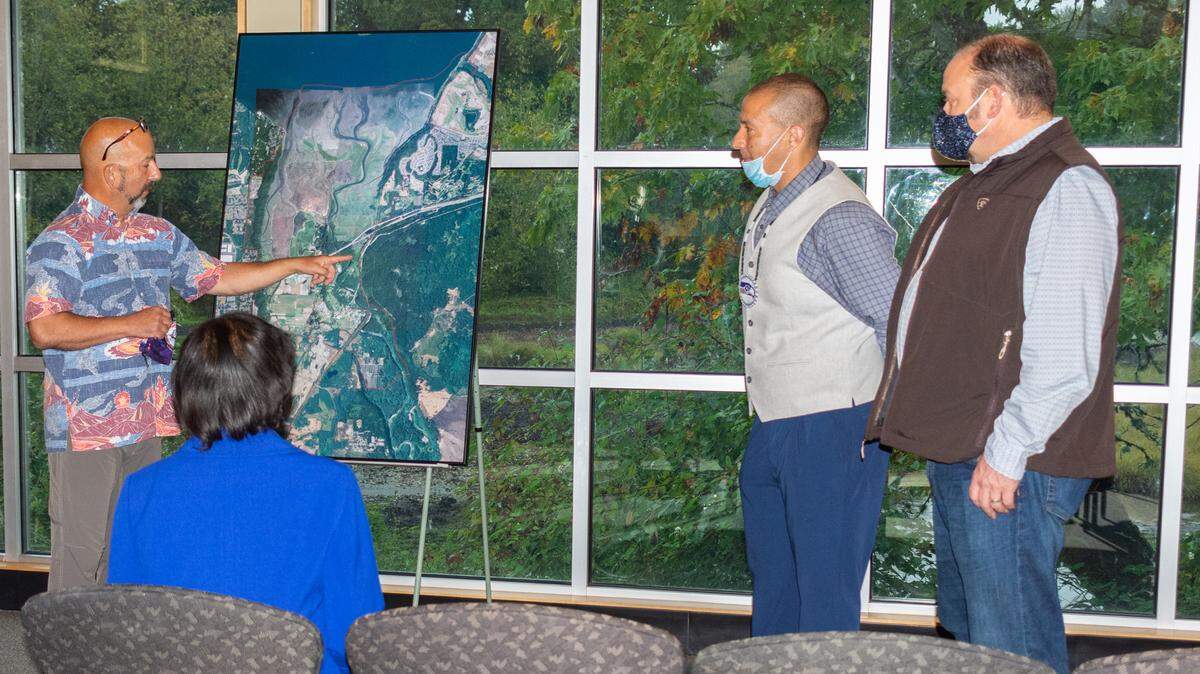
Tribal leaders and the Northwest Indian Fisheries Commission joined U.S. Reps. Derek Kilmer and Marilyn Strickland to discuss federal investments in Tribal communities and conservation efforts with Brenda Mallory, the chair of the White House Council on Environmental Quality, at the Billy Frank Jr. Nisqually National Wildlife Refuge on Tuesday, Oct. 5.
“We’re very hopeful for this opportunity to work with Chair Mallory and the Biden Administration,” said Willie Frank III, chairman of the Nisqually Indian Tribe.
The group discussed the bipartisan infrastructure deal and President Biden’s Build Back Better Agenda to support investments in Tribal communities, sustainable transportation, environmental justice and outdoor equity.
“It’s very important for the Biden Administration to have eyes on these assets here, the cultural significance and honoring our Tribal nations. So I’m very honored to be here today. We live in a very busy nation and that means our natural resources are in peril. We need investments to maintain these beautiful assets and understand their historical significance, their economic and cultural significance,” Mallory said.
Kilmer and Strickland, co-chairs of the Puget Sound Recovery Caucus, discussed the Puget SOS Act that aims to enhance the federal government’s role and investment in the Puget Sound, the nation’s largest estuary by volume.
“We’ve got an urgent challenge with regard to salmon recovery,” Kilmer said.
In what became the theme of the day, Kilmer shared a story of the last time he met with the late Nisqually leader and activist Billy Frank Jr., Chairman Frank’s father.
“He said, ‘We used to catch 2% of the fish and that was more fish back then than now, when ostensibly we’re supposed to get 50% of the fish.”
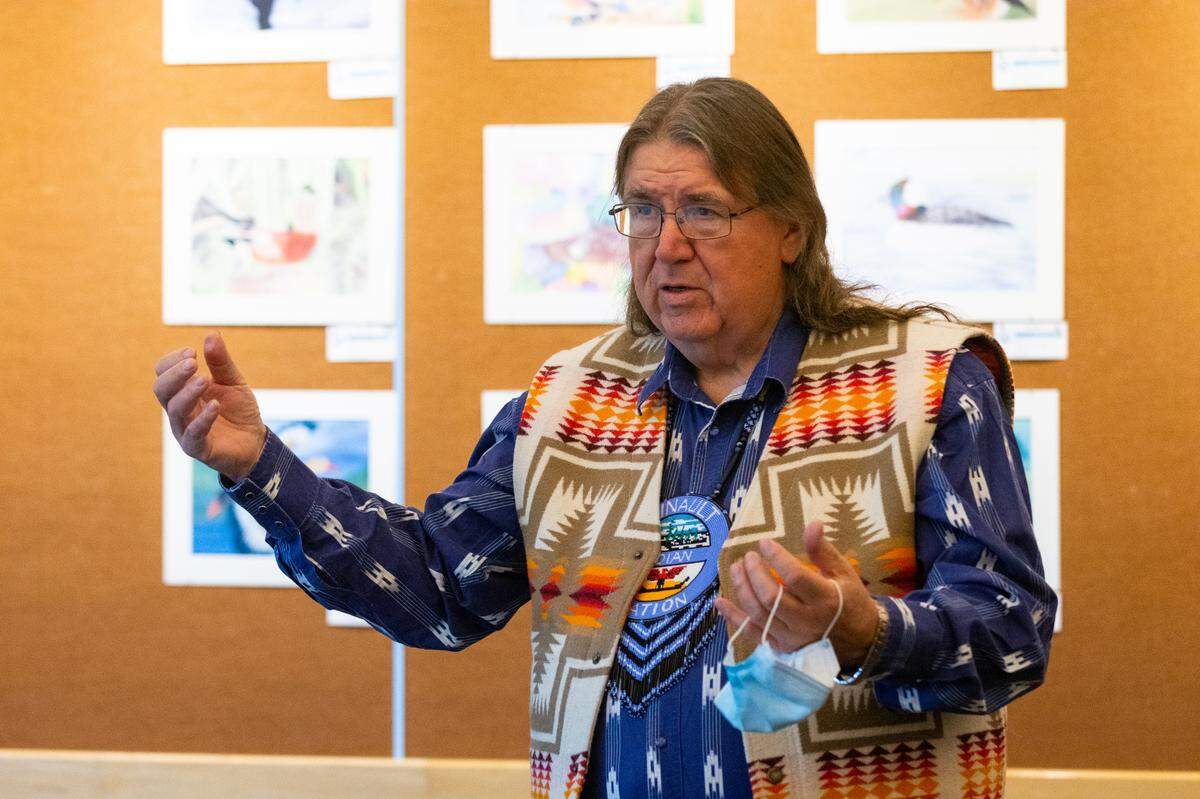
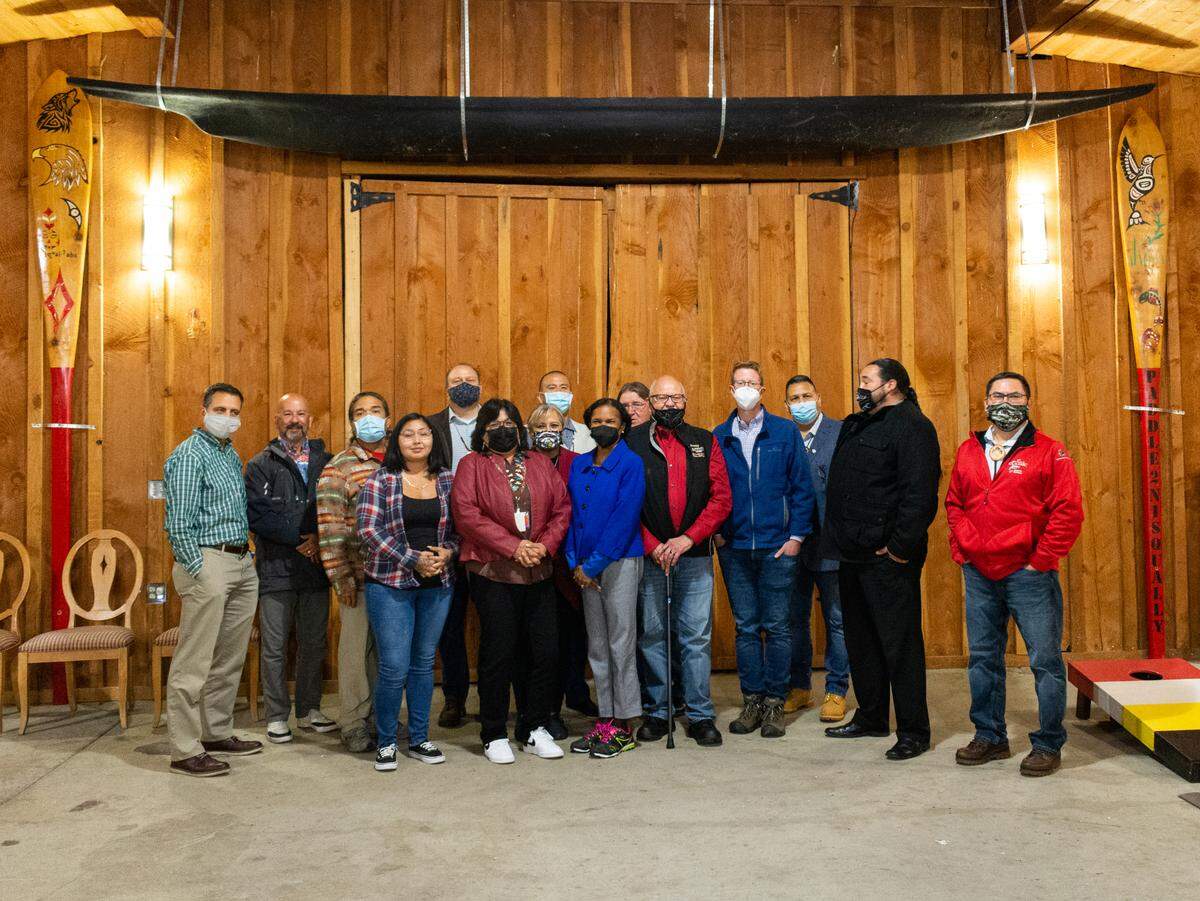
Chairmen, members of council and departments of natural resources representatives for the Nisqually Indian Tribe, Lummi Nation, The Quileute Tribe, The Makah Tribe, The Jamestown S’Klallam Tribe, Squaxin Island Tribe and The Quinault Indian Nation shared with Mallory first-hand accounts of how climate change has affected their communities.
“The Quinault suffer from the same inflicted issues that our brothers and sisters throughout the state, especially along the I-5 corridor, have too through experiencing massive population growth, urbanization, habitat destruction and deforestation. In Washington, we’re about ground zero for the impacts of climate change. Our Tribes don’t want to just have meetings, we want action — to move the dial, ” said Ed Johnstone, fisheries policy spokesperson at Quinault Indian Nation, in an interview before the meeting.
The group also discussed changes they hope her office and the Biden Administration can bring.
“If there’s no salmon, there’s no shellfish — there’s no treaty rights... 50% of zero is still zero... We’re trying to stop the bleeding,” said Justin Parker, executive director of the Northwest Indian Fisheries Commission and a Makah Tribal member.
Squaxin Island Tribe Chairman Kris Peters told Mallory he believed her to be a “climate warrior” and has faith that her work will bring about action.
“We as Indigenous people, we need climate warriors at every level... We need people that are gonna fight, listen to the science and the experts... You’re not gonna find better experts than the Indigenous people of the United States,” Peters said.
In the meeting, Tribal representatives highlighted the need for federal oversight in producing guidelines for how federal trustees should consult with Tribes.
Lisa Wilson, a Tribal council member for Lummi Nation, said an executive order to outline these guidelines will prevent roadblocks for climate action and other matters of Tribal consultation while fostering trust in the federal government.
“They come at us like regulators, our trustees, but I’d like to see them come back with a plan on how they’re going to protect our treaty rights,” Wilson said.
Echoing Wilson, Johnstone said Washington state Tribes’ treaty rights are at risk.
“We’re place-based people. We can’t pick up and move our treaty rights to Oregon or Arizona,” Johnstone said.
In her first-ever meeting with Indian Country as chair, Mallory joined leaders of the Yakama Nation Monday, Oct. 4, to discuss similar concerns along the Columbia River.
“Engaging with Tribal leaders and hearing the priorities of our Tribal communities is essential to strengthening the United States’ nation-to-nation relationship with Tribal governments. We look forward to the opportunity to be strong partners in addressing the climate crisis, the protection and restoration of our salmon and fish resources, and the prioritization of Tribally led conservation efforts,” said Yakama Nation Chairman Delano Saluskin in a news release.
BEHIND THE STORY
MOREPlease help support this reporting
Natasha Brennan covers Washington state tribes’ impact on our local communities, environment and politics, as well as traditions, culture and equity issues, for McClatchy media companies in Bellingham, Olympia, Tacoma and Tri-Cities.
She joins us in partnership with Report for America, which pays a portion of reporters’ salaries. You can help support this reporting at bellinghamherald.com/donate. Donations are tax-deductible through Journalism Funding Partners.
You can sign up for her weekly newsletter here.
Mallory’s meeting in Nisqually wrapped up her two round-table discussions with Washington state Tribal leaders before concluding her stop in the state with a visit to Jennie Reed Elementary School in Tacoma.
With Congresswoman Strickland, Mallory visited the school to learn about the work that the Trust for Public Land, MetroParks Tacoma and Tacoma School District are doing to renovate the schoolyard for public use. Reducing inequitable access to parks and greenspace is a key focus area of the administration’s America the Beautiful Initiative, an effort that is led by Mallory.
The Council on Environmental Quality is set to convene two Tribal consultations on Oct. 26 and Oct. 28 via Zoom to garner input on the America the Beautiful initiative, with a particular focus on supporting Tribally led conservation and restoration priorities.
This story was originally published October 6, 2021 at 12:31 PM.