Gov. Jay Inslee rolls out these new Washington initiatives at U.N. climate talks
Gov. Jay Inslee spent the weekend announcing climate pledges at the U.N. climate talks that aim to reduce planet-warming emissions from Washington’s public fleet vehicles and the region’s building and construction sector.
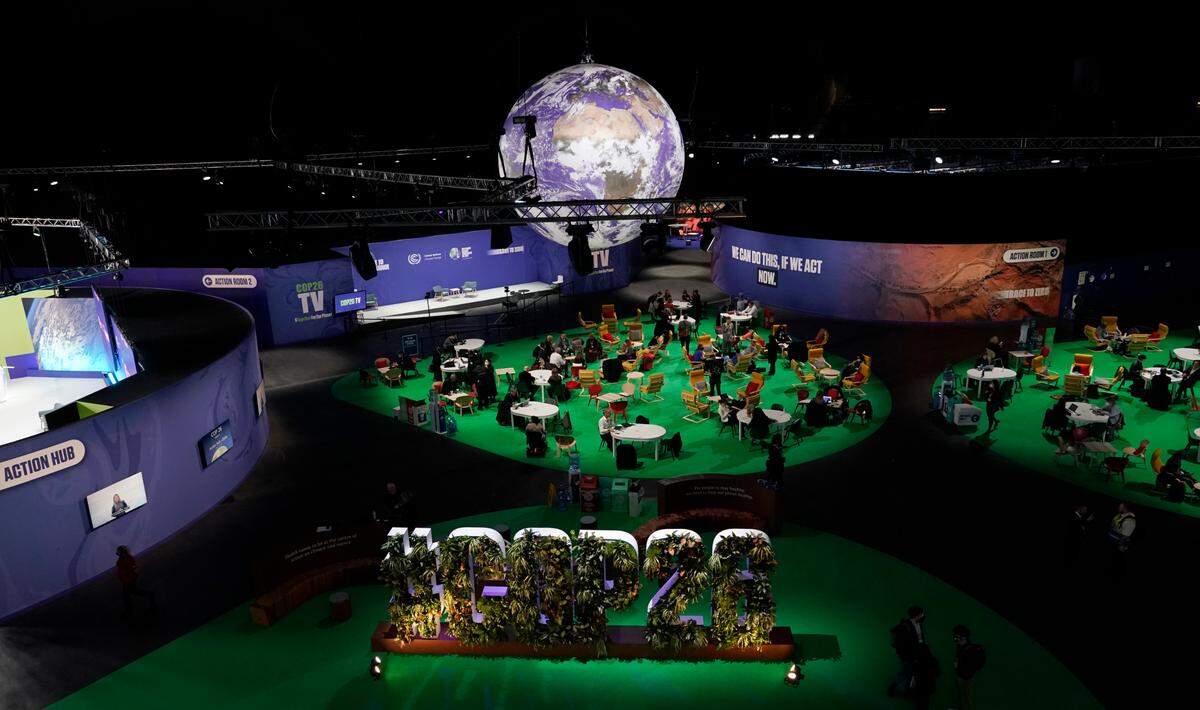
Inslee touched down late last week in Glasgow, Scotland, to participate in the 26th annual Conference of the Parties, also known as COP26, where world leaders have gathered to plan and negotiate how they will respond to human-caused climate change. The talks were described by U.S. climate envoy John Kerry in October as the world’s “last best hope to get its act together.”
“The message from Glasgow is that Washington state is leading the charge, and we are not alone,” Inslee said at a press conference on Monday, Nov. 8. “We have states and governments around the world joining us.”
Inslee, who centered climate in his 2019 presidential campaign and pushed the state legislature to pass two major climate policies last session, is leading a coalition of 68 state, regional and city governments at the global conference in affirming their commitment to addressing the climate crisis, according to a Sunday, Nov. 7, news release from the governor’s office. The governments are focused on halving emissions by 2030 and getting to net-zero by mid-century.
The world is on a path to catastrophic warming of about 2.7 degrees Celsius by 2100, according to current emissions projections by the United Nations.
Together, the 68 subnational governments Inslee is leading at COP26 represent 470 million people and 20 percent of the world’s entire GDP, he told the Under2 Coalition General Assembly on Sunday.
“The actions we take in the next five years will determine the fate of our species,” Inslee said in a news release. “I’m proud to stand with this global coalition of governors and mayors to go beyond pledges.”
Subnational governments, as state and local governments are referred to, are able to move faster than national governments in taking climate action, Inslee told the Under2 Coalition General Assembly on Sunday.
“The national commitments that come out of COP will not be the ceiling for us,” Inslee said. “They will be the floor, and we will exceed them because we know exceeding them is both necessary and practical and economically productive.”
State and local governments should always want to be further along in climate action than their nation-states, Inslee said at the Monday press conference.
“Washington wants to be ahead of Washington D.C.,” he said.
He may have only been at COP26 for a few days, but already Inslee is announcing new climate initiatives for Washington.
On Saturday, Nov. 6, he joined leaders from the Pacific Coast Collaborative in launching the Low Carbon Construction Task Force, which will examine ways to reduce the carbon footprint of building and construction materials and methods. The Pacific Coast Collaborative is a regional alliance including California, Washington, Oregon and British Columbia, as well as the cities of Seattle, Portland, San Francisco, Oakland, Los Angeles and Vancouver, B.C.
Buildings contribute greatly to climate change, both through the fossil fuels used to keep the lights on and the air and water warm, as well as through building materials and construction. The building sector is responsible for at least 39% of global energy-related carbon emissions each year, with 28% coming from operational emissions and 11% from embodied carbon, which is the carbon footprint of a building’s raw materials and construction, according to a news release from the Collaborative.
“Washington and the (Pacific Coast Collaborative) region are leaders in demonstrating how strategies to reduce climate pollution also create good jobs and a strong economy,” Inslee said in a Saturday news release.
The next day brought more climate commitments from Inslee: On Sunday, he announced an executive order to fully electrify Washington state’s public fleets. By 2035, the state will have a zero-emissions light-duty fleet, and by 2040, it will boast a zero-emissions medium- and heavy-duty state fleet. The fleet differentiation depends on the weight and engine types of the vehicles in question.
Vehicles are the largest contributor to the state’s greenhouse gas emissions, according to the executive order.
The state has assessed the cost-effectiveness of electrifying the public fleet and found it to be favorable, Inslee said at the Monday press conference. He stressed that electricity is much cheaper than gas and diesel, and state purchases of electric vehicles to date have been successful.
But Washington has a ways to go in achieving the goals set by Inslee this weekend: In 2020, electric vehicles made up 3% of the state’s overall public fleet, according to an assessment by Washington State University, the National Renewable Energy Laboratory and Atlas Public Policy. (That share was higher for the light-duty fleet, at more than 7%.)
The same analysis found that full fleet electrification could save Washington more than $3.4 billion by 2035, assuming cost-saving innovations and reduced charging infrastructure costs.
Electrifying the public fleet can boost the local economy as well, Inslee said, giving a shoutout to a company manufacturing electric buses near Ferndale.
Inslee’s COP26 schedule is packed with meetings with climate leaders from countries including the U.K., Canada, Korea and Spain’s Catalonia region, as well as with U.S. governors, senators and officials. He is planning on attending events regarding climate change and oceans, local-federal partnerships and carbon markets, which set a limit on emissions and allow emitters to trade emissions allowances.
Inslee met with Quebec Minister of Environment Benoit Charette to discuss how the two governments can potentially collaborate on a carbon market that may include California and other states around the world, Inslee said at the Monday press conference.
Washington passed legislation earlier this year initiating the creation of a statewide cap-and-invest carbon market, which sets a cap on allowed emissions and auctions off permits to emit greenhouse gases to polluters. Each year, the emissions cap gets lower, requiring polluters to reduce emissions to participate in the program. In Washington, the money generated from the permit auctions will go toward climate resilience initiatives, such as clean energy investments, flood mitigation and securing water supplies, according to the Washington Department of Ecology.
World leaders at COP26 are considering a global carbon market, but negotiations are slow going, according to reporting by Reuters. Inslee is in favor of seeing other jurisdictions adopt carbon markets, according to Tara Lee, executive director of communications for the governor.
COP26 has come under fire from some activists for excluding Indigenous voices, which is similar to some of the criticism Inslee has gotten locally. Some tribal leaders in the region have criticized him for vetoing a portion of the state’s recently passed Climate Commitment Act that would have locked in historic levels of consultation and protections for sacred sites and burial grounds, as previously reported by The Herald.
When questioned by The Herald about how the governor plans to address those perspectives moving forward, Lee responded via email that it was a critical issue, since Indigenous people worldwide and in Washington are on the front lines of climate change.
Lee pointed to the Environmental Justice Council created by the 2021 HEAL Act, which will include tribal representatives and advise seven government agencies, and highlighted that 10% of the investments from the state’s cap-and-invest program will go to projects sponsored and supported by tribes.
“Gov. Inslee is also in conversations with tribal leaders about strengthening our government to government consultation processes in the upcoming legislative session,” Lee wrote in an email to The Herald.
Inslee acknowledged the importance of the $1 trillion federal infrastructure package passed by Congress on Friday, Nov. 5, which would provide money for climate change efforts such as increasing electric vehicle infrastructure. But he said that the funding provided in a separate federal reconciliation bill would be even more meaningful in spurring regional climate action.
“There might be four or five times more benefit in the reconciliation bill,” Inslee said at the Monday press conference.
Seattle Mayor Jenny Durkan is also participating in the climate talks in Glasgow. She announced an executive order on Monday, Nov. 1, that accelerates Seattle’s efforts to reduce emissions from the building and transportation sector, as well as invest in a diverse clean energy workforce.
The executive order calls for the development of a new carbon-based building performance standard for large commercial and multifamily buildings, an act which is estimated to reduce Seattle’s building sector emissions an additional 27 percent by 2050, according to the City of Seattle’s Nov. 1 news release.
Durkan’s executive order also expands free transit for the city’s middle and high school students, invests in the conversion of diesel trucks in the Duwamish Valley to electric and launches a clean energy workforce committee in Seattle.
“From a new normal of smoky summers and dangerous heat in Seattle, I have never seen the impacts of climate change that we are now facing,” Durkan said in a news release. “We’ve invested billions to support green transportation, efficient buildings, and other policies to mitigate climate change, but we know we need to do more to reach net zero.”
Inslee highlighted the importance of collaboration and unity in his final remarks at the Monday press conference.
“It’s good that we are leading the world, but it’s also great that we are not alone,” he said. “We are all in this together, and when you are with a group of people from around the world, it’s heartening, it’s inspiring and it’s a good day to be a Washingtonian.”
This story was originally published November 8, 2021 at 7:43 AM with the headline "Gov. Jay Inslee rolls out these new Washington initiatives at U.N. climate talks."