Charles F. Sams III sworn in as first Tribal citizen to lead National Park Service
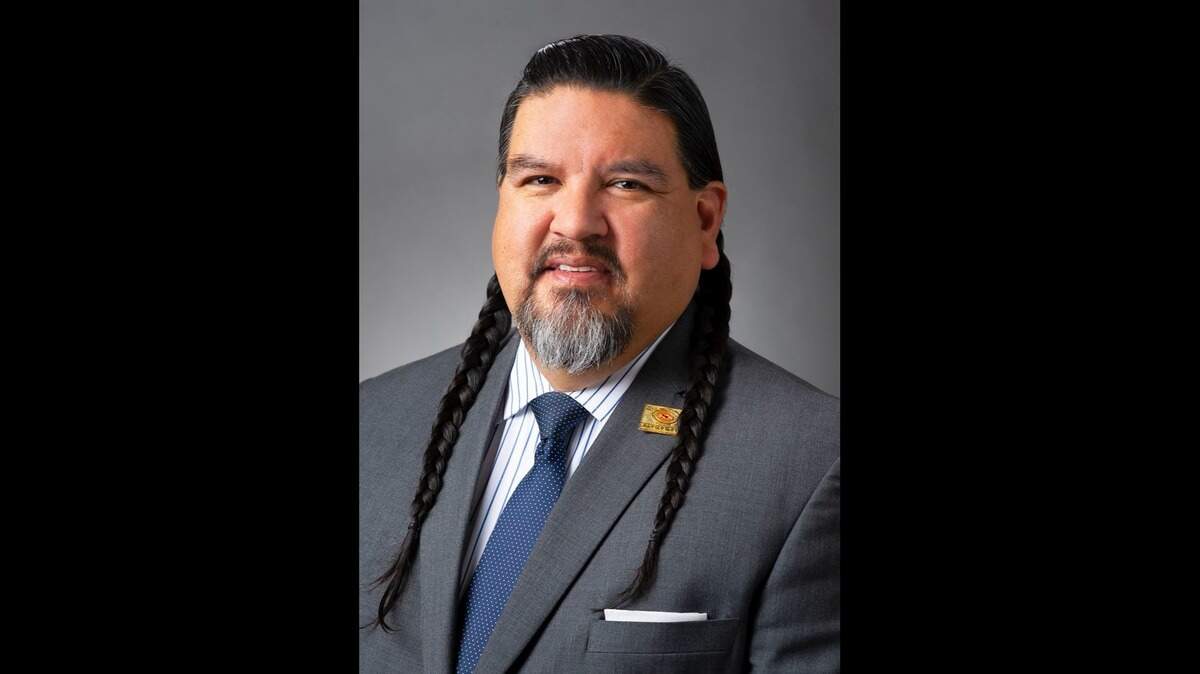
Charles F. “Chuck” Sams III has sworn in as director of the National Park Service Thursday, Dec. 16 in Washington, D.C. He is the first Tribal citizen to lead the agency and the first Senate-confirmed National Park Service director in five years.
“I am honored to serve as Director of the National Park Service and thank President Biden and Secretary Haaland for entrusting in me the care of one of America’s greatest gifts: our National Park System,” Sams said in a news release.
Sams was sworn in by Secretary of the Interior Deb Haaland — an enrolled member of the Laguna Pueblo who became the first Native American cabinet secretary earlier this year. Sams’ nomination was announced in August and the Senate confirmed his nomination last month.
“Everyone should have access to the outdoors no matter where they live, how much money they have, or what their background is. Chuck Sams understands the importance of connecting people to nature, and I am thrilled to work with him as the Interior Department works to make our national park system accessible to all Americans,” said Haaland in a news release. “Under his leadership, the National Park Service will continue to protect our public lands for generations to come and make critical investments in the vast infrastructure that sustains our public lands and national parks.”
An enrolled member of the Cayuse and Walla Walla — Tribes that are part of the Confederated Tribes of the Umatilla Indian Reservation in southeast Washington and northeast Oregon — Sams is the first enrolled Tribal member to serve as Director of the National Park Service since its creation in 1916. He also will be the first permanent director of the Park Service since former director Jonathan Jarvis retired during the Obama administration in 2017.
Sams, a U.S. Navy veteran, holds a bachelor’s of science degree in Business Administration from Concordia University-Portland as well as a master’s of legal studies in Indigenous Peoples Law from the University of Oklahoma. He has more than 25 years experience in state and Tribal governments, non-profit natural resource and conservation management.
Before his confirmation, Sams served as a council member to the Northwest Power and Conservation Council — appointed by Oregon Gov. Kate Brown — and previously held the position of executive director of the Confederated Tribes of the Umatilla Indian Reservation, where he lives with his wife and their four children.
As director of the National Park Service, Sams will help carry out many new programs, bills and laws, such as the Great American Outdoors Act.
Additionally, he will help implement the Bipartisan Infrastructure Law — providing historic funding for climate resiliency initiatives, legacy pollution clean-up and a five-year reauthorization of the Federal Lands Transportation Program, which will help invest in repairing and upgrading National Park Service roads, bridges, trails and transit systems for both park-goers and wildlife.
“I am also incredibly proud to work with the dedicated employees of the National Park Service. I have no doubt that together, we’ll be able to expand access to the outdoors, protect America’s public lands, and upgrade our nation’s infrastructure system through the Bipartisan Infrastructure Law,” Sams said.
The law was recently highlighted by Department of the Interior Assistant Secretary of Indian Affairs Bryan Newland in a three-day tour of listening sessions with Tribal leaders across Washington state — including leaders of the Shoalwater Bay Tribe, Jamestown S’Klallam Tribe, Port Gamble S’Klallam Tribe, Suquamish Indian Tribe, Puyallup Tribe and Muckleshoot Indian Tribe.
Washington state has four national parks — Mount Rainier National Park, Olympic National Park, North Cascades National Park and the Manhattan Project National Historical Park — with a total of 15 reserves, areas, parks, trails and sites managed by the National Park Service. Together, they host more than 7 million visitors a year.
Olympic National Park was one of the top 10 most-visited national parks in 2019, according to the Park Service.
The newest park is the Manhattan Project National Historical Park, which includes sites at the Hanford nuclear reservation near Richland, as well as in Los Alamos, N.M., and Oak Ridge, Tenn. The park marks the history of the people, science, events and controversy associated with the creation of the atomic bomb in the top-secret effort known as the Manhattan Project.
This story was originally published December 17, 2021 at 5:00 AM.
CORRECTION: The number of national parks in Washington state was updated Dec. 20, 2021.