Lummi matriarchs say healing the Salish Sea begins with bringing home their orca relation
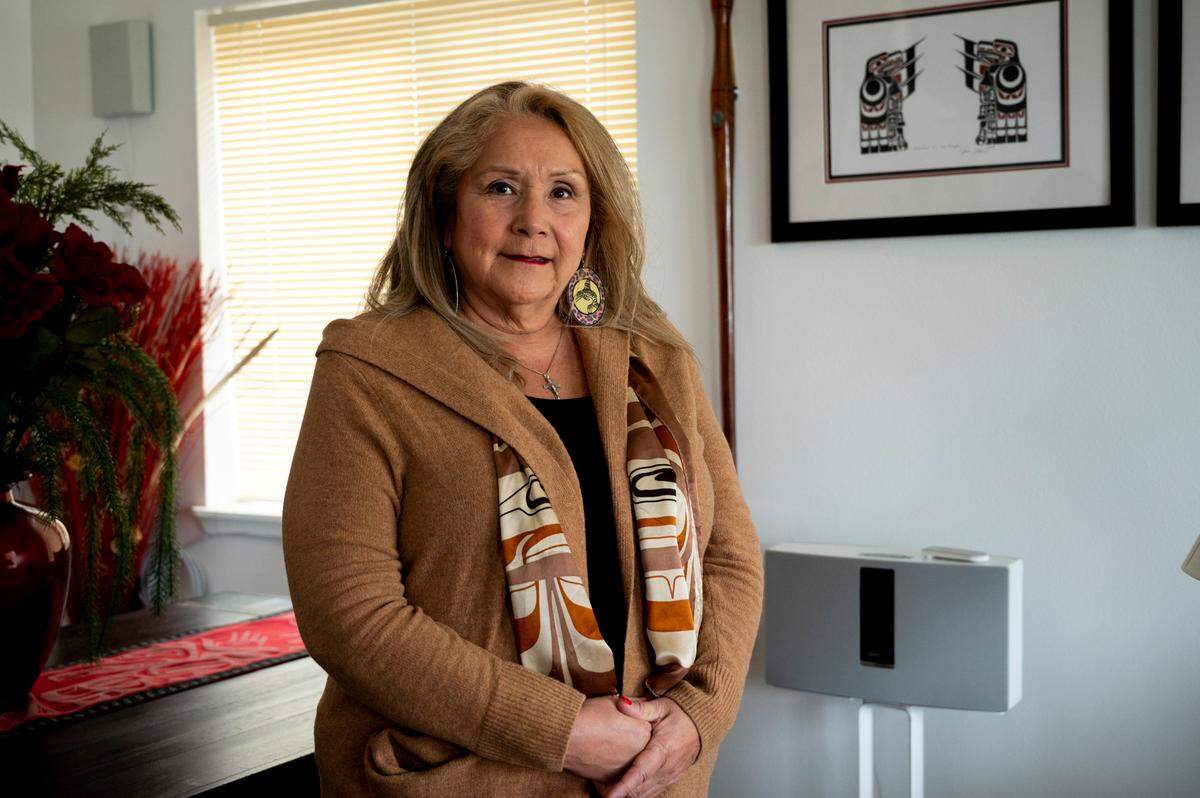
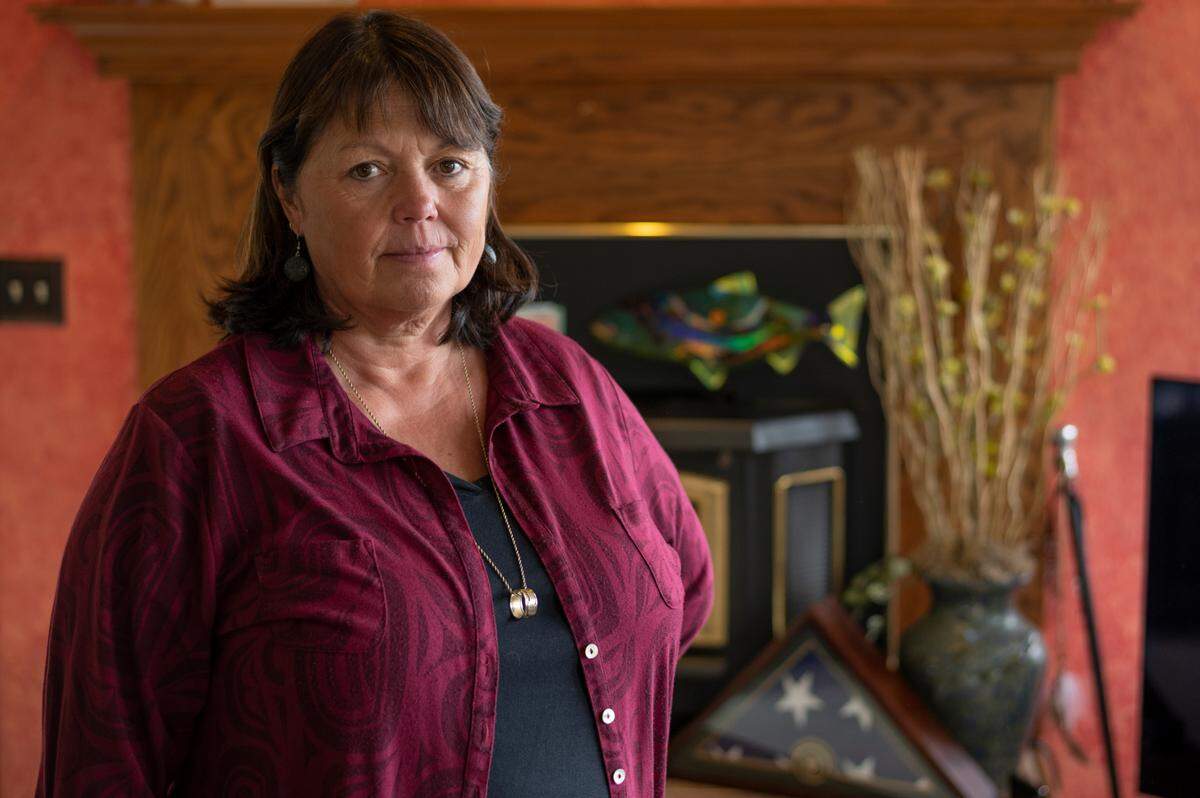
Sacred Sea, led by enrolled Lummi Tribal members Raynell Morris and Ellie Kinley, continues to advocate for the repatriation of the orca Sk’aliCh’elh-tenaut from her concrete tank in the Miami sun back to her cool, dark home waters of the Salish Sea.
“Now that she’s not performing three times a day, not having to do tricks for food, she can get the best care and be her best self,” said Morris, vice president of the Sacred Lands Conservancy known as Sacred Sea.
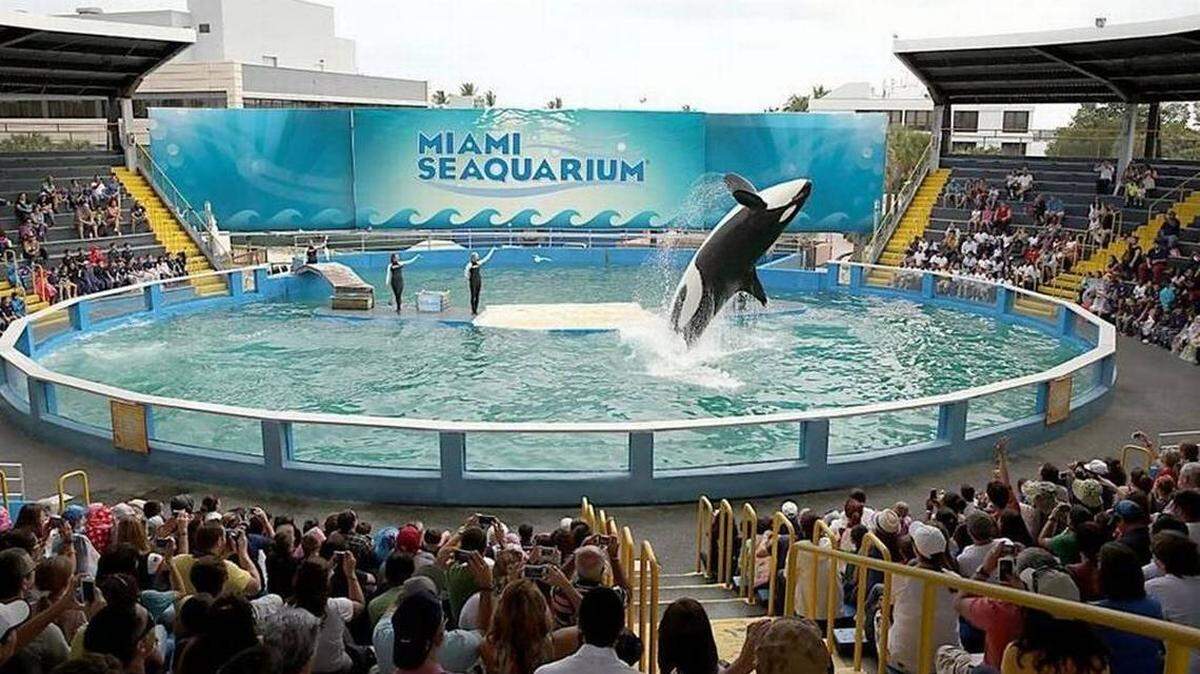
More than 50 years since her capture at Whidbey Island’s Penn Cove, southern resident orca Sk’aliCh’elh-tenaut (pronounced SKAH-lee-CHUKH-tah-NOT) — known by her stage name of Lolita and as Tokitae by others — has been retired from performances at Miami Seaquarium.
For now, she will remain at the park in Miami, which has been acquired by MS Leisure Company Inc. — an entity of Cancun-based The Dolphin Company — on the condition that she and a dolphin in her tank will not be exhibited.
With the new license prohibiting The Dolphin Company from using her in social media or to generate revenue, hope is renewed that she can be repatriated home.
A prayer ceremony for Sk’aliCh’elh-tenaut will be held 10 a.m. to 11 a.m., Sunday, March 20, at Xwe’chi’eXen / Cherry Point. The event is open to the public.
Family under the waves
“The qw’e lh’ol me chen are culturally and spiritually significant to the Lummi people,” then-chairman of Lummi Nation Jay Julius wrote in a 2018 Bellingham Herald op-ed.
In Xwlemi Chosen, the language of the Lummi people, orca are called “qw’e lh’ol’ me chen,” meaning “our relations who live under the water.”
“We don’t have a written history, we have an oral history and our stories tell us that qw’e lh’ol’ me chen are just our family that lives under the waves. They put on their regalia and they live underwater. They’re part of our family and they can take off that regalia and walk among us. That is what we’re told as our history and that’s what we believe,” said Kinley, whose traditional name is Tah-Mahs.
In 2019, the Tribe affirmed the J, K and L orca pods are members of the Lummi family, naming them Sk’aliCh’elh. The name comes from the village site located in the Penn Cove area, Sk’ali.
Noting the orca — then known by the Tribe as Tokitae — was captured from Penn Cove, late hereditary chief Bill Tsi’li’xw James thought to name her the feminine form of Sk’aliCh’elh, Sk’aliCh’elh-tenaut.
“We felt like — he felt like — it was time she carried a Lummi name and not a show-business name. First it was Lolita, then it was Tokitae and we’ve never had the opportunity to name her, so we did it in a traditional way out in the San Juan Islands for her and her family,” said Morris, whose traditional name is Squil-le-he-le.
“From the beginning of time, they’ve always been part of our family. We’re salmon people. Lhaq’temish (Lummi) people are salmon people, survivors of the great flood. So water, that kinship to salmon, to qw’e lh’ol’ me chen, to the cedar trees — it’s all part of who we are.”
Fifty years from the Salish Sea
Sk’aliCh’elh-tenaut is the last surviving orca from the roundup at Penn Cove on Aug. 8, 1970.
Corky, a Northern Resident orca captured in 1969 from Pender Harbour off the coast of British Columbia, is the only killer whale that has been kept in captivity longer.
At least 47 Southern Resident orcas were captured for display at marine parks like Seaquarium. Many of the orcas died within five years.
It was thought that none had survived until Sk’aliCh’elh-tenaut’s existence was brought to the Tribe’s attention less than ten years ago, Kinley said.
Lost video of the Penn Cove roundup had been found, put in documentaries and posted online.
“The first time you watch the video of the capture — the screams. The babies screaming for their moms, the moms screaming for their babies, resonates inside. As a grandma and a mom, it doesn’t leave you,” Morris said.
Sk’aliCh’elh-tenaut’s mother is believed to be 93-year-old Ocean Sun of the L-pod. Ocean Sun’s other daughter and grandchildren are all either dead or thought to be, leaving her without any other immediate family.
With this information, members of Sacred Sea and the Tribe sat down with Cheif Tsi’li’xw James and agreed, she must come home.
“Her being taken, our late hereditary chief Tsi’li’xw said, that’s like the boarding school, the Indian resident boarding schools where they came and took the children because they ‘knew what was best for them’,” Morris said. “That’s exactly what they did to her. And their family mirrors what happened to Lhaq’temish people. It’s our sacred obligation to make it right.”
In 2018, Lummi Nation hosted a totem pole journey to Seaquarium to demand her release. Since, members of Sacred Sea, Florida-based activists and Indigenous leaders have protested at the facility and held ceremony for Sk’aliCh’elh-tenaut.
“There’s a reason she’s been holding on all this time,” Morris said. “She knows we’re coming for her.”
A global love
In a 2019 news release, Morris and Kinley announced their intent to sue for Sk’aliCh’elh-tenaut’s repatriation under the Native American Graves Protection and Repatriation Act — a Federal law passed in 1990 that requires agencies and institutions that receive Federal funds to return objects of cultural patrimony to the Native American individuals and/or Tribes from which those objects were taken.
The pair stated Lummi Nation was never notified nor consented to the orca’s capture from territorial waters. The following year, with legal support from the Earth Law Center, they renewed their efforts. However, Sacred Sea did not move forward with the lawsuit, deciding instead to work directly with the agencies and entities that oversee her.
“We have always had legal strategies, but have chosen to go to the owners with open hands to continue to have a dialogue,” Morris said.
A petition calling for Sk’aliCh’elh-tenaut’s return continues to climb toward the goal of 25,000 signatures.
Sacred Sea hosted a virtual event in 2020, marking the 50th anniversary of the Penn Cove roundup, including videos of Indigenous communities around the world praying for Sk’aliCh’elh-tenaut.
“As Indigenous people, Sk’aliCh’elh-tenaut may be ours in the Salish sea to fight for, but they all have their own,” Morris said “It’s a global love for her.”
On a boat outside the Miami Seaquarium, the team met with local Indigenous leader Samuel Tommie of the Seminole Tribe of Florida to provide prayer, songs and place cedar in the water, as Lummi stories tell of salmon coming home by the smell of cedar.
They said bringing her home is still a community effort and continue to ask for prayers.
“We consider that you have, in Miami, cared for her in your way. If you can be so moved to go to the Seaquarium and raise your hands in thoughtful prayer for her, ask her to be strong. Pray for her. That energy will resonate into the air and over to her,” Morris said.
Federal investigation, license changes
In February, Miami Seaquarium stated Sk’aliCh’elh-tenaut — known to them by her stage name Lolita — was recovering from an unspecified illness in response to a People for the Ethical Treatment of Animals report she was “deathly ill.” She was diagnosed as “under the weather” after a routine blood test came back as abnormal, according to Seaquarium’s attending veterinarian, Dr. Shelby Loos.
Citing alarming and conflicting reports about her health, Sacred Sea wrote to the USDA, NOAA and the mayor of Miami-Dade County, requesting that they press for, initiate and supervise an examination of their relation’s emotional and physical well-being.
Last year, it was announced Miami Seaquarium was to be sold to The Dolphin Company. In October 2021, the Miami Seaquarium’s lease was up for a county vote, shortly after a USDA investigation report was released to the public.
The investigation, completed in June and released in September 2021, found numerous animal deaths, algae and parasite-infested pools, dolphin fights and animals being fed rotting food.
With regards to Sk’aliCh’elh-tenaut, the USDA inspection report also found “events of particular concern.” She appeared agitated with injuries from chlorine affecting her eyesight. Her food had been cut from 160 pounds of fish a day to 130 pounds against veterinarian advice.
“The (attending veterinarian) was also concerned that (Toki) wasn’t getting enough water (as marine mammals extract water from fish for their hydration needs) and that the lack of food volume would cause her distress and agitation,” the report read.
The report also highlighted an injury to her lower mandible, noted in her medical records on five occasions. The attending veterinarian recommended she not be made to do fast swims and large jumps, which was ignored by the training curator, according to the report.
The lease change was delayed in December and MS Leisure, a subsidiary of The Dolphin Company, announced the completion of its Seaquarium acquisition March 5. As part of an amended agreement to provide better care for the animals, Sk’aliCh’elh-tenaut and a dolphin will no longer be exhibited under its new license with the USDA.
Her Lummi home
With the troubling USDA report coming to light and the Seaquarium’s inability to generate revenue off Sk’aliCh’elh-tenaut, Sacred Sea is hopeful the process to return her home will begin soon.
“We have been communicating with the state and the federal agencies and all of those who have authority over her... from here to Miami telling them her story and asking for their support to help us bring her home,” Morris said.
Sacred Sea has asked the Seaquarium and The Dolphin Company for permission to bring in a third-party veterinarian, which Sacred Sea would pay for, and access to her health records to determine her overall health.
In the past, this has been denied as the Seaquarium said their own veterinarian specialists were capable, Morris said. With support from Miami-Dade officials, they plan to continue to advocate for a third-party vet with the new owners.
“Let us bring in spiritual healing for her. Her health has been suffering, her spirit is ill,” Morris said.
Looking forward to a future when Sk’aliCh’elh-tenaut is released, Sacred Sea has worked with the Whale Sanctuary Project in collaboration with other world-renowned experts to create a plan to bring her home.
The 7,000-pound orca currently lives in a 20-foot-deep tank under the Miami sun and much would have to be done to prepare her for a seismic change.
“Right now her tank is so shallow, she’s never out of the sun. They lather her in sunblock because the sun is so strong and there is no shade on her tank,” Kinley said.
The plan, grounded in Lhaq’temish values and centered around her lifelong well-being, will begin with the independent team’s evaluation. Following a clean bill of health, she will be trained to prepare her to be airlifted in a sling.
She will also be slowly acclimated to cooler waters like that of her native Salish Sea.
Then, she will be transferred to her Xwlemi Tokw (Lummi Home), a proposed 15-acre protected area in the San Juan Islands.
She will be held in a netted enclosure that is 30 feet deep, 100 feet wide and 250 feet long to allow her plenty of swimming space as well as dynamic and natural ocean water with natural acoustics.
“She will breathe the air of the Salish Sea, she will hear the birds, keep company with the fish, swim over kelp beds, feel the pull of the tides and currents. We believe that water is alive, and has memory. Her home waters will embrace her,” Sacred Sea’s plan reads.
The operational plan also outlines her transport; access to spiritual practitioners, scientists and veterinarians; a detailed review of personnel, including security; long-term care, emergency and risk management plans and a comprehensive review of potential ecological risks and mitigation strategies.
Securing the site for her home is one of Sacred Sea’s next steps as permitting and building will take time.
“It’s going to happen. And then the moment that we hear she can be ours, she can come home, that’s going to trigger three to six months worth of work,” Kinley said. “It’s never too late to right a wrong and that’s all we’re trying to do.”
Continuing community prayer
Bringing Sk’aliCh’elh-tenaut back to her home waters has been a tumultuous journey that isn’t nearly over, but the renewed sense of hope has provided much-needed solace.
“Our late hereditary chief Tsi’li’xw was my spiritual guide and he passed a couple years ago. So when we got the news about the USDA, I just went and raised my hands. This is our gesture for honor, respect and love to him. He knows what he’s accomplished through me, through us,” Morris said. “Ancestors have cleared Sk’aliCh’elh-tenaut‘s path home. Our dream and goal and hope and belief is she’ll live out the rest of her life reunited with her waters, her native waters, and if she chooses, back with her family.”
Kinley said Sk’aliCh’elh-tenaut’s capture was done before scientists knew as much as they do today about the social structures of orca.
“It was allowed to be done before they knew enough about them. That’s how I like to think about it. Because I really like to believe that people wouldn’t do that now,” Kinley said.
Though bringing her home as soon as possible is the goal, Kinley said they hope to repatriate Sk’aliCh’elh-tenaut while Ocean Sun is still alive.
“How could we allow her to be captive for 51 years and having to perform for her meals when her family’s still out here? There are still members that were around when she was captured. If we can return her home while Ocean Sun is still out here, she’ll still remember her,” Kinley said.
Kinley, a commercial fisher whose generations of family have fished since time immemorial, said bringing Sk’aliCh’elh-tenaut home is necessary for the Salish Sea.
“We have to heal the Salish Sea and one of the first steps is righting a wrong that we allowed to happen in the ‘70s. Every year, we allow it to keep happening. Bringing her back to the Salish Sea is the first part in apologizing to the Southern Residents,” Kinley said.
“I hope in my lifetime I get to see our salmon levels back to where they were in the ‘80s — when the orca were strong and we were strong. When we prospered and thrived and so did they, because what happens to them happens to us.”
This story was originally published March 18, 2022 at 5:00 AM.