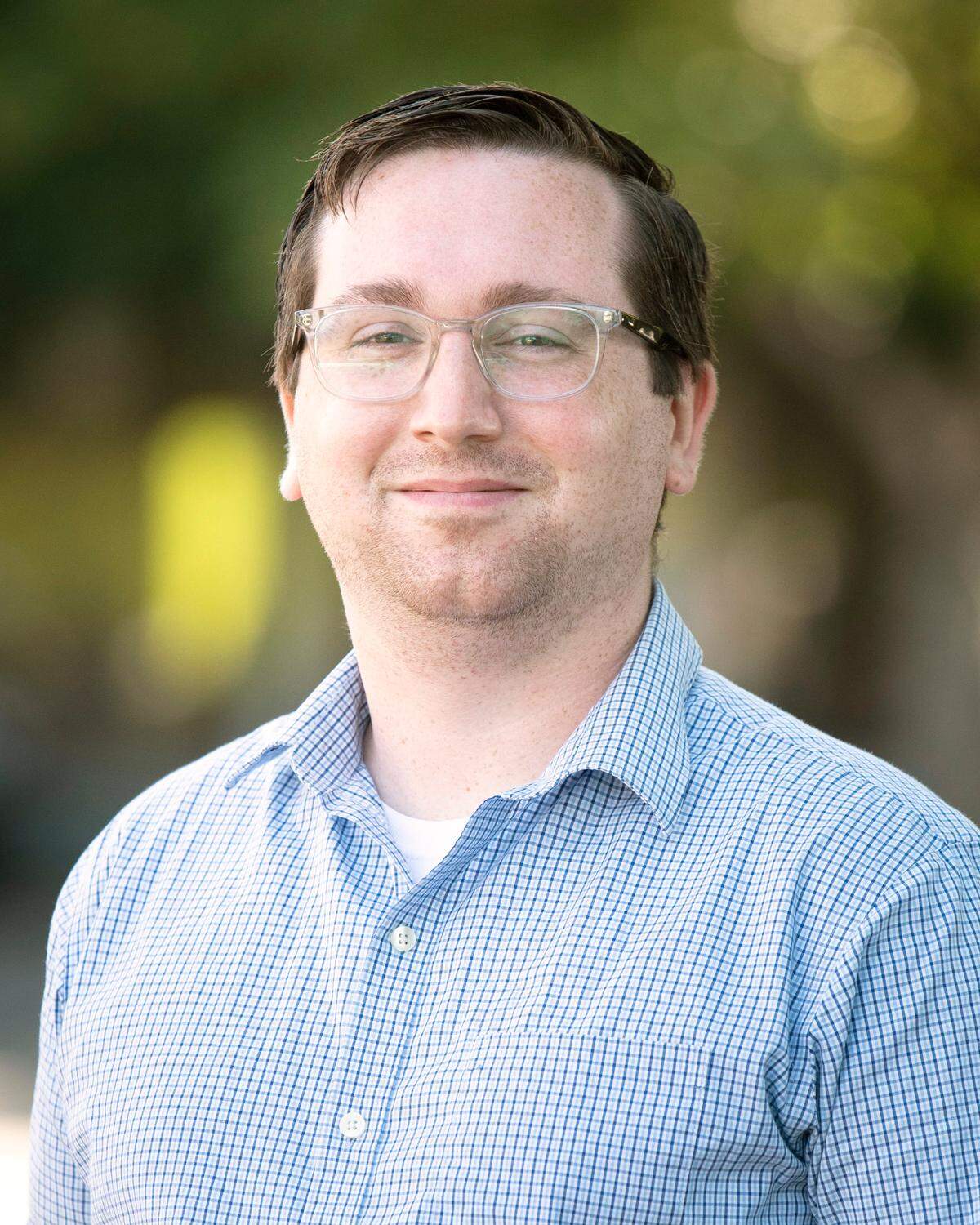
A WA teen’s phone app could stop you driving drunk. It earned her a national honor
What impact does Advaitha Motkuri want to have on the world?
If you ask, she’ll give you a pretty simple answer.
“Definitely helping people,” the Richland High School sophomore says with pride.
Motkuri, 15, has designed a smartphone app that can detect how drunk someone is by scanning the pupil of their eye. It’s a technology she hopes to roll out to consumers in the coming years.
Her project — entitled “People’s Pupil: A Detection in Intoxication” — is also winning accolades.
It earned her third place in the overall high school category at the 2022 Mid-Columbia Science Fair, as well as second place at last spring’s Washington State Science and Engineering Fair.
Now, it’s gained praise on the national level.
“People’s Pupil” was recently named winner of the 2022 Central Washington Congressional App Challenge, which is a coding competition for middle and high school students in the state’s 4th Congressional District.
“I was very surprised because I didn’t expect something I submitted as an assignment for a class to get this far,” she said.
Motkuri even received a call and congratulations from Congressman Dan Newhouse, whose office announced the winner of the contest.
“Every year, the Congressional App Challenge highlights the bright minds of Central Washington students,” Newhouse said in a prepared statement. “It is important for Congress to continue to support the next generation of leaders in STEM, computer science, and coding skills. Congratulations Advaitha, I am confident that you and other Central Washington students will continue to learn and grow in this field.”
Her winning phone app was selected by a panel of judges from the Pacific Northwest National Laboratory (PNNL) in Richland.
In addition to having her app shown in the U.S. Capitol Building, she’ll also be invited to the House of Code Capitol hill Reception in Washington D.C., and receive a short computer science mentorship session with PNNL scientists.
Since 2015, the Congressional App Challenge has sought to foster computer science and STEM education through presentation and competition. More than 40,000 students from across all 50 states have competed in the annual competition.
How does it work?
Drinking liquor can cause a person’s eyes to dilate at a slower rate. That’s what causes blurred vision.
The concept behind Motkuri’s application is pretty simple: By measuring the size of a person’s pupil through a series of photographs, her Python code can detect with relative certainty if someone is under the influence and if they should avoid getting behind the wheel.
The app would then open the Uber ride-sharing app and order the person a ride home. If that’s not available, she said, it could connect them to a family member or friend’s number.
Motkuri said she got the idea for the project by seeing drunk driving accidents on the news and by reading research on the alcohol’s affect on human eyesight.
There must be a real world use for this information, she thought.
“I got this idea based on the facial recognition (technology) on a phone. This is very new, and nobody has thought about connecting alcohol to a pupil, even though there has been research,” she said.
Dreams to work in medicine
Inclusion and diversity are also major tenets of the Congressional App Challenge competition. Participants are overwhelmingly more racially, cultural and gender diverse than some of the largest technology firms in Silicon Valley.
Motkuri knows this struggle as she’s the only woman of color in her advanced placement computer science class.
“Throughout all the classes I’ve taken, I was one of the very few women in there,” she said. “It’s very different from my other classes, but it’s also very exciting and exciting to learn, and that’s what I enjoy.”
Motkuri’s father is a material scientist at PNNL and her mother used to work for the school district. She said she’s never really been too into computer coding, but she learned the ropes in middle school on projects that taught to code in HTML, CSS and Java.
Regardless, she found she had a knack for it.
“I like math, but I can survive without it,” she jokes.
Motkuri said she hopes the PNNL scientists can help refine the app so she can publish it on Android and IOS application stores for people to use.
This story was originally published December 12, 2022 at 5:00 AM with the headline "A WA teen’s phone app could stop you driving drunk. It earned her a national honor."