Missing baby orca — a ‘symbol of hope’ for pod — is likely dead, Washington experts say
A baby orca is likely dead after it went missing from its group of endangered killer whales, about a month after it was born, Washington researchers said.
But this disappearance doesn’t come as a surprise to researchers who say the creatures face many threats, one being a lack of food.
The calf, named J60, wasn’t spotted with J pod, a group of Southern Resident killer whales, during a Jan. 27 survey in the San Juan Channel, the Center for Whale Research said in a Facebook post.
Researchers snapped photos of the baby orca’s potential mothers during the encounter, but he was no where to be seen, the group said.
“Given his young age, it is extremely unlikely that J60 was off on his own for the entire duration of the encounter,” the nonprofit said in the post.
Because of this, researchers said it’s likely the young orca died at some point.
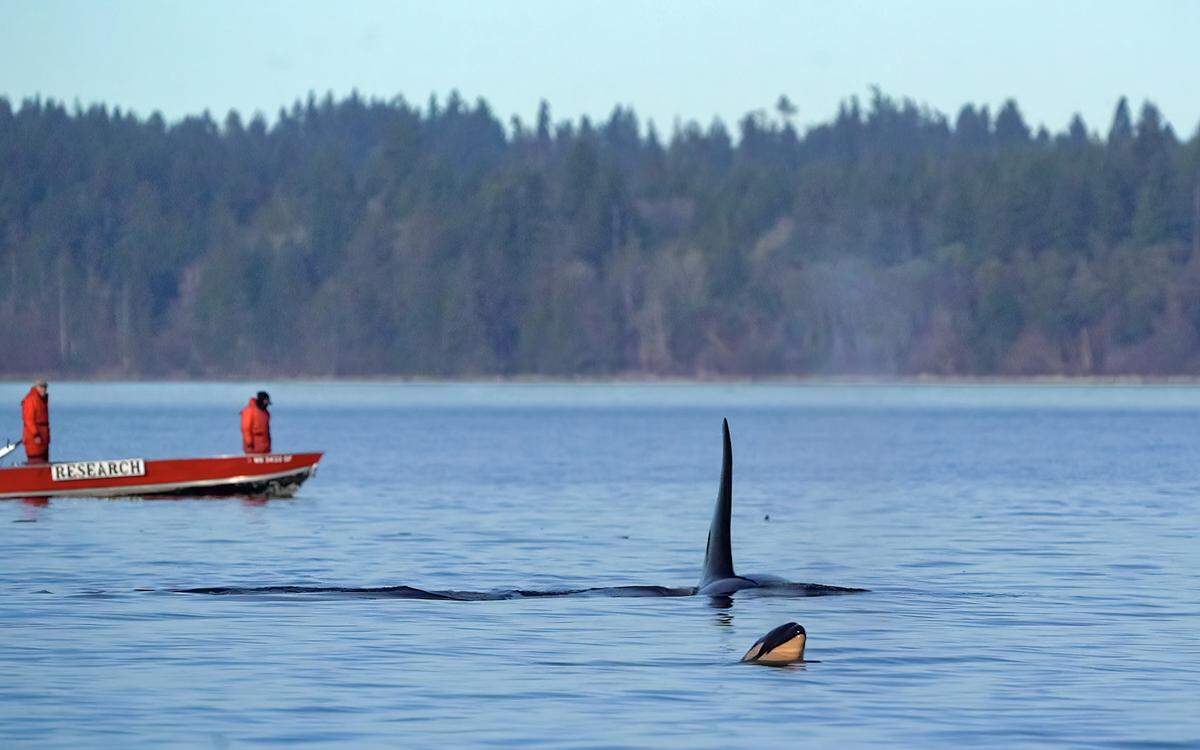
What to know about J60
The baby orca was first spotted by Puget Sound killer whale researchers Maya and Mark Sears on December 26, and it was later confirmed to be a boy, according to the nonprofit.
Researchers believed his mother was most likely J42.
Photographer Jami Cantrell and her friend Brittany Noelle also captured the days-old orca with an orange-colored face on camera shortly after he was born, McClatchy News previously reported.
After the news spread about discovery of the calf, experts and community members began warning the public about the species’ vulnerable conditions.
“My first priority is the health and safety of the Endangered Southern Resident killer whale population and not the amusement of those wanting to get close,” Noelle said in a statement.
Whales are endangered
Southern Resident killer whales are listed as an endangered species in both the U.S. and Canada, according to the Environmental Protection Agency. The population was 75 on July 1.
These populations have declined due to lack of prey, chemical pollution, noise disturbances from human vessels as well as other factors, the agency said.
Baby Southern Resident killer whales often don’t make it past their first year of life, research director Michael Weiss told McClatchy news by email in December.
One reason is the toxins that are transferred from the mother to the calf during gestation and lactation, the nonprofit said in the post.
Depleting food source: Chinook salmon
Poor nutrition is another reason for declining Southern Resident killer whale populations.
“New kids are always a moment of cautious optimism, but these whales need more prey (Chinook salmon) if we’re going to have more calves and keep them around longer,” Weiss said.
Chinook salmon are critical prey for the fish-eating mammals that rely heavily on them because of their “large size, year-round availability and high fat (lipid) content,” according to marine scientist Jacob Lerner.
However, chinook salmon populations have dwindled for many reasons, including river damming, overharvesting and selective harvesting of the biggest fish, Wild Orca’s Research Director Dr. Deborah Giles told McClatchy News.
The quality of the salmon has also changed.
About 80 years ago, Giles said these salmon may have weighed over 100 pounds. Now the average Chinook salmon size in Washington is about 12.5 pounds, she said.
So as a result, the orcas are getting less food.
When pregnant female orcas don’t get enough to eat, there are pregnancy failures, Giles said.
“Up to 70% of the females in this population are unable to bring their calves to bear,” Giles said. Or the calves die shortly after being born, like J60, because of the lack of food, she said.
“(J60) was an animal that was desperately needed in this population,” Giles said.
Hundreds of people commented on the group’s Facebook post about J60’s fate, sharing their thoughts.
“That calf was a symbol of hope for J-pod. They must be devastated!” one person commented.
“This breaks my heart,” another person wrote.
This story was originally published January 30, 2024 at 10:30 AM.