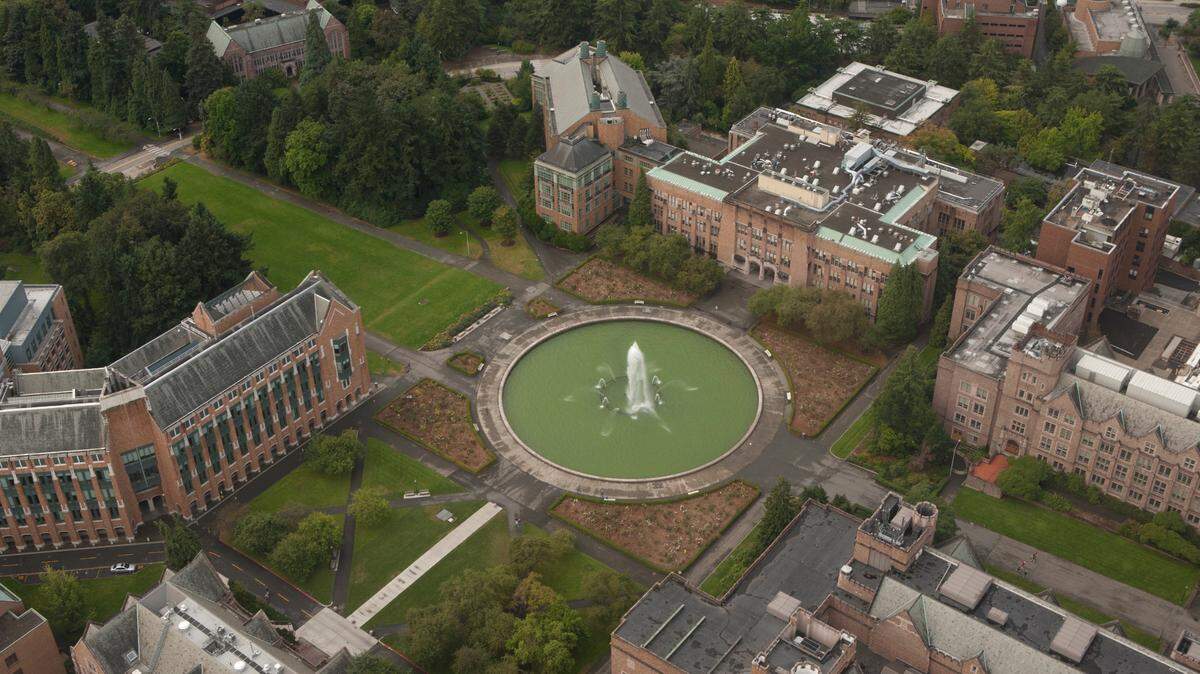
Aerial view of the University of Washington campus in Seattle, Wash.
Merrill Images
Getty Images
U.S. News and World Report released its annual college rankings on Sept. 24, with some Washington state schools seeing a slight drop from last year’s list.
The only other Washington school to make the top 100 was Gonzaga University, coming in at No. 98. The Spokane school fell slightly after taking the No. 93 spot last year.
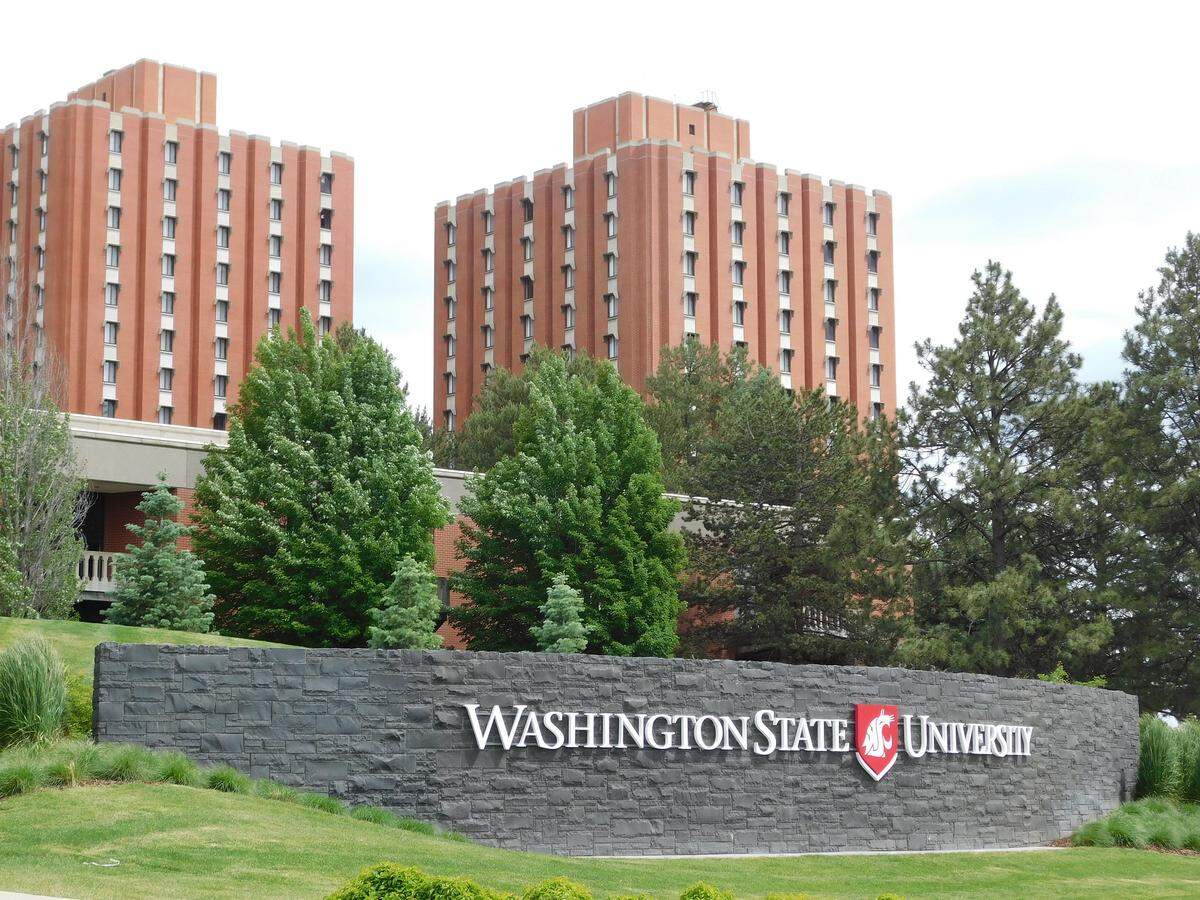
The campus of Washington State University in Pullman, Washington. Jimmy Emerson via Flickr
WA public colleges still among best regional universities
In addition to its ranking of national universities, U.S. News publishes a ranking of the best liberal arts colleges in the U.S., and the best regional universities in each part of the country.
Whitman College in Walla Walla took the No. 53 spot among liberal arts colleges, while the University of Puget Sound in Tacoma took No. 95.
Washington was also well-represented on the list of best regional colleges in the western U.S. Two schools – University of Washington Bothell and Whitworth University – made the top ten, while another two, University of Washington Tacoma and Western Washington University, made the top 20. Rounding out the list for Washington’s public universities, Central Washington University came in at No. 35, while Eastern Washington University reached No. 53 and The Evergreen State College took the No. 64 spot.
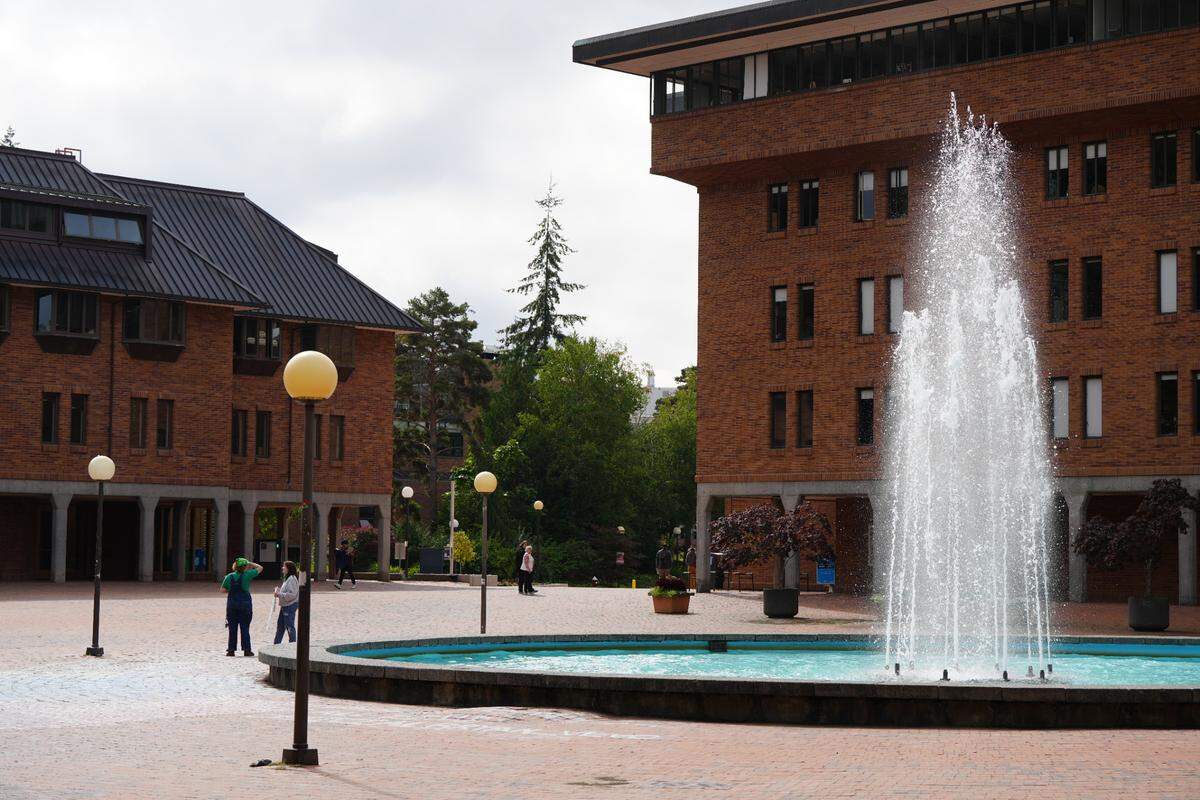
Red Square fountain at Western Washington University on September 10, 2024, in Bellingham, Wash. Rachel Showalter The Bellingham Herald
How U.S. News college rankings are determined
U.S. News looks at 17 factors to determine its list of best national universities, and 13 factors to rank regional and liberal arts colleges. The most significant factor is a school’s peer assessment score, which accounts for 20% of its overall mark, followed by its graduation rate and a metric that measures whether or not it outperformed its expected graduation rate.
Financial resources play an important role as well. 8% of the overall score is determined by the financial resources that a school has available for each student, while faculty salaries account for 6% of the score for national universities, and 8% of the score for all other schools.
Standardized test scores, a sometimes controversial component of the rankings, account for 5% of the score, while acceptance rate isn’t factored in at all.
For the purposes of the rankings, the national universities are schools that offer a broad range of undergraduate and graduate degrees, while regional universities offer fewer graduate opportunities and liberal arts colleges primarily focus on undergraduate education.
Daniel Schrager is the service journalism reporter at the Bellingham Herald. He joined the Herald in February of 2024 after graduating from Rice University in 2023.Support my work with a digital subscription