
Want to see northern lights in WA state? How to find areas with less light
If you’re in Washington state and missed seeing the northern lights at the end of May and start of June that resulted from a “severe” G4-level geomagnetic storm, you’ll likely get more chances this summer. An alert for a G3-level storm was issued by the National Ocean and Atmospheric Administration’s Space Weather Prediction Center for the night of June 2.
Clear, dark skies provide the best chance to see the aurora borealis, especially after sunset, which will be around 9 p.m. and later for the rest of June.
Geomagnetic storms are classified on a scale of one through five, with G3 and higher indicating a strong storm. A G4 storm, like the one that was observed in late May and early June can cause a “major disturbance in Earth’s magnetic field,” according to NOAA. Such a storm can produce auroras visible from much of the northern United States if conditions allow.
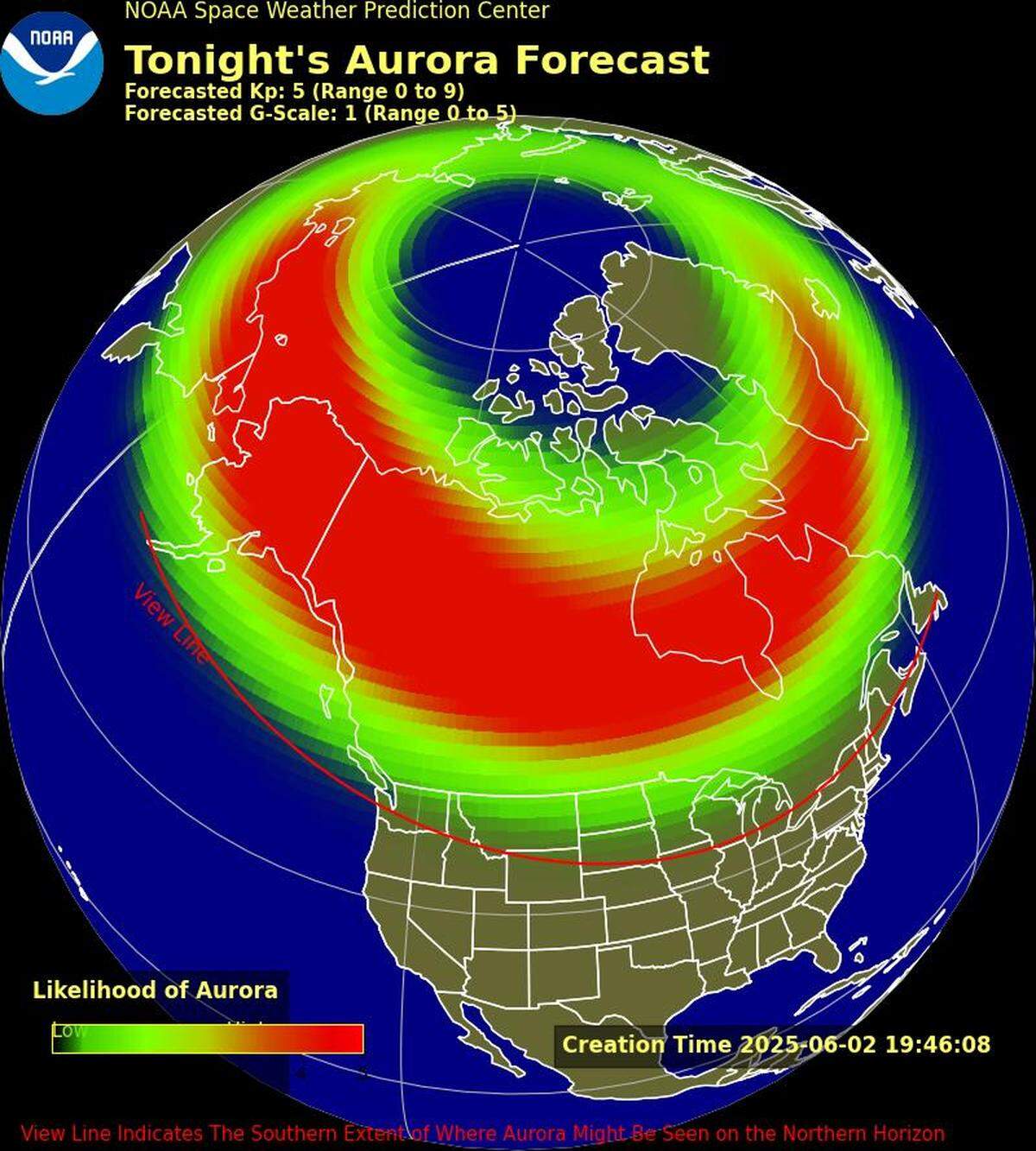
How to see the northern lights in WA
Much of Washington had the chance to see the most recent northern lights, according to NOAA’s experimental aurora prediction dashboard, although the likelihood was in the low to moderate range. The dashboard is updated throughout the day and provides same-day and next-day predictions.
The chances of seeing the aurora are better the farther north you are, and the less light pollution there is around you.
To find spots near you with low light pollution, you can search using interactive maps online.
Here are some useful light pollution map sites:
This story was originally published June 2, 2025 at 1:47 PM.