
Mount Rainier has seen hundreds of earthquakes this week. Is it safe to visit?
Over 300 minor earthquakes have been detected under the surface of Mount Rainier since the morning of Tuesday, July 8.
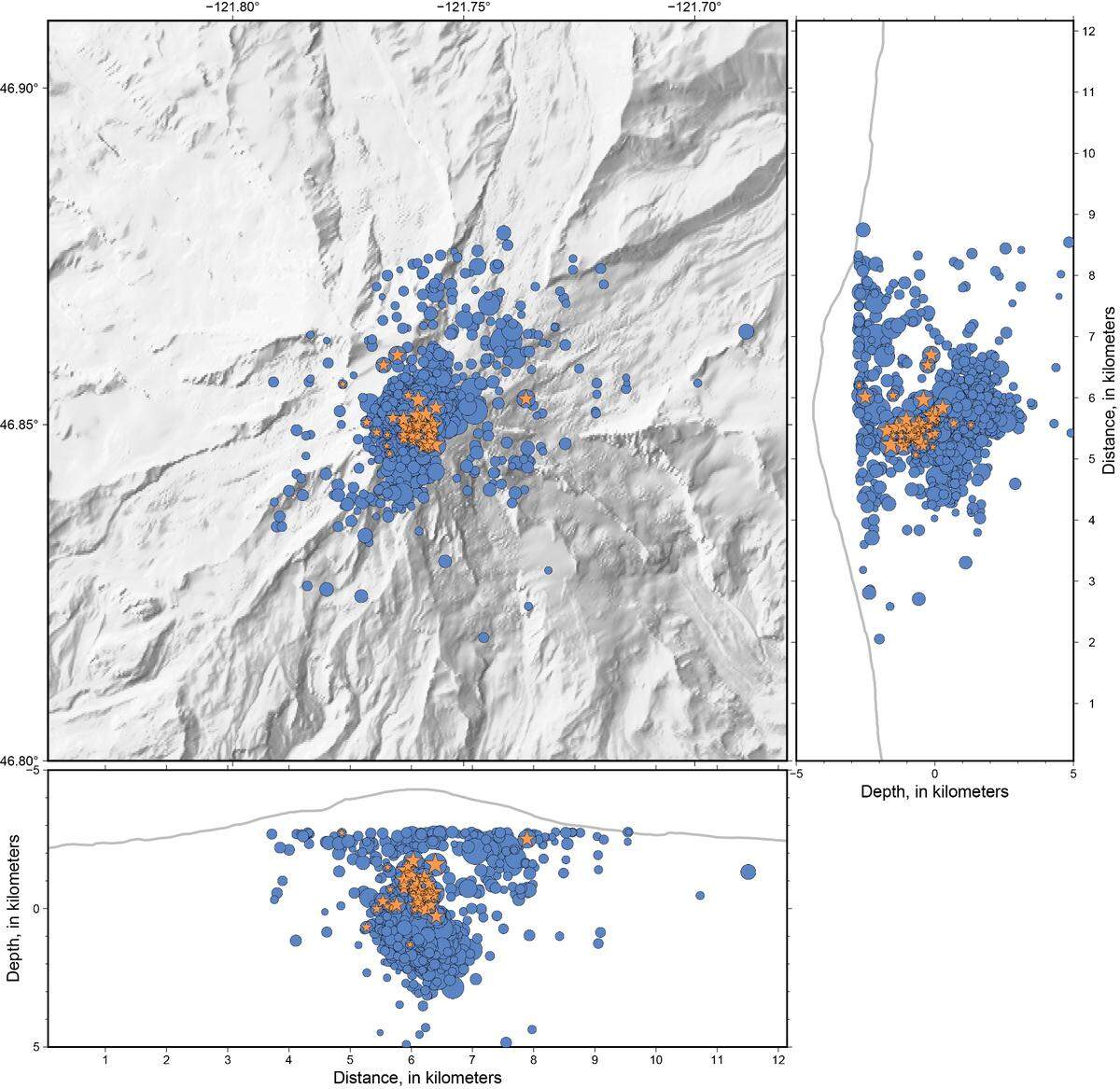
The swarm is the first of its kind since 2009, and, according to Pacific Northwest Seismic Network Director Harold Tobin, the biggest swarm the organization has ever detected.
“There have been something around 330 or so that our team here at PSN has actually verified and precisely located by expert analysis,” Tobin told McClatchy in a phone call. “And there are many hundreds, actually thousands more earthquakes that we can see, mostly much smaller ones, on the instrumentation.”
The early hours of the swarm brought more earthquakes than the nine that Mount Rainier would typically see over the course of a month, according to the U.S. Geological Survey.
“We were detecting numbers bigger than that per hour in this event, and even, actually, many more than that,” Tobin said.
So what does the seismic activity mean for people who are planning on visiting the mountain?
Is it safe to visit Mount Rainier?
The earthquake swarm coincides with the mountain’s busy season – it welcomed over 389,000 recreational visitors last July, the most of any month, according to National Park Service data.
Meilee Anderson, marketing consultant for Visit Rainier, a group that promotes tourism in the area, said that the earthquakes haven’t deterred visitors so far.
“We haven’t observed any changes in visitor behavior—no noticeable rise in cancellations or decline in interest,” Anderson said in an email to McClatchy. “Summer is the peak season for travel in this region, and interest in Mount Rainier and the surrounding communities remains strong.”
If you are planning on visiting Mount Rainier, the earthquakes shouldn’t be too much of a concern – Tobin said the mountain remains as safe as usual.
“My answer would be, based on what we’ve seen so far, yes, absolutely,” Tobin said. “I would unhesitatingly, personally, go for a hike or up to Paradise or be a climber [or a] mountaineer if I were able this weekend at any time, right now.”
Not only have the earthquakes not been significant enough to pose a threat to hikers, Tobin said they haven’t even been noticeable from the surface.
“I don’t think any of them have risen to the size that could even be felt at the surface,” Tobin said. “We really need our network of instruments to have even detected them.”
Mount Rainier eruption risk
In addition to the risk posed by the earthquakes themselves, Mount Rainier is an active volcano and seismic activity can be related to a potential eruption. But Tobin said there’s been no indication that this swarm of earthquakes is related to potential volcanic activity.
“There’s nothing about this swarm that is a sign of actual magma on the move, which would be more concerning to us… We see different kinds of earthquakes in the case where magma is actually on the move, and we would see, probably, other signs as well,” Tobin said.
Instead, Tobin thinks that the earthquakes have been caused by fluid making its way into cracks in the rock underneath the mountain’s surface.
“What we think is going on is that super heated, pressurized fluid – water, essentially, that’s circulating in the Earth’s crust – has found its way into some network of small faults or fractures in the rock, and that pressurization has just triggered small slips there,” Tobin said.
The activity hasn’t caused the USGS to change their assessment of the likelihood of an eruption.
“We’ll still watch and see how it develops, but what we’ve seen so far has not caused the USGS to change their assessment of the volcano’s hazard level from what they call normal and green – it’s a green light, yellow light, red light kind of system,” Tobin said. “So it’s still at normal, and we see this as within the normal range of what we would call background activity for Mount Rainier.”
Will earthquakes continue at Mount Rainier?
Tobin said that researchers would only begin to worry about potential volcanic activity if the magnitude of the earthquakes began to increase.
“If significantly larger earthquakes happened, like high magnitude three, four, even higher, then that certainly would… be a red flag to us that maybe more is going on,” Tobin said.
However, Tobin said that it’s most likely the activity continues to die down over the course of the week.
“The rate has been reduced since the initial burst of activity in the first 12 or 24 hours of this swarm, but it’s still going on. We’re still seeing events as of the last few hours even. And the most likely scenario is that it continues to taper back to the background,” Tobin said.
If you’re concerned about earthquakes while you’re at the mountain, you can check the Mount Rainier page on the USGS website for the latest updates.