
After Capitol break-in, experts hope to return WA historic piano to former glory
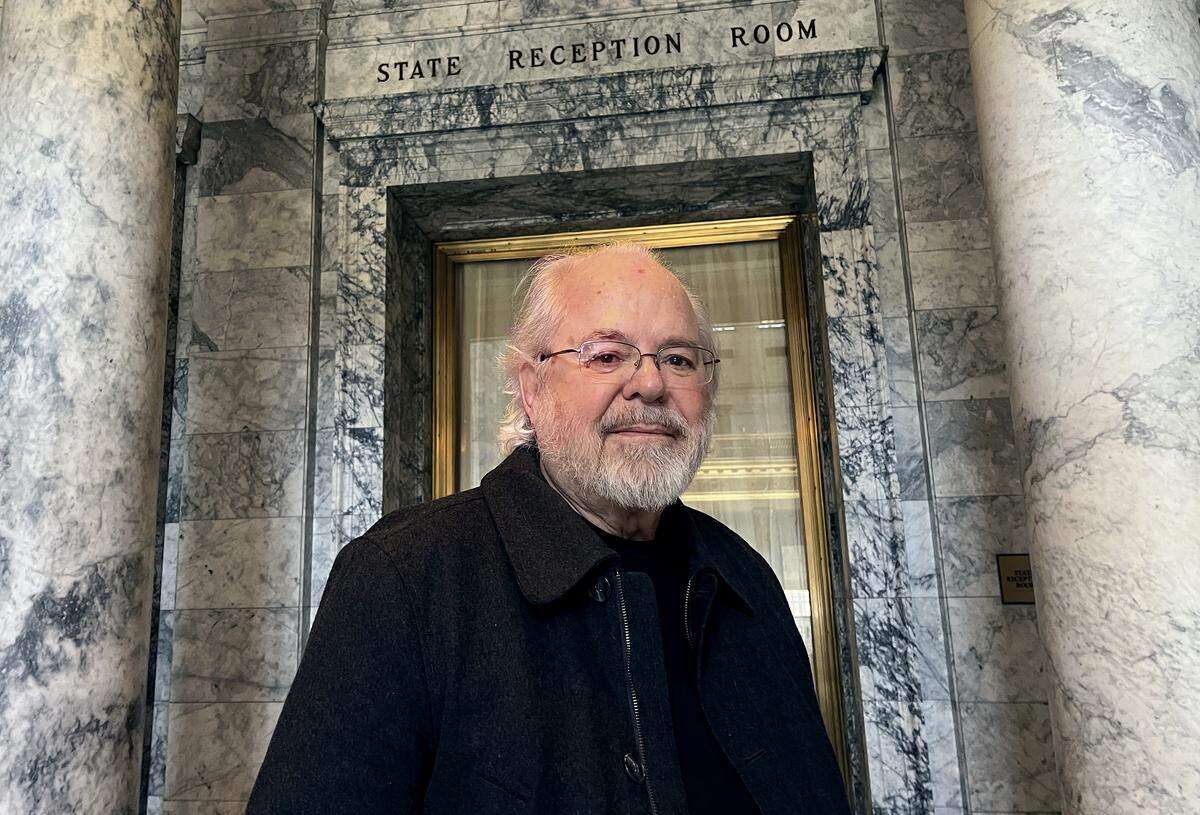
Returning the Blüthner piano to the Washington state Capitol was a proud moment for Ken Eschete. In 2017, the Spokane-based piano technician had worked to restore the historic instrument, which had lived in the State Reception Room for nearly three decades.
So, learning that someone had broken into the state Legislative Building earlier this month and damaged the piano was hard for Eschete to hear.
“It’s heartbreaking to anybody that’s associated with the restoration of an instrument,” he said. “We got kind of attached to it.”
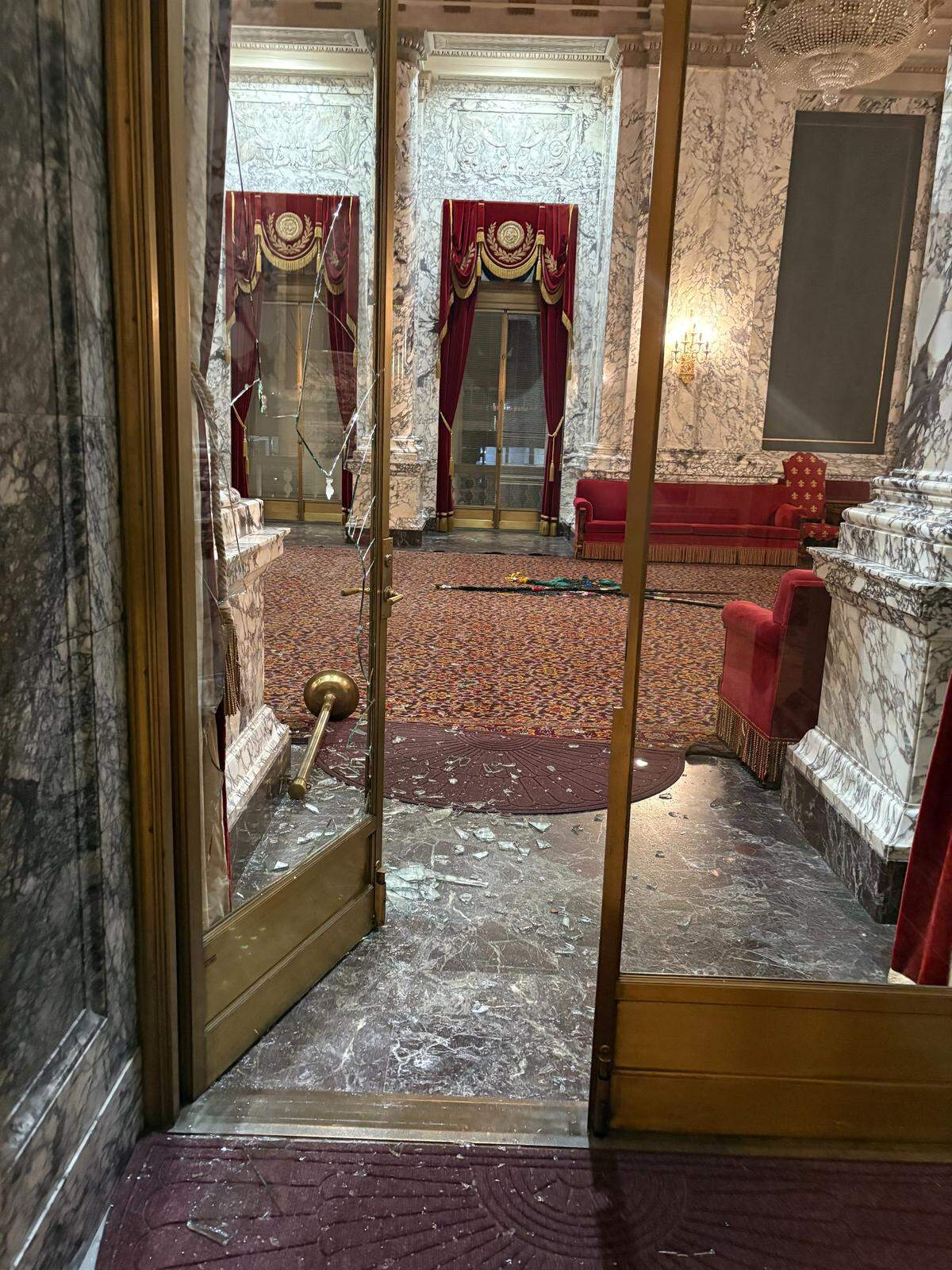
The night of Oct. 5, a man broke into the domed state Capitol building and vandalized several significant artifacts. The suspect was arrested, and was released from jail with conditions the following day, but without bail.
Gunnar McLean Schubert, the 29-year-old suspect, was ordered to undergo a mental health evaluation.
The Department of Enterprise Services (DES), which oversees the Capitol Campus, released an initial damage assessment. In addition to the piano and its totaled, non-historic bench, authorities say the suspect burned flags, shattered a historic glass entry door, toppled bronze busts and more.
It’s unknown how much the repairs will cost.
In past experience with pianos that weren’t burned themselves — but were close to a flame and exposed to smoke and steam to extinguish the fire — restoration work can be pretty involved, Eschete said. Smoke deeply penetrates the felts inside the instrument, leading to deterioration. Then there’s the matter of mitigating the smell.
The Spokesman Review noted that heat from the bench that was set aflame wound up blistering the Blüthner’s front, and small bubbles formed on its exterior. Eschete said great effort had previously been made to preserve its original finish.
“I would hate to see a refinisher take after it, because that’s not a conservation approach,” he said. “We’re regarding this as a historic object.”
Now, Eschete and fellow piano technician Delwin Fandrich of Olympia are hoping to ensure the state takes care to properly assess and mend the complex, 132-year-old instrument.
Eschete is a modern piano restorer with certification in the Piano Technicians Guild. He’s also a certified conservator of historic keyboard instruments, with membership in the American Institute of Conservation.
He’d like to guide the work this time around, too — or someone with equal qualifications.
History of WA’s Moldenhauer Blüthner piano
The 6-foot, 3-inch Blüthner grand piano was made in Leipzig, Germany in 1893. It features a light rosewood veneer, turned legs, and, on either side of its ivory keys, “carved acanthus leaf decorations,” as noted on the state Legislature’s website.
The piano was dear to musicologist Hans Moldenhauer, a Spokane music legend. It traveled with his family from Germany in 1938, first making a stop in New York before coming to Spokane, where it remained for roughly five decades.
Moldenhauer’s estate gifted the piano to the state of Washington in 1990, and it was placed in the State Reception Room.
Over time, worries about its worsening condition prompted the search for professionals who could restore it to, as best as possible, its original performance condition and aesthetic.
In late 2016, the state contacted Fandrich, the Olympia-based registered piano technician, according to an emailed timeline. Fandrich was asked to either complete the restoration himself, or to oversee the work and tap someone else to do it.
He opted for the latter and chose Eschete, whom the piano went to in March 2017, the timeline shows. Ultimately the restored piano returned to the State Reception Room, where it was spotlighted in a public reception in November of that year.
Concert pianist Wolfgang Wortberg performed at that event.
“He’s a friend of ours, and drops by periodically to play our piano, which is also a very historic instrument,” said Fandrich, who is semi-retired today but still does some piano-design consulting.
DES is assessing “the need for specialized attention to each of the damaged items, including the piano,” a spokesperson said via email. The initial examination has shown that it can be repaired and refinished.
The Blüthner is a treasured component of the room in which it resides, the email continued. Sometimes, as school field trips stop by, a student will get the chance to play for their peers.
The agency is working with its capitol conservator to determine a cost estimate.
“Once the cost estimate and scope are established, we will move forward with contracting,” the spokesperson said.
Eschete said if the piano has been exposed to high humidity, it’s a bad idea to dry it out immediately. That’s because many of its inner parts are made of wool. Being too hasty could lead to shrinkage, like putting a wet wool sweater in the dryer.
The Blüthner piano — with its European sound — is different from an American or Japanese piano, both of which have a more cutting, bright tone, he said.
“It is designed to please the ear without stressing the listener,” Eschete said. “I think of it as an old-pair-of-slippers kind of sound.”
Push for another Blüthner reception
Eschete and Fandrich’s wife, Barbara Fandrich, say they’ve been in touch with the state. Delwin Fandrich said he was concerned to hear about the break-in and piano damage.
“And I’m particularly concerned because, so often, repairs when they’re done are not done to what would be called restoration standards,” he said.
Restoring a piano is different than rebuilding one, Fandrich explained. Rebuilding would mean disassembling the instrument and working to make it contemporary, including through replacing old parts.
But with restoration, experts aim to take the piano back to its original condition: the way it left the factory, he said. “And that means working with all of its foibles and the sometimes awkward mechanisms that those instruments had,” he said.
Fandrich fears that damage to the instrument may actually be less superficial than initially believed.
After all is fixed, he hopes that the state will host another reception. He wants the Blüthner piano to be used for community events.
“I’d like to see citizens actually being able to go in and listen to it being played and enjoyed,” Fandrich said. “That’s what pianos are for. They’re not meant to be visual art. They’re meant to be audible art.”
This story was originally published October 19, 2025 at 12:29 PM with the headline "After Capitol break-in, experts hope to return WA historic piano to former glory."
.jpg)