
70-year-old WA nuclear reactor stack toppled with explosives. Watch it drop
AI-generated summary reviewed by our newsroom.
- Hanford demolished a 175‑foot reactor exhaust stack as a step toward cocooning.
- Explosives used to bring down stack at K West Reactor.
- Putting reactor in storage mode will cut monitoring costs.
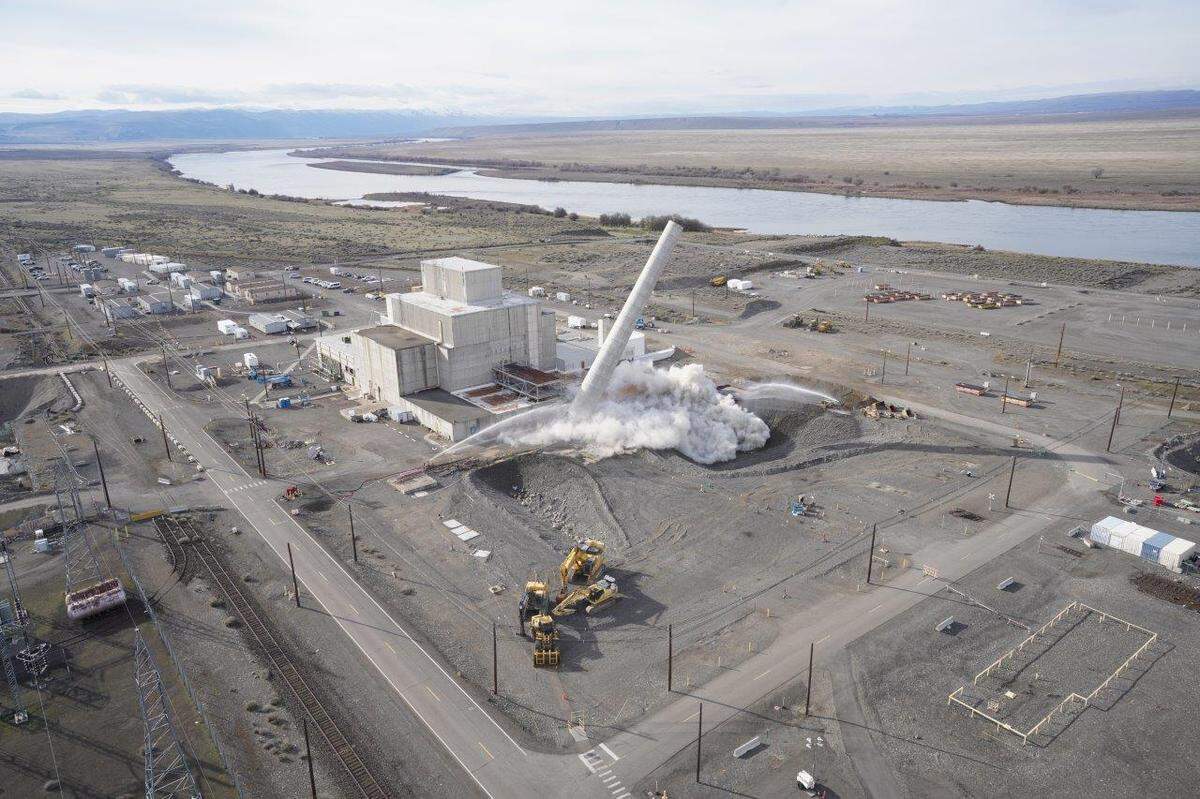
The 175-foot-tall concrete exhaust stack at the Hanford nuclear site’s defunct K West Reactor came crashing down Friday afternoon.
“Okay, here we go,” came the announcement and then a countdown started – 10, 9, 8 ...
A “boom” sounded as carefully placed explosives around the base of the stack were remotely detonated. The stack leaned to its side, taking a couple of seconds to fall in one piece and hit the ground with a thud.
As a cloud of dust rose, the limited number of workers watching cheered.
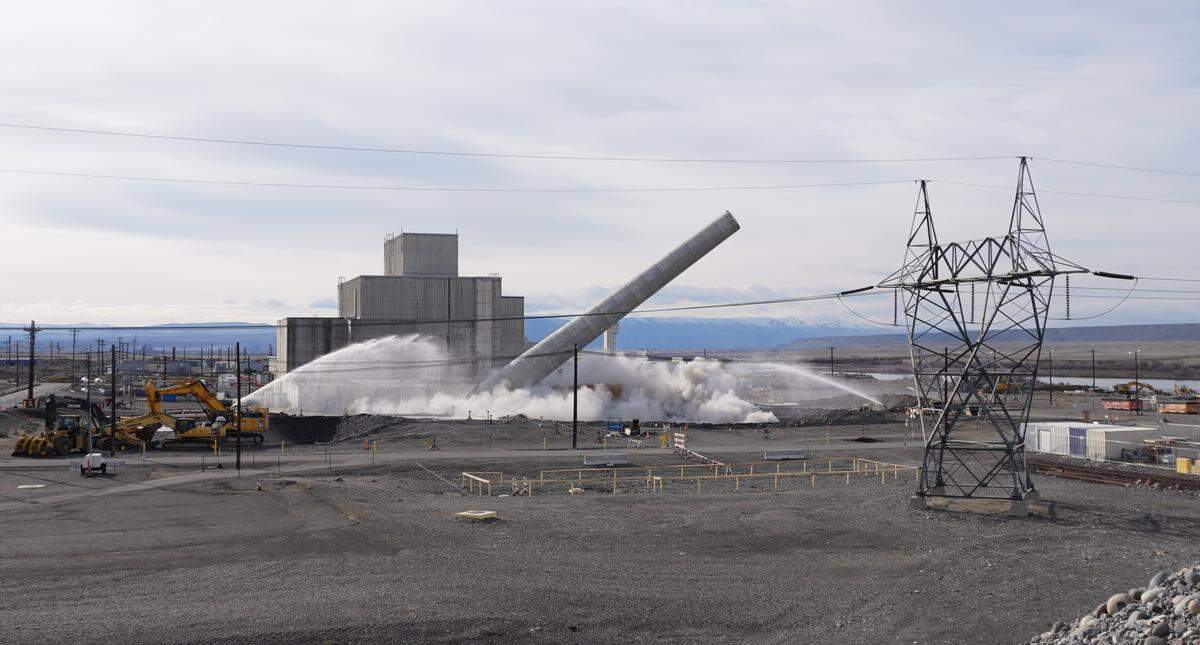
Department of Energy contractor Central Plateau Cleanup Co. (CPCCo) hired Controlled Demolition Inc., the same company that took down the Seattle Kingdome in 2000, to demolish the reactor stack on a Friday off for most Hanford workers.
The demolition of the stack is a step toward putting the K West Reactor into temporary storage.
The reactor operated from 1955 to 1970, irradiating uranium fuel to produce plutonium for the nation’s Cold War nuclear weapons program.
During operation, airborne releases with radioactive contamination went up the reactor’s exhaust stack.
Then the stack was 300 feet tall, but in the early ‘80s it was shortened to 175 feet and sand blasting was done to help decontaminate it.
Monitoring was done during demolition of the stack Friday to check for radioactive contamination.
Reducing Hanford site risk
“We are clearing the path for the final stages of decommissioning the K West Reactor,” said Ray Geimer, the Hanford nuclear site manager for the Department of Energy.
That will reduce the longterm requirements for surveillance and maintenance of the reactor and eliminate threats to the environment, he said.
The reactor sits about 300 yards from the Columbia River.
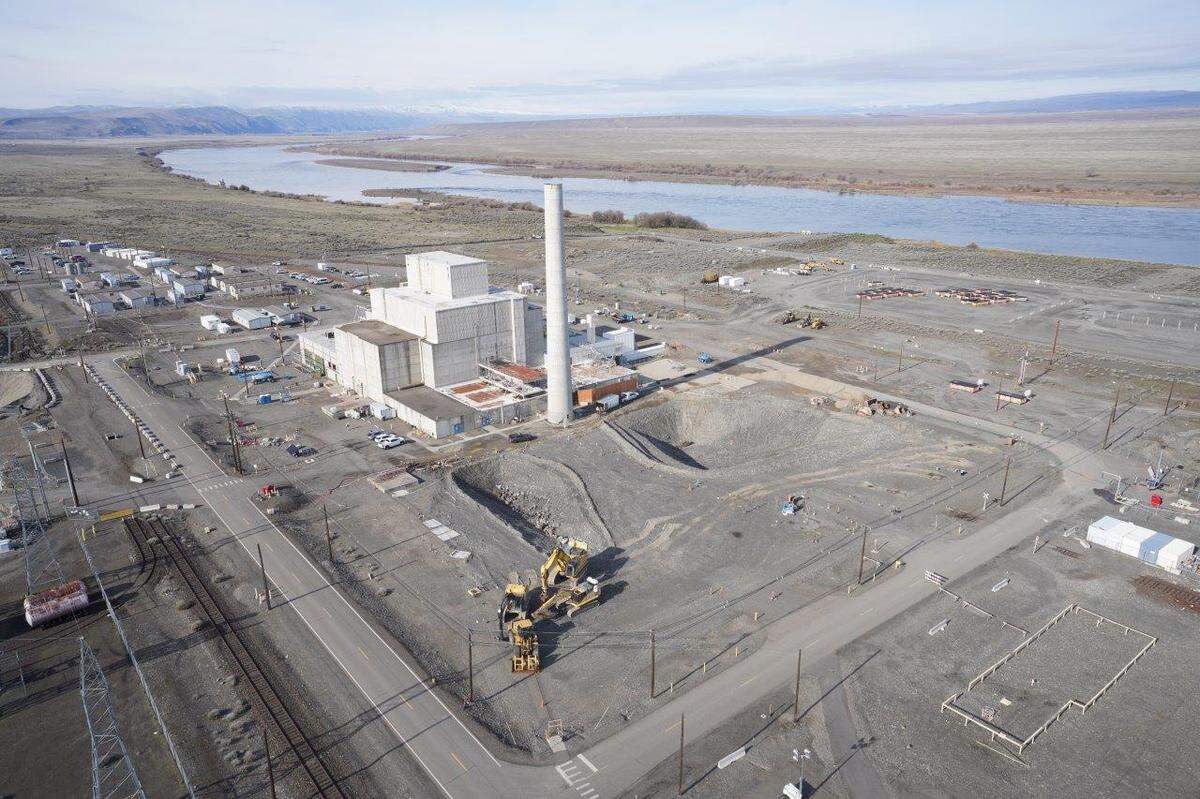
Bringing down the stack demonstrates CPCCo’s “commitment to being responsible stewards of the land and continuing our drive to reduce sitewide risk,” said CPCCo President Bob Wilkinson.
The K West Reactor is the eighth of the nine Hanford plutonium-production reactors along the Columbia River in Eastern Washington that will be “cocooned,” or put in temporary storage for up to 75 years to allow radiation in the core to decay to lower levels before a permanent environmental cleanup solution is attempted.
The ninth reactor, historic B Reactor, was the world’s first full-scale nuclear reactor and is being maintained in its original condition as part of the Manhattan Project National Historical Park.
Work has been underway for decades to prepare the K West Reactor for temporary storage, following cocooning of the nearby K East Reactor in 2022.
At the end of the Cold War the two reactor’s attached fuel storage basins were called back into service to store 2,300 tons of highly radioactive irradiated fuel underwater. The fuel had been irradiated at Hanford’s newest reactor, N Reactor, but never processed to remove plutonium.
The bulk of the fuel was removed from both reactors’ fuel storage basins between 2000 and 2004, with radioactive sludge that had built up in the basins and contaminated equipment requiring additional years of work to remove.
2032 K West Reactor cocooning
Rubble from the K West Reactor stack will be taken to the Environmental Remediation Disposal Facility, a lined landfill in central Hanford, for disposal.
The next step in preparing the reactor for cocooning will be tearing down the office area on the east side of the reactor and some of the structure on its west side.
Heavy equipment will eventually be used to demolish the reactor’s fuel storage basin, which has been drained and filled with grout.
It is estimated to be a two-year project that is not included in this fiscal year’s Hanford site budget. The K East Reactor Basin was demolished in 2009.
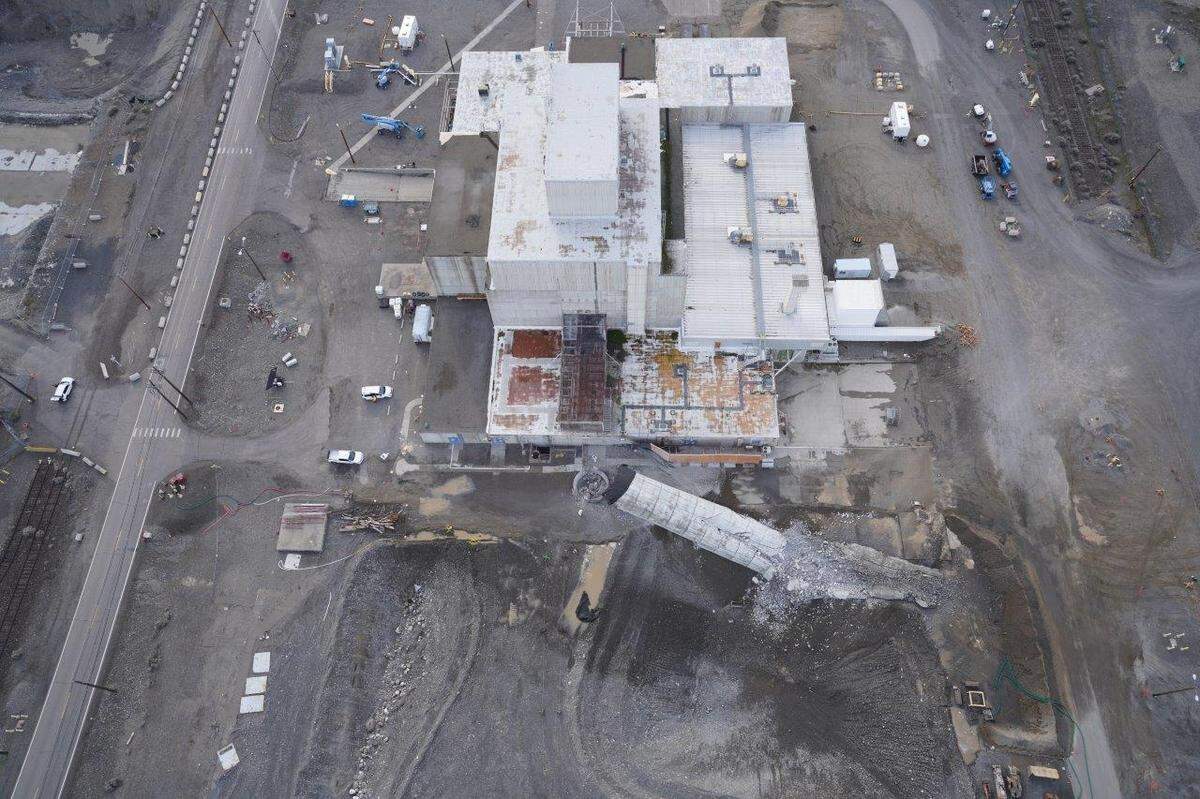
Cocooning of the K West Reactor is not expected to be done until the end of 2032.
Traditionally cocooning has been done by tearing down reactors to little more than their radioactive core, sealing up any building openings and reroofing them.
However, in a new method, the K East Reactor was covered with a freestanding steel enclosure with straight sides and a sloping roof.
The new method is expected to better protect the concrete of reactors from wind, sand and cycles of freezing and thawing; reduce the need for roof maintenance; and be less costly.
This story was originally published February 20, 2026 at 5:48 PM with the headline "70-year-old WA nuclear reactor stack toppled with explosives. Watch it drop."