
Students get boost to high-pay careers with Tri-Cities nuclear simulator
AI-generated summary reviewed by our newsroom.
- Nuclear expected to play key role in Tri-Cities future economy
- Students can train for high paying jobs on new control room simulator
- DOE grant and colleges expand nuclear curriculum and technician pipeline.
The Tri-Cities is building on its history of being on the forefront of nuclear innovation with a simulated control room to train the next generation of nuclear workers to operate advanced reactors.
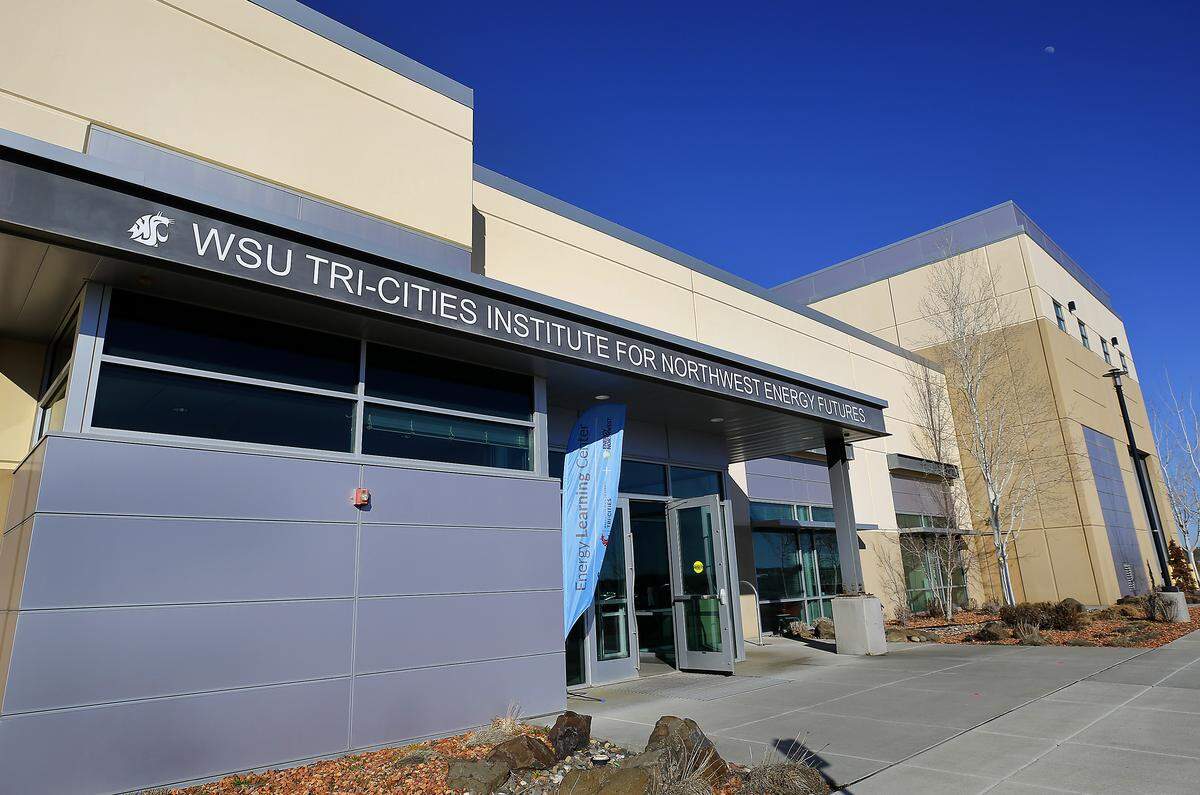
The Energy Learning Center simulator at Washington State University Tri-Cities in Richland was officially opened Wednesday with tours and a ribbon cutting.
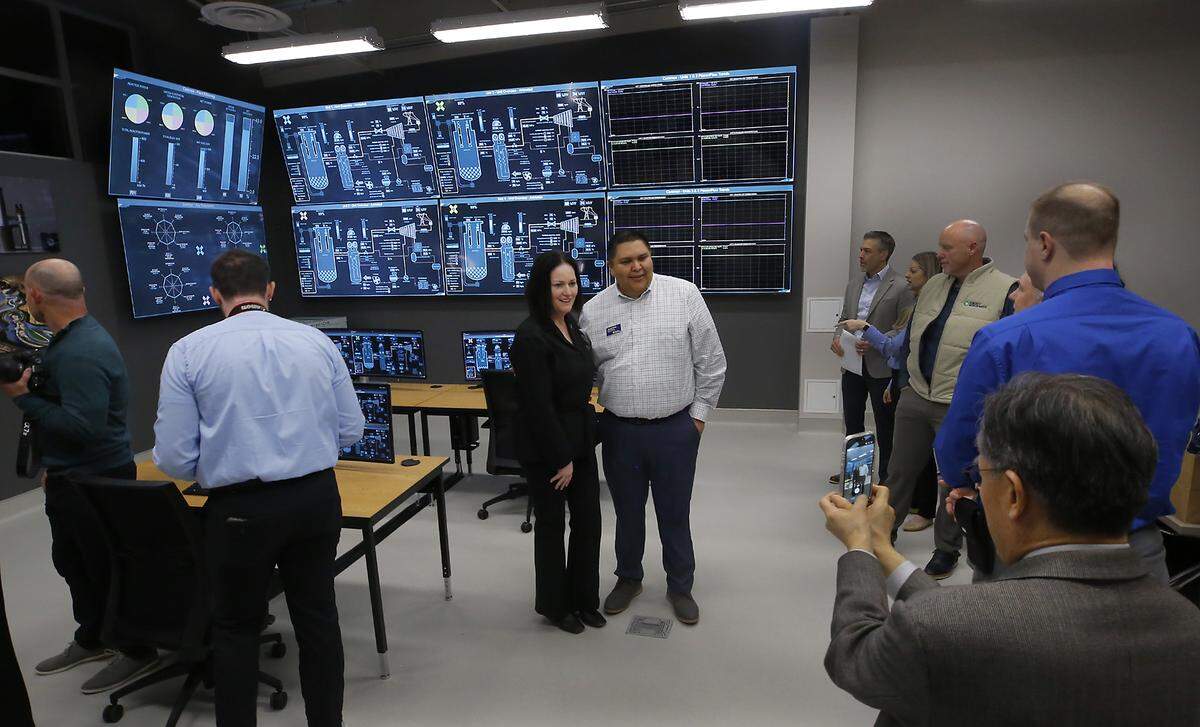
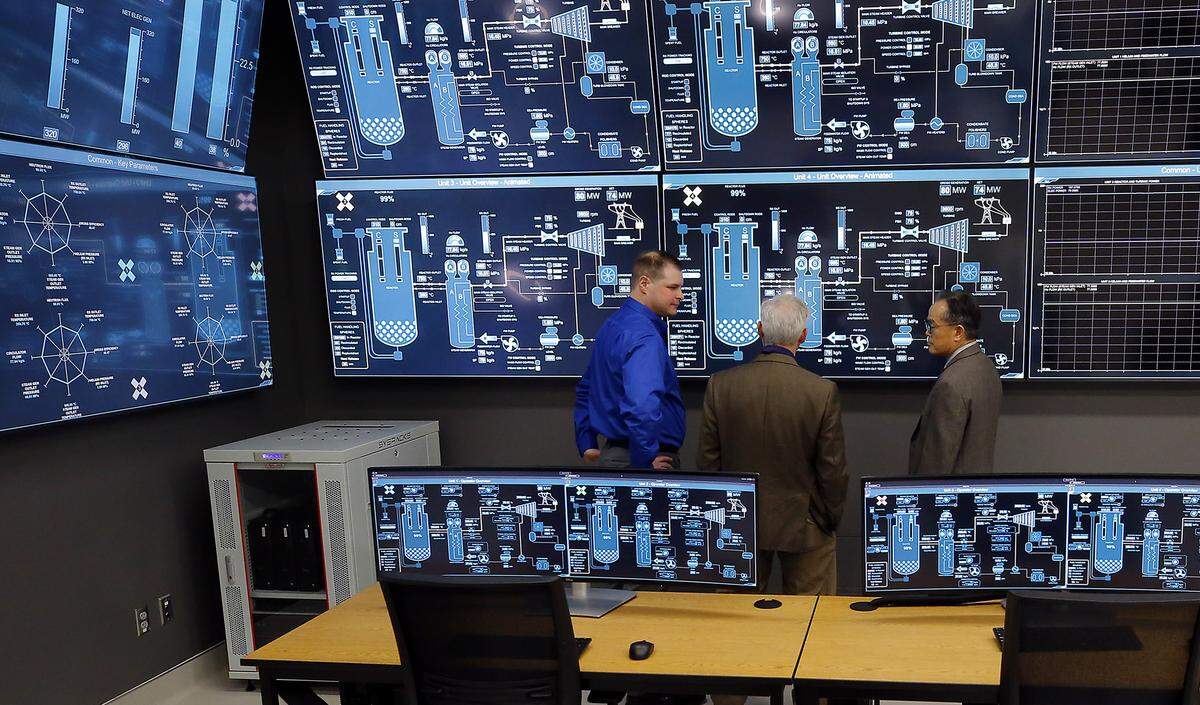
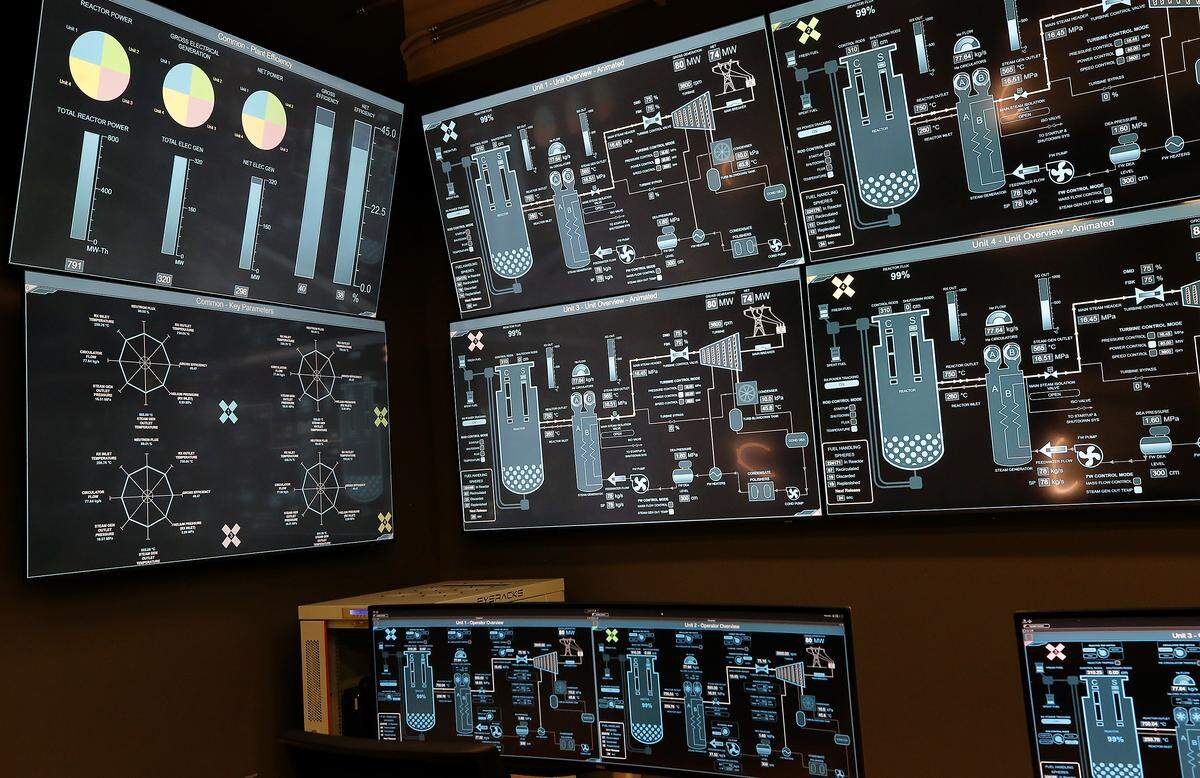
In a simulated control room for an advanced nuclear reactor at WSU Tri-Cities’ Institute for Northwest Energy Futures, oversize electronic monitors fill walls to the ceiling displaying graphs, charts and diagrams.
Students from Columbia Basin College in Pasco and WSU in the Tri-Cities and Pullman can use keyboards and monitors below the displays to learn and practice operating an advanced small modular nuclear reactor. The project is a collaboration of CBC, WSU Tri-Cities and Energy Northwest.
“We hope this community sees this simulator as a sign of the future and what is possible here for economic development and jobs, continuing our ‘nuclear’ legacy,” said Greg Cullen, Energy Northwest vice president for energy services and development.
The Tri-Cities gave birth to the atomic age, building B Reactor, the world’s first full-scale production reactor at the Hanford nuclear site during World War II.
Now Energy Northwest has been on the cutting edge of moving advanced nuclear power forward, working toward starting an advanced small modular reactor before headlines on expanding nuclear energy coverage became common, said Christina Walrond, an X-energy director.
X-energy initially planned its first advanced reactor near the Tri-Cities, but now the Tri-Cities is second in line behind a Texas development for Dow.
Advanced nuclear reactor near Richland
X-energy is working with Energy Northwest to build an advanced small modular reactor on unused Hanford nuclear site land leased from the federal government 10 miles north of Richland near Energy Northwest’s Columbia Generating Station, the Pacific Northwest’s only commercial nuclear reactor.
The new project, the Cascade Advanced Energy Facility, could be producing power in the mid 2030s.
“We frankly know the closer you are to a nuclear plant, the higher the likelihood is that you have the knowledge about nuclear energy, that you are accepting of nuclear energy and you see the benefits,” Walrond said. “This community has such a legacy rooted in nuclear that truly the workforce here is world class.”
Initially, Cascade Advanced Energy Facility will include four modules that can generate 320 megawatts of energy capacity. Amazon will have the right to buy that electricity to help power its artificial intelligence and cloud services.
However, the facility will be licensed and permitted before the first modules begin operation for an additional eight modules, Cullen said.
They could be operating within three to four years after the first four modules, bringing the energy capacity of the facility to 960 megawatts and expanding the use of electricity produced beyond Amazon.
.png "CAEF 8 (2).png")
By comparison, Columbia Generating Station has a total generating capacity of up to 1,207 megawatts, or enough electricity to power about 1 million homes.
The initial small modular reactor plant is expected to employ 1,000 workers for construction and then at least 100 workers during operations, including operators and engineers.
Grant expands CBC nuclear program
The simulator was paid for with some of the money from a $2 million grant from the Department of Energy Community Capacity Building Grant Program.
Energy Northwest used a little less than half the grant for the simulator project, including ongoing outreach to students that will help expand the pipeline of skilled workers for the nuclear industry.
The remainder of the grant is being used by Columbia Basin College to expand nuclear energy education and build awareness of job opportunities.
“We know that practical, hands-on experiences are key to helping students discover career pathways they may not have considered before,” said CBC President Rebekah Woods in a statement.
CBC students use their college education to find jobs in the community, said Jesus Mota, CBC dean for career and technical education. But they may not know about the career opportunities in the nuclear industry, he said.
The DOE grant has allowed CBC to hire a second faculty member for its Nuclear Technology Program, said Jason Stone, assistant professor and director of the program.
The program will grow to 74 students in the fall, with day and evening programs offered. The grant is also being used to expand the curriculum to cover small nuclear reactors and additional clean energy programs, including solar, geothermal and wind.
Energy Northwest is already hiring students from the CBC program in positions that start at $39 and $45 an hour, plus overtime.
WSU nuclear career pathway
WSU Tri-Cities is turning its energy program increasingly to nuclear, said Sandra Haynes, WSU Tri-Cities chancellor.
The simulator program “is especially relevant to this region given the strong nuclear presence and planned future expansion,” she said.
WSU Pullman has a 1 megawatt TRIGA research reactor that students are taught to operate. They can become licensed by the U.S. Nuclear Regulatory Commission as nuclear operators, said Zach Heiden, associate director of the Pullman Nuclear Science Center.
Pullman students will be visiting the Tri-cities as the Richland simulator is incorporated in their curriculum, giving them knowledge of advanced reactor operations, he said.
In the fall, the reactor operations program for undergraduates is expected to be expanded from the Pullman campus to the Tri-Cities campus.
“By working together, we’re creating opportunities for students to gain experience with the technologies that will define the next era of clean energy,” Cullen said.
This story was originally published February 26, 2026 at 12:14 PM with the headline "Students get boost to high-pay careers with Tri-Cities nuclear simulator."