
How does Washington’s new millionaire tax work? Your questions answered
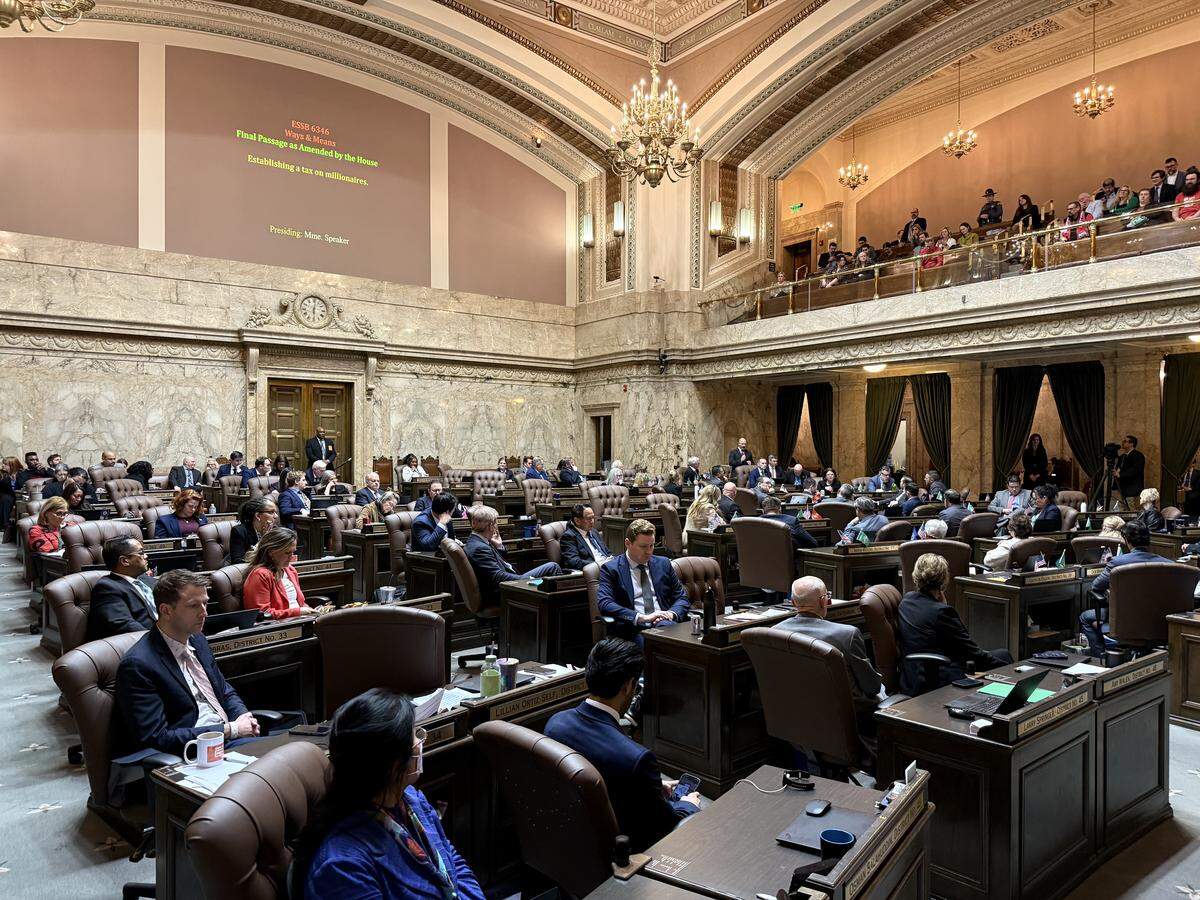
In March, the Washington State Legislature passed Senate Bill 6346, a controversial bill establishing a new income tax on millionaires.
SB 6346, which taxes households bringing in more than $1 million annually, has been a hot topic among legislators and constituents alike.
State legislators debated the bill for more than 24 hours, McClatchy Media previously reported.
After passing the state Senate and House of Representatives, the bill was delivered to Washington Gov. Bob Ferguson. Ferguson signed the bill into law on Monday, March 30, during an event at the state Capitol building.
How does the new income tax on millionaires work? And how accurate are claims about the tax?
Here’s what you should know:
How does Washington state’s new millionaires tax work?
SB 6346 imposes a 9.9% levy on Washington residents with an annual household income of more than $1 million, starting in 2028.
The income tax would begin generating revenue in 2029, unless there are ballot measures or legal challenges delaying its start.
It’s expected to raise at least $3 billion in tax revenue each year, according to state officials.
Will Washington state tax non-millionaires?
SB 6346 specifically taxes Washington state residents who make more than $1 million in income in a single year — not people whose net worth meets or exceeds $1 million due to the value of their home and other factors.
To qualify for the so-called millionaire tax, a household must earn at least $1 million in income alone.
The bill includes language to adjust for inflation over time.
Less than 0.5% of Washingtonians will be affected by the tax change, according to state officials.
Out of Washington state’s 8 million-plus residents, an estimated 20,000 households will be impacted by the income tax increase, The New York Times reported.
What will revenue from the millionaire tax be used for?
A chief motivation in income taxes for wealthier Washington residents is addressing the gap in the state budget.
By adding billions to Washington’s annual revenue, supporters say, core government services and additional resident care will be better funded.
Revenue generated from the tax will be allocated for education, health care and housing needs, among other needs.
In a Facebook post, Ferguson said the bill “represents historic progress in rebalancing our unfair system.”
“It sends significant dollars back to Washington families and small businesses,” Ferguson wrote in the March 10 post, expanding the Working Families Tax Credit to 460,000 additional households and supporting free meals for students across the state.
“That’s money straight back into the pockets of working families,” Ferguson said.
Will Washington’s new income tax drive rich residents out of state?
Critics worry that Washington’s millionaire tax could drive out high-income residents and their businesses, inspiring them to relocate to other states with lower income tax rates.
Currently, only eight U.S. states besides Washington state do not impose personal income taxes: Alaska, Florida, Nevada, New Hampshire, South Dakota, Tennessee, Texas and Wyoming.

Prior to SB 6346’s passage, some of Washington’s wealthiest residents had either moved out the state or threatened to leave.
In 2023, Amazon founder and former CEO Jeff Bezos moved to Miami.
Former Starbucks chief executive Howard Schultz — one of Seattle’s wealthiest residents — announced a move to the same Florida city in March.
Some legislators are hopeful the higher earners who have long benefitted from Washington state’s lack of personal income tax will be willing to stay despite the change, especially considering federal tax cuts they’re received under President Donald Trump.
“Maybe they won’t mind contributing here at home,” state Rep. Brianna Thomas, D-West Seattle, said in March during House floor debates. “Maybe they’ll be happy to stay here and invest in the community that has given them the opportunity to thrive.”
Research by the Center on Budget and Policy Priorities found that state taxes have little effect on interstate migration, including among high-income households.
“State income tax increases on wealthy people have not led substantial numbers of them to move to lower-tax states, certainly not enough to erode more than a small fraction of the revenue the tax increases generated,” the think tank said in a 2019 report.
When analyzing the movement of high-income households from states with increased income taxes, the think tank found that there’s no significance between high-tax states and low-tax states when it comes to out-migration by high earners.
“For example, California, the state with the highest top income tax rate in the country, actually has had the second lowest out-migration rate among the $200,000-plus income group of any state since 2011,” the report said.
In 2012, a 3% tax increase on millionaires in California impacted 67,000 households, the study found, but only 535 of them moved — resulting in the loss of about 4.2% of expected revenue generation. The Golden State made $5.8 billion in revenue from the tax increase in the first year, more than initially projected.
A recent study from the Association of Washington Businesses found that 17% of Washington business owners are considering relocating their operations, and 44% are considering moving their personal residence.
Is Washington state millionaire tax unconstitutional?
Many expect the new tax on millionaires will face legal challenges before it can take effect.
Currently, the Revised Code of Washington requires all property taxes be uniform. In 1933, the Washington Supreme Court ruled income counts as property.
This language has blocked similar income tax attempts on multiple occasions.
Additionally, the state legislature banned personal income taxes in 2024. Language in the new legislation exempts the millionaire tax from the ban.
On Monday, the Citizen Action Defense Fund announced plans to file a lawsuit against the law within a few days, with lead counsel from former Washington State Attorney General Rob McKenna.
Conservative group Let’s Go Washington and the Washington State Republican Party have also announced plans to take legal action against the income tax.
In addition to filing lawsuits, opponents could seek a statewide vote to repeal SB 6346.
.jpeg "IMG_0649 (2).jpeg")
Is millionaire tax unfair for Washington taxpayers?
Some say the millionaire tax unfairly gives higher earners increased tax rates.
In reality, SB 6346 seeks to even out the state’s unbalanced tax system. Economists consistently rank Washington’s tax model “among the most regressive in the country, the Times previously reported.
The addition of federal tax cuts for millionaires has left working-class Washingtonians paying even more disproportionate tax rates.
“The inequities of our state’s tax structure have been exacerbated by President Trump’s massive tax cuts for the wealthy — an unprecedented upward transfer of wealth that makes the rich even wealthier while hardworking people are overburdened,” Ferguson said in a Dec. 23 statement. “We must rebalance this unfair system and return money and cut taxes for working families and small business owners who have been hit hard by the affordability crisis.”
According to the Institute on Taxation and Economic Policy, households in the bottom 20% in Washington pay 13.8% of their total income in taxes. Conversely, the top 1% pay only 4.1%.
Will new Washington income tax make prices go up?
Some believe that inflation in Washington state will be made worse by the millionaire tax, suggesting business owners will attempt to offset increased taxes by raising their prices.
While this is one method to relieve the tax burden, economists recommend other tactics to business owners — including deferred compensation plans and charitable giving optimization.
Research suggests personal income tax increases can actually tame inflation, not the other way around.
This story was originally published March 27, 2026 at 11:44 AM.