
Boating season is here. See WA rules for boaters, Jet Skis, inner tubes and more
With warm weather finally hitting Washington state, waterways are filling up with boats and other vessels.
Whether you’re on the Puget Sound, the Columbia River or another body of water, aquatic recreation is a popular option all summer long.
However, there are laws to keep in mind while boating, inner tubing or heading out on personal watercraft.
Here’s what to know before you hit the water.
How old do you need to be to operate a boat?
In Washington state, children as young as 12 years old can operate a power-driven vessel in state waters, as long as they have a Washington State Boater Education Card.
Children must be at least 14 to operate a personal watercraft such as a Jet Ski, and they’ll need state-issued boater education cards as well.
Boaters must be 16 years old before they can lease, hire or rent a personal watercraft.
Any pilot without a boater education card may be directly supervised by a certified boater who is at least 16 years old.
Do boaters have to take safety courses in Washington state?
Most boaters in Washington state are required to complete a safety course in order to receive their boater education cards.
You’ll need one if you’re operating any vessel with a motor of 15 horsepower or greater.
You must obtain your boater education card within 60 days of purchasing a boat. Cards are valid for a lifetime, and meet the requirements for recreational boating in many other states as well as in Canada.
There are a few exceptions to this requirement:
- Boaters born before 1955
- Drivers practicing for or participating in permitted racing events, so long as permit information is available
- Operators of commercial fishing boats with the applicable license
- Anyone with a valid U.S. Coast Guard Marine Operator License
- Anyone operating an exempt government vessel
Temporary cards are issued to individuals renting a boat that have completed a watercraft safety checklist.
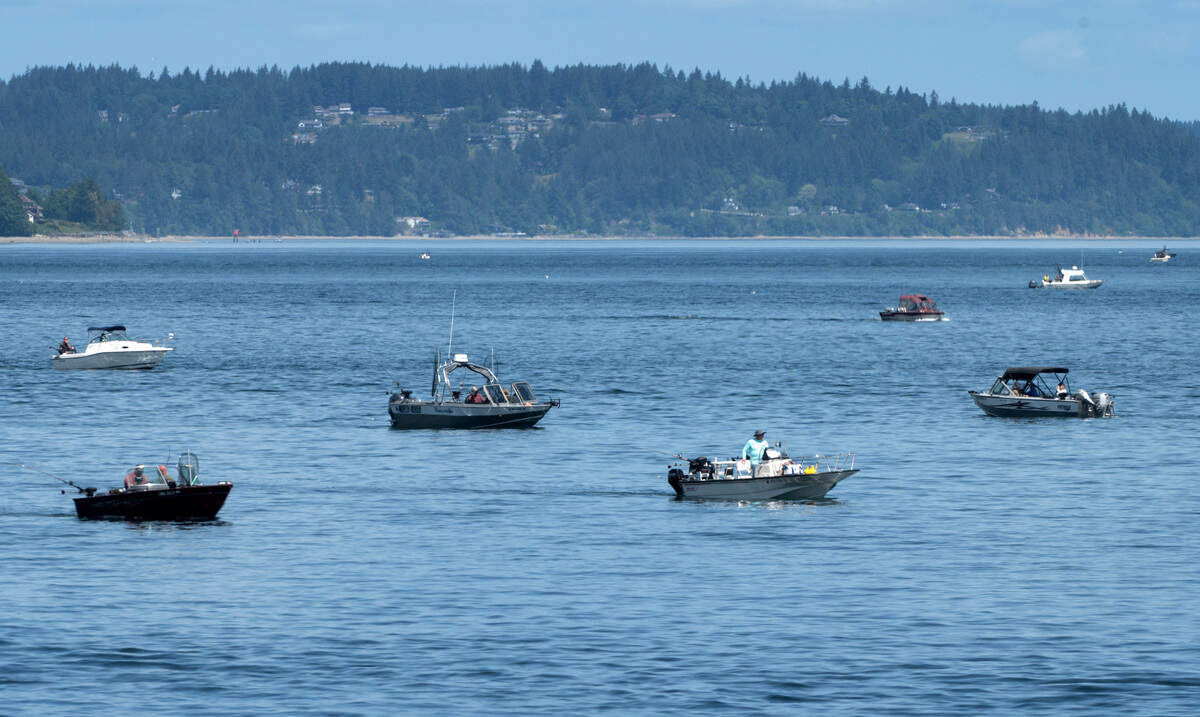
How can I get a boater education card in Washington?
These are the steps for obtaining a Boater Education Card in Washington state:
- Pass a state-approved boating safety course or equivalency exam to receive a certification of completion.
- Print your certificate. This is your temporary card for 60 days and must be with you when boating.
- Submit a Boater Education Card application with a copy of the certificate and a check or money order for $10 to the Washington State Parks and Recreation Commission Boating Program.
- A card will be mailed to you within two to four weeks of this application being received.
These safety courses can be taken online at any time for varying fees. Different courses offer different experiences, and none are specifically recommended by the state boating program.
Options include:
- Boat U.S. Foundation Boating Safety Course: Includes free study materials and practice tests, and applies for a boater card on your behalf. There’s an additional $10 application fee plus 50 cents for handling.
- Boater Exam Washington: Includes an animated and narrated study guide with visuals and practice tests for $39.95, and applies for a boater card on your behalf. There’s a $10 application fee.
- America’s Boating Course: Includes an interactive course with downloadable material and practice tests for $34.95. Certification of completion may be used in a separate application with standard fees.
- Boat-Ed: Includes an animated and narrated course with a study guide and practice tests for $44.95, and applies for a boater card on your behalf. Additional fees include a $10 application fee and 50-cent handling fee.
- Boat-Ed+: Includes an interactive course with a virtual instructor and practice tests for $79.50, and applies for a boater card on your behalf. Additional fees include a $10 application fee and 50 cents for handling.
Course materials cover water navigation details, boat navigation lights, boat traffic signals, Washington state standards, controlling your wake and more.
There is a free study guide available to all online. You can also request the certification exam booklet directly by emailing the Boating Program with your legal name and mailing address.
Alternatively, limited in-person classes are also available.
If you have a valid Boater Education Card from another state, refer to Washington State Parks to determine if it is also valid in Washington. If so, you can submit a card application for a $10 fee to receive a Washington state card. You must do this within 60 days of moving to the state.
The fine for not having your Boater Education Card with you while operating a vessel is $87. Replacement cards cost $5.
What am I required to have on my boat in WA state?
In Washington state, each boat is required to carry certain equipment.
Relevant vessels in Washington state must have a state title, current registration certification and decals. Registration needs to be renewed each year.
Under state law, all vessels should be equipped with U.S. Coast Guard-approved life jackets. That includes non-motorized watercraft.
These life jackets must be readily accessible, in good condition and the proper sizes for those on board. How many you need, and which kind, depend on your vessel and the number of people on board.
Vessels must have sound-producing devices such as a handheld air horn or athletic whistle, in case of low-visibility conditions.
Additionally, federal law requires many vessels to have at least one Type B fire extinguisher. This must be readily accessible and in good condition.
In many waterways in Washington state, you’re also required to carry visual distress signals for both daytime and nighttime boating.
When visual distress signals are not required, they’re still strongly recommended. Visual distress signals must be U.S. Coast Guard approved, readily accessible and in serviceable condition. Examples include a combination of flares, electric distress lights and orange distress flags.
Under state law, rental boats must provide all required safety materials at no added cost.
What do flags on boats in Washington mean?
When in distress, a boat should fly an orange distress flag.
These flags, which feature a black square and circle, must measure at least 3 feet by 3 feet.
These daytime signals are “especially effective in bright sunlight,” according to the BoatUS Foundation.
Diver Down flags are federally required on any vessel involved in diving activities.
Here are two flags that indicate diving activity:
- Divers flags are red rectangles with a white diagonal stripe that indicate the presence of a submerged diver in the area. These do not meet state or federal display requirements.
- International Code Flag A flags are blue and white, measure at least a meter high and are visible from all directions. Alfa flags are required on vessels with restricted maneuverability due to diving operations.
The most popular flags for recreational water areas are Skier Down flags. These are legally required in Washington state.
Any vessel towing people on water skis, wakeboards, inner tubes, aquaplanes, kneeboards and similar devices must carry skier down flags and have an additional person besides the operator on board at all times.
Skier Down flags must be “bright red or brilliant orange,” measure at least 12 inches by 12 inches and be mounted on a pole that’s at least 24 inches long, according to Boat-Ed.com.
The additional boater needs to be in charge of monitoring the status of the people being towed and reporting updates to the driver.
Whenever the towed recreator is in the water after falling or while preparing to ski, the boater must raise the Skier Down flag so it is visible from all directions. The flag is not displayed when the recreator is up or out of the water.

What are requirements for water skiing or inner tubing?
Water skiing, boarding and inner tubing are popular activities in Washington state, and there are additional laws regulating boats conducting them.
Towed individuals count toward a boat’s capacity limit.
Every person behind a vessel for one of these activities is required to wear a U.S. Coast Guard-approved life jacket. Only some life jackets are approved for these activities, so check yours before heading out.
Additionally, it is illegal to tow people behind boats anytime between an hour after sunset and one hour before sunrise.
Holding onto a power-driven vessel’s transom — alternately known as body surfing, platform dragging or teak surfing — is not allowed due to the risk of carbon monoxide poisoning.
You’re also not allowed to swim or float in the wake directly behind a vessel while it is underway or the engine is idling.
The law does not apply to those briefly on a platform, step or ladder while exiting or entering a vessel.
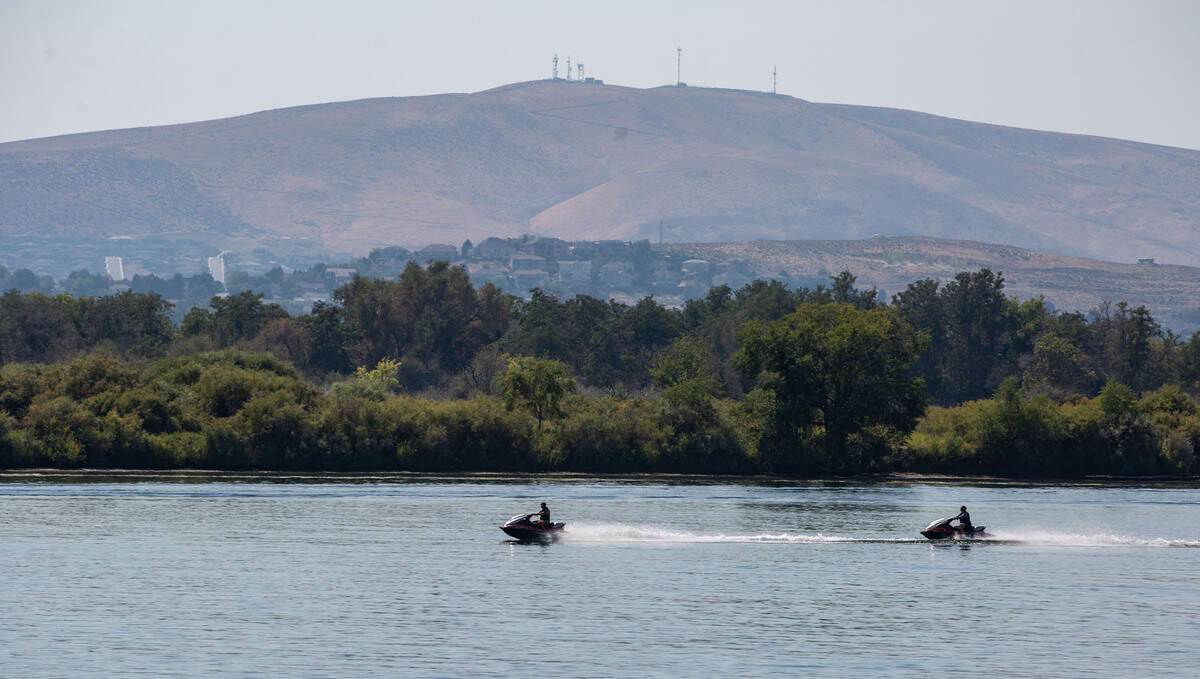
What are rules for Jet Skis in Washington state?
Personal watercraft such as Jet Skis are subject to specific regulations in Washington state.
Everyone on board is legally required to wear a life jacket approved by the U.S. Coast Guard for the specific activity. Impact-rated options are recommended.
When operating a personal watercraft with a lanyard-type engine cutoff switch, the driver is required to attach the lanyard to themselves, their clothing or their flotation device. It is not legal to remove or disable such cutoff switches.
Personal watercraft may only be operated between sunrise and sunset.
Can you get a DUI while boating in Washington state?
Alcohol use is a contributing factor in many boating incidents, including about a third of all boating-related fatalities, according to Boat-Ed course materials.
According to Boat-Ed, one alcoholic drink while boating can have the same effect as three drinks on land.
In Washington state, it’s against the law to “operate a vessel while under the influence of intoxicating liquor, cannabis or any drug,” the Revised Code of Washington says.
A driver is considered guilty of boating under the influence if:
- Have a blood alcohol concentration of 0.08% or more
- Have a blood THC concentration above 5.0 nanograms
- Are affected by the impacts of alcohol or any drug
What are penalties for boating while drunk?
In Washington state, boating under the influence is a gross misdemeanor punishable by up to a year in state prison and a fine of up to $5,000.
“Operating a boat impaired is a danger to the public,” Washington State Parks said on its website.
On all boats, the skipper is in charge of keeping passengers safe and must “exercise reasonable care” for them, State Parks said.
When outings involve alcohol, the person operating the vessel should remain sober and capable of operating the vessel.
“Being alcohol-free is the safest way to enjoy the water,” State Parks said.
Boating activities may be subject to additional regulations depending on the jurisdiction.
Some waterways around Washington state falls under federal jurisdiction, and state waters may be subject to added local regulations. Check the applicable laws before entering any waterway.