Where’s that smoke coming from? Wildfire maps show location, status of WA state fires
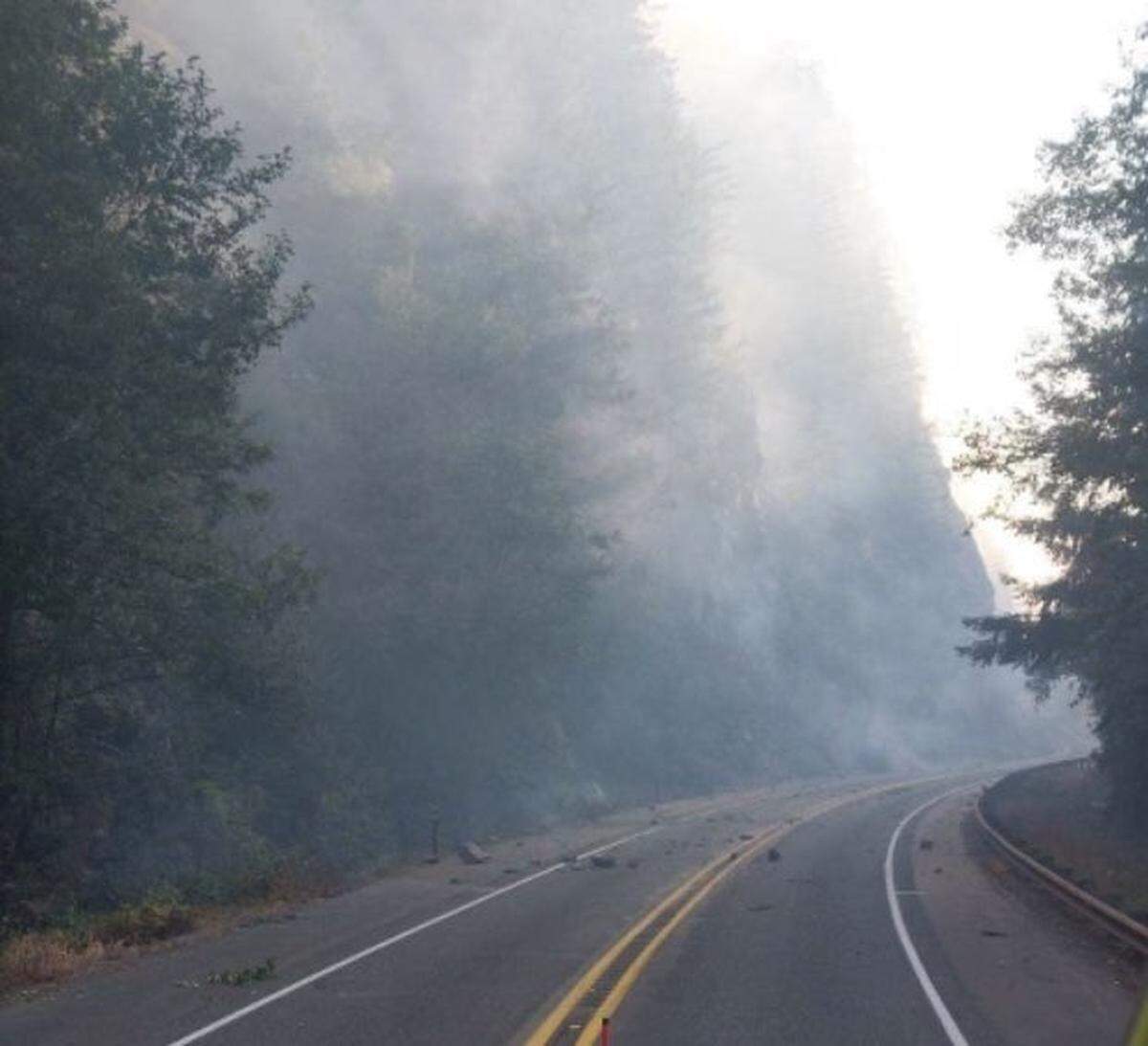
If you live in Washington state, particularly the western side of the state, you may have noticed smoke in the air in recent days. It’s coming from multiple active wildfires, big and small, particularly around the south Puget Sound region.
But how can you find out where exactly the fires are coming from?
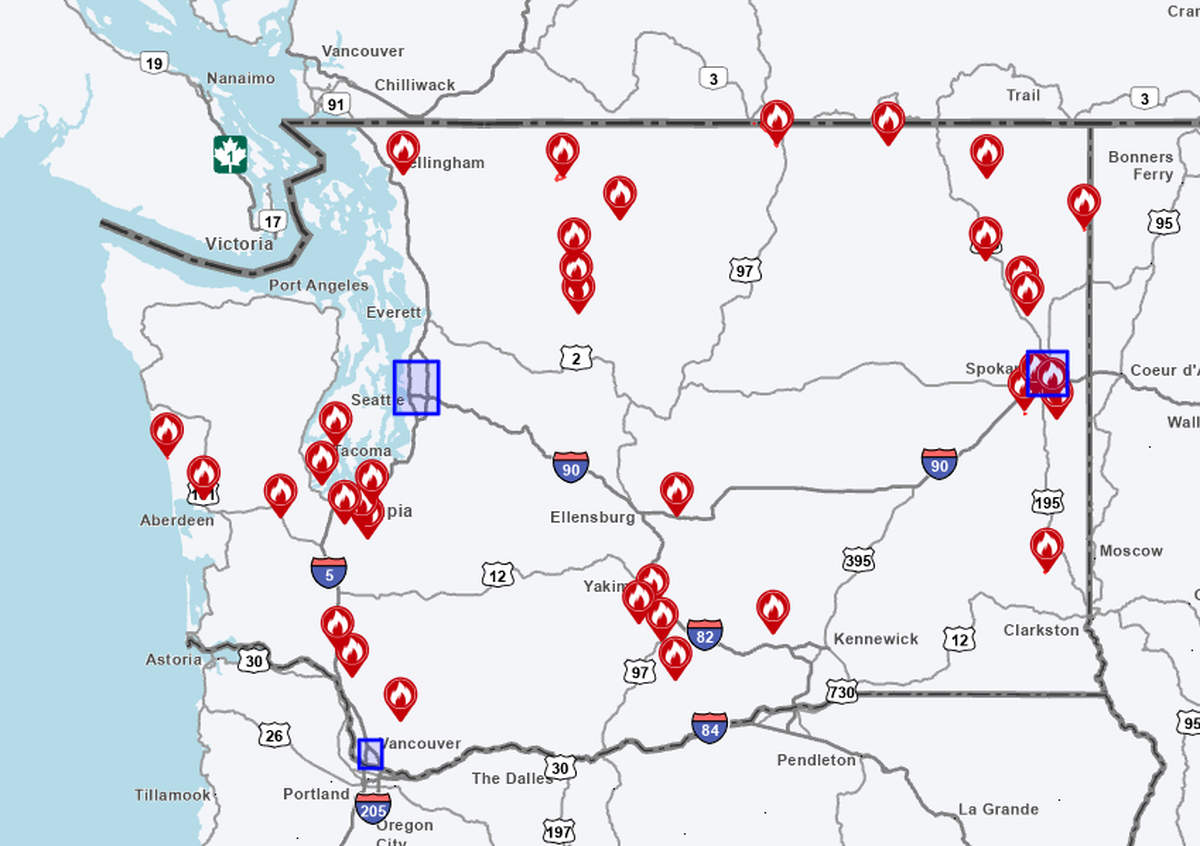
The state of Washington has multiple online resources, including the Department of Transportation’s interactive Travel Center map. The map has an option to select a view of wildfires. You can then click on each related icon of fire that pops up to learn more about the date it started, the cause and how many acres have burned.
WSDOT also maintains an interactive map of the national view of all wildfires data across the U.S., which allows users to drill down by state.
The Northwest Interagency Coordination Center also posts detailed information on its website about wildfire location, cause, containment level and acres burned. It also details how many, if any, nearby residences or businesses are threatened by the blaze.
The NICC also maintains a blog on which they frequently publish detailed updates and summaries on specific fires.
Which WA agencies issue wildfire alerts?
Washington’s main statewide source for wildfire information is the Department of Natural Resources. A wildfire danger and burn ban status by region page maintained by DNR allows residents to see which burn activities are currently allowed, including campfires.
DNR’s Twitter and the #WaWildfire hashtag are both good sources on social media for most recent and frequently updated information. There is also an active wildfire dashboard on the DNR website.
DNR also communicates updates via its Incident Information System and the Northwest Interagency Coordination Center, which both provide up-to-date information about active wildfires across the nation, including in Washington.
WSDOT updates its website and social media accounts of relevant wildfires. You can sign up for traffic updates, which will include fire information when relevant.
Many cities in Washington have emergency notification systems that alert local residents of potential dangers, such as weather and wildfires:
- Tacoma - CodeRED
- Olympia - Thurston County Alert
- Bellingham - AlertSense
- Tri-Cities - AlertCenter and CodeRED
How do you report wildfire in WA?
If you spot a wildfire, don’t assume someone else has already reported it. If no emergency crews are on the scene, play it safe and call it in. Washington wildfires can be reported to 911 or 800-562-6010. If you are on a highway, note the nearest exit or milepost marker.
Once a call is made to 911, dispatch will send out the nearest available fire protection district or the DNR Fire Protection District, DNR fire meteorologist Matthew Dehr previously told McClatchy News.
If you’re an avid outdoors person and often explore the Washington wilderness, Dehr recommends bringing along a device that can communicate via satellite, such as a Garmin InReach. Dehr recommends having something that can communicate via satellite if you need to call in a fire because of spotty wilderness cell reception.
Once you’ve spotted a wildfire and called emergency services, the next best move is to move as far away from the source of the wildfire as possible.
“If you’re out and you start to notice wildfire smoke, if you can see it or if you see helicopters or airplanes overhead, understand that that can be a pretty dangerous situation and get out of there as quick as possible.”
What causes wildfires to start?
There have been 34,454 wildfires nationwide since the start of 2023, burning a total of 1,624,622 acres, according to the National Interagency Fire Center. Both of those numbers are below the past 10-year average, according to NIFC.
About 40% of fires are caused by lightning, which means the other 60% are human-caused. Dehr says changes in the landscape have contributed to that.
“Our forests and our grasslands have changed dramatically over the last 100 years,” Dehr said. “And sometime within the last 10 years really reached that tipping point.
“Whether it’s a certain type of fuel that is now getting a little bit hotter, a little bit drier, a little bit more available to burn, and that is what’s causing this extra run in fires,” he continued. “Or if it’s just an increase in humans recreating in the land and people being out in the wilderness.”
Some primary fuels that’ll start a wildfire are typically dry and close to the ground, such as woody shrubs, dry and dead leaves and thick timber debris.
Dehr noted that many wildfires start near roadways because of human interaction with the dry shrubbery alongside the road. The simple act of dragging chains across the pavement, flicking a cigarette butt out of a car window or leaving a hot vehicle running next to dry grass can all cause wildfires.
“Just be aware of the fire danger and the type of fuels you’re seeing,” Dehr said. “If you’re out in a field of very dry grass, understand that it can ignite so easily; it does not take much.”
This story was originally published August 15, 2023 at 1:53 PM.