It was near-record-breaking hot in Tacoma this August. Here’s why, and what’s to come
If you think last month was unusually hot and dry, Tacoma, you’d be absolutely correct.
The Seattle-Tacoma area just experienced its 4th-hottest August on record, with data going back to 1945.
The region had an average temperature — including daytime highs and nighttime lows — of 69.9 degrees, with just 0.27 inches of rain, according to data from the National Weather Service. The typical August temperature is 67.4 degrees, with 0.96 inches of rainfall.
Why was August so hot and dry?
August is typically northwest Washington’s warmest month, but it was exacerbated this year due to multiple upper-level ridges moving through the region, National Weather Service meteorologist Harrison Rademacher told the Tribune.
“We even saw a couple of instances of offshore flow where we’re not getting winds from the ocean,” Rademacher said. “Normally, we’re used to seeing ocean marine air coming through, and that kind of helps to keep everyone cool.”
The lack of cool marine air meant Seattle-Tacoma’s nighttime temperatures couldn’t drop as low as they typically do. The average low for the area in August is 57.2 degrees, but this year’s average low was a much higher 59.9 degrees.
“This was an instance where we didn’t see really a significant ton of overnight cooling,” Rademacher said. “Which resulted in a lot of those heat index and indices being quite a bit higher.”
The same upper-level ridges from the lack of cooling also blocked any meaningful precipitation from falling.
“With high pressure, that allows for cloud heights to rise,” Rademacher said. “And so you don’t oftentimes see a lot of [rainy] weather, even with clouds you have at really high heights.”
But interestingly, the Weather Service in Seattle recorded eight days with measurable rainfall this past August, which is more than any other August in the past decade — but only one of those days (Aug. 29) delivered rain over one-tenth of an inch.
Warming up in August
An average temperature of 2.5 degrees higher than usual doesn’t seem like a huge deal, but in the context of climate change, it’s another point in the larger picture.
Since 1970, the Seattle-Tacoma region has experienced an average temperature increase of 4.1 degrees, according to data from Climate Central. Last August’s average temperature was 70 degrees, meaning the area has now experienced two straight hotter-than-average summers.
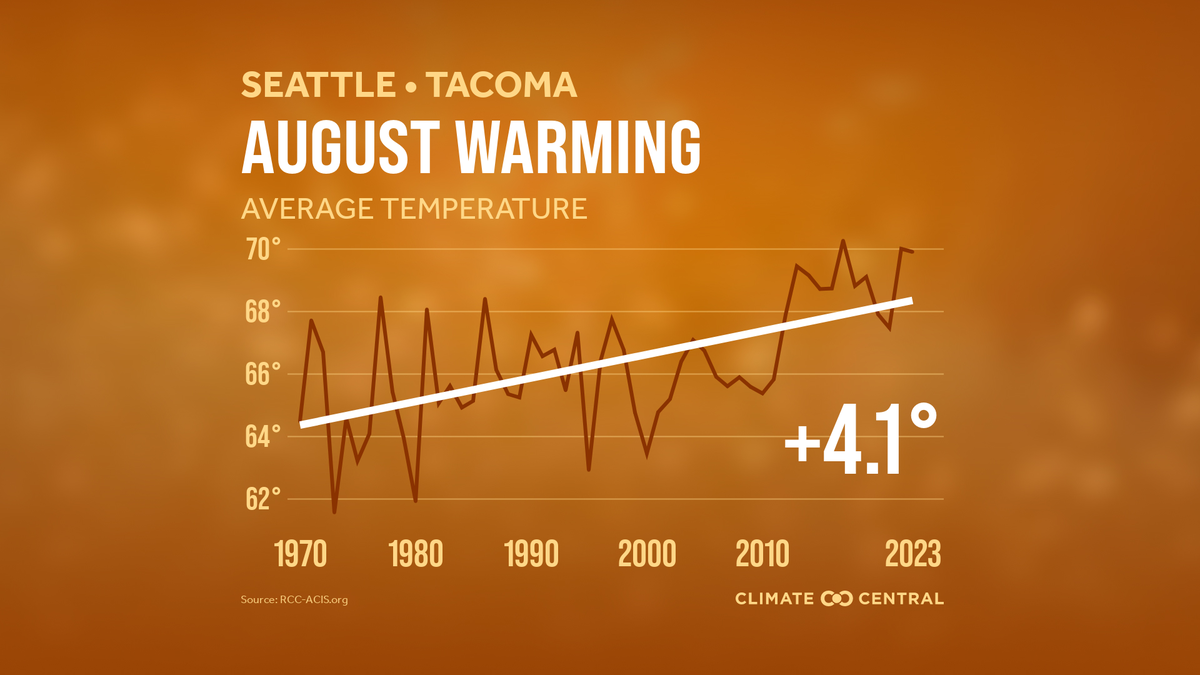
August is also the month in which northwest Washington experiences its largest average warm-up each year, according to Climate Central. Rademacher attributes that phenomenon to the long days experienced in August following the summer solstice.
“We’re just a couple of months past the summer solstice in June,” Rademacher said. “So it takes a little bit of time; the Earth is still absorbing quite a bit of sunlight.”
The longer days in August contribute to the heat increase. Tacoma receives almost 15 hours of daylight at the start of the month and is still seeing 13 hours and 24 minutes per day by the end of the month.
Although the days are longest by the time of the solstice in late June, it takes time for the hottest weather to come because the solar radiation from the sun continues to be greater than the cool-down effect in the evening over several months, according to the National Centers for Environmental Information. By August, so much heat from the radiation has been trapped, resulting in warmer temperatures.
Will this continue through September?
Tacoma has already experienced an 87-degree day in September, but a cooling pattern is coming. Outside of this coming Saturday, which could reach the 80s, most of Puget Sound will experience highs in the 70s, with a chance of showers over the weekend.
The Climate Prediction Center forecasts that Puget Sound will see average temperatures through the month — with highs around 71 degrees — and above-average precipitation.
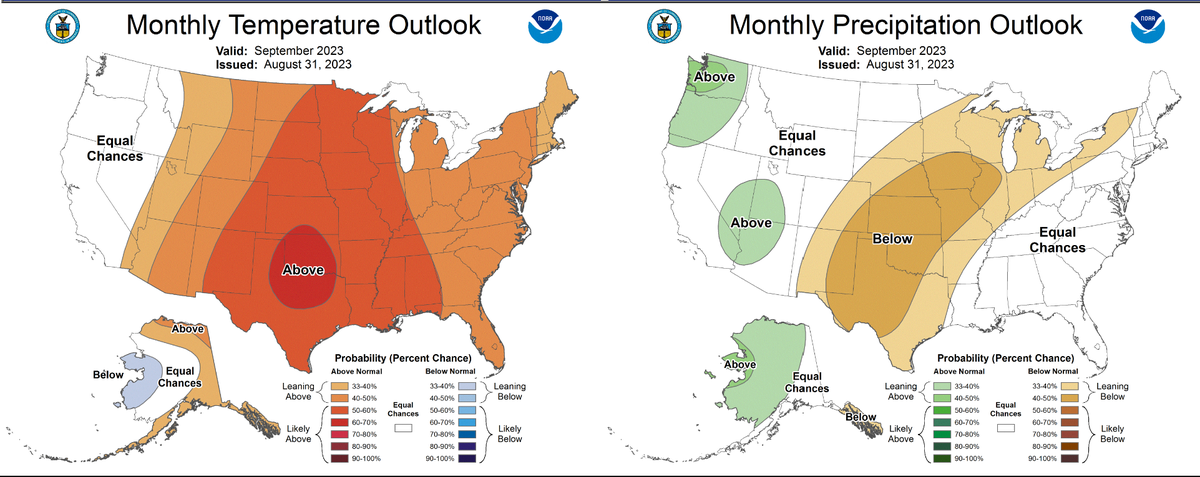
September should wave goodbye to the warm weather before fall and winter truly start in October.
“Once we go into October, that’s normally rainy season starting up in Washington,” Rademacher said. “So definitely keep your eyes out for the beginning of rainy trends during that time.”
This story was originally published September 7, 2023 at 6:32 AM.