Species die-offs and extreme weather. How WA marine heatwave ‘blobs’ are wreaking havoc
Oceanographers and climatologists are becoming all too familiar with a growing trend in the northeastern Pacific Ocean over the last decade: abnormally warm sea surface temperatures.
For the third time in 10 years, NOAA Fisheries and ocean buoys monitored by the Northwest Association of Networked Ocean Observing Systems (NANOOS) detected conditions indicative of a “marine heatwave” off the coast of Washington and Oregon this past summer. A marine heatwave occurs when sea surface temperatures are above average for an extended period.
So the temperature of the sea is a little bit warmer, so what? Doesn’t that mean more pleasant conditions for beachgoers and the animals in and around the water?
Not quite. It’s not just sensors and numbers tipping off scientists.
Massive die-offs of coastal species have also been seen over the last decade, according to University of Washington ecologist Julia Parrish. Around 400,000 Cassin’s auklet seabirds died in 2014 and 2015, Parrish told McClatchy News. In 2016, up to 4 million common murres, a relative of the puffin, died because of the effects of marine heatwaves.

“Common murres also continued to die in mass mortality events in Alaska after that event,” Parrish said. “So, yeah, Murres are having a real hard time.”
While millions of coastal species are experiencing massive die-offs, warmer sea temperatures also affect marine animals such as oysters and tuna, affecting humans through the seafood industry.
And this may just be the start.
What is a marine heatwave?
A marine heatwave is typically characterized by sea surface temperature anomalies of at least one standard deviation, about 2 degrees Fahrenheit. A departure from the mean of two standard deviations — about 4 degrees — is considered an extreme heatwave by experts.
According to data from one NANOOS buoy off the coast of Washington, sea surface temperatures in the northeastern Pacific were recorded as high as 67.6 degrees this past August, 6.8 degrees above average for late summer. Dozens of NANOOS buoy’s are stationed along the Washington coast and measure numerous data points, such as sea-surface temperatures, air temperatures and wind speed and direction.
But 2023 is not the start of this phenomenon.
A marine heatwave starting in the winter of 2013 and extending into 2014 saw northeast Pacific sea surface temperatures average 4.5 degrees warmer than average, according to a paper by Dillon Amaya, a National Oceanic and Atmospheric Administration researcher, published in the journal “Nature.” Another marine heatwave in the summer of 2019 saw a similar temperature increase, at the time indicating the warmest temperatures in the region in 40 years.
“2019 was unique because the heatwave definitely was strong in the summertime,” Jan Newton, a senior principal oceanographer with the Applied Physics Laboratory of the University of Washington, told McClatchy News. “But even still, it didn’t tend to persist that long. So that’s kind of the good news aspect of it.”
These two heatwaves have been titled “The Blob” and “The Blob 2.0” by University of Washington researcher and state climatologist Nicholas Bond. The original blob at one point reached 1,000 miles long and wide and 300 miles deep.
“We’re seeing more of these events reaching a threshold that constitutes a marine heatwave is just no surprise again, with the thermostat being just ratcheting up day by day,” Bond told McClatchy News.
.jpg "IMG_1337 (2).jpg")
How do marine heatwaves affect humans?
While marine heatwaves can devastate local wildlife communities, the long-term effects on the climate can mean just as much trouble for humans on land.
The most immediate effect is the warming of inland areas, according to Bond, especially west of the Cascade Mountains.
“When the ocean is warmer, that tends to make the weather in the inland areas of the Pacific Northwest a little warmer also,” Bond said. “That air that is moving over warmer than normal water is just going to pick up a little bit of extra heat.”
Looking at the years when there was a marine heatwave, warmer-than-average temperatures have been observed throughout Puget Sound. The average high in Seattle for August is 73 degrees; during the 2019 marine heatwave, the average high in Seattle was 76.5 degrees and was 80.1 degrees this past August.
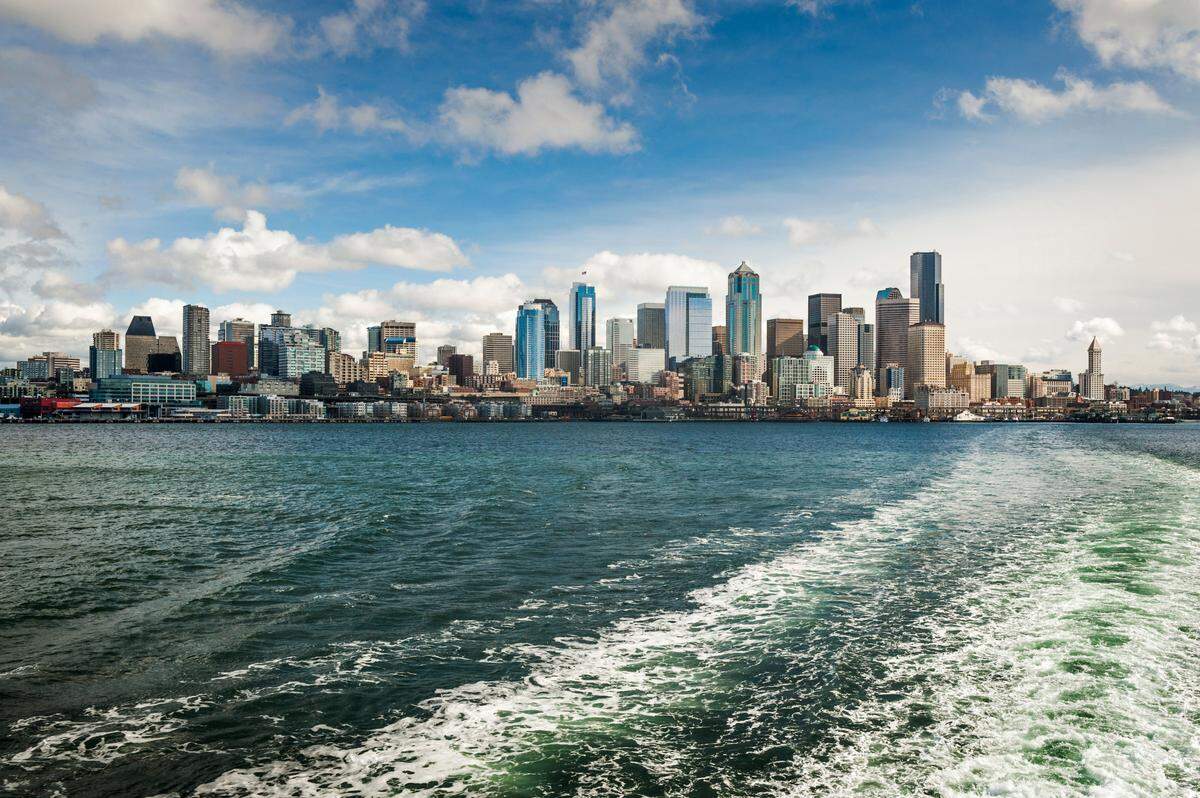
Typically, a warmer air temperature will mean more water is absorbed into the atmosphere, which would usually result in more rain. But this isn’t the case with marine heatwaves, Bond said.
Instead, the warmer sea-surface temperatures interact with other weather conditions and storm patterns, such as strengthening storms. That’s a particular concern for hurricanes and typhoons.
Both Hurricane Hilary and Otis are examples of hurricanes that rapidly gained strength when over warmer waters.
Hilary made landfall in Mexico as a category 4 storm before tracking northward, bringing historic rain to the southwest. Otis rapidly strengthened from a tropical storm to category 5 in just 12 hours before slamming into Mexico, bringing equally destructive conditions to that country’s Pacific coast.
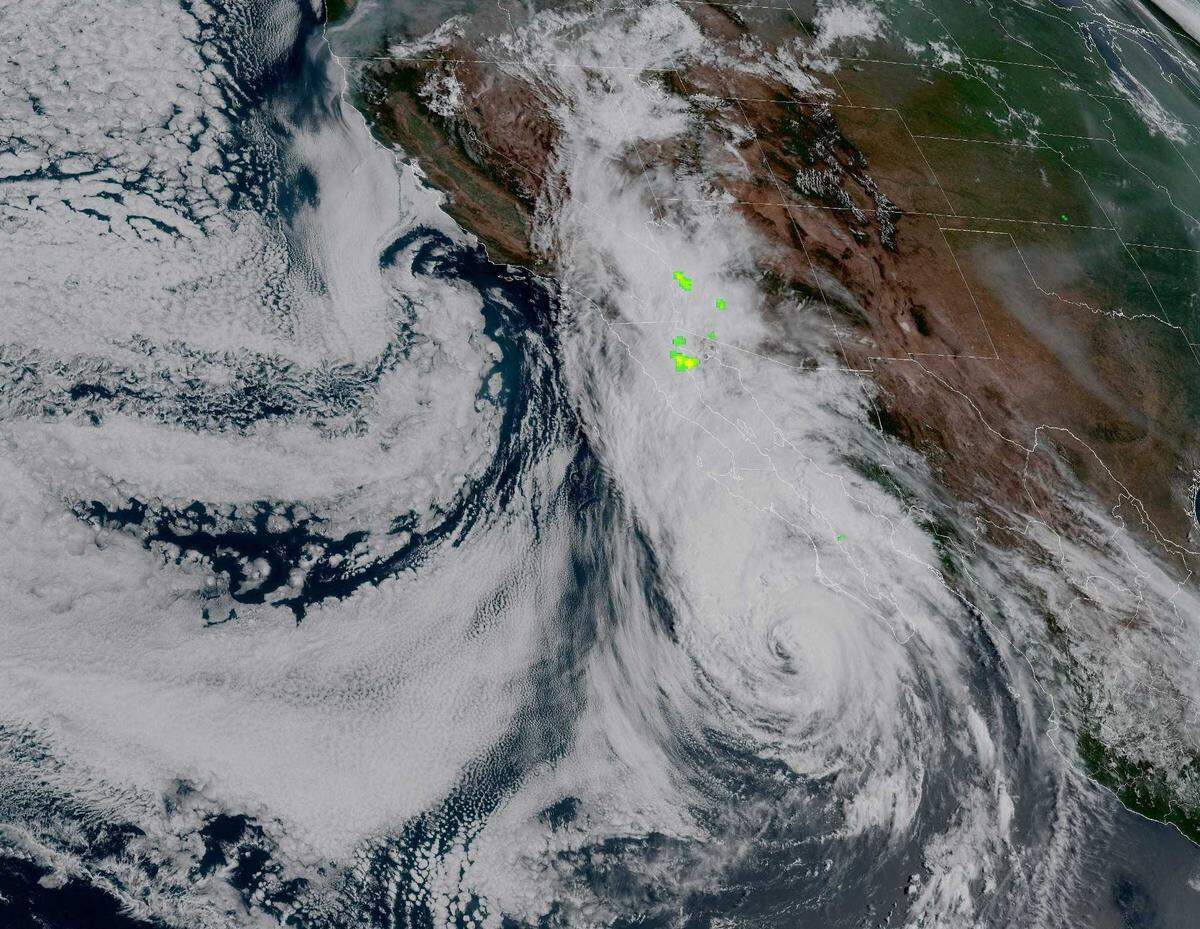
Although both hurricanes formed in the south-central Pacific Ocean, they intensified to such strong levels because of warmer sea-surface temperatures in the region. The phenomena gives oceanographers and meteorologists a peek at what could happen in the northern Pacific if temperatures continue to rise.
“As the oceans warm, there are going to be that much stronger tropical cyclones and typhoons in the Western North Pacific,” Bond said. “And those Typhoons are often the precursor to our strongest storms.”