‘Super El Niño’ may be on the way, new NOAA report says. What that means for WA weather
Washington has already felt the early effects of the first El Niño weather pattern in four years, with this winter so far being characterized as both warmer and drier than usual. But it may get even warmer and drier if a new National Oceanic and Atmospheric Administration weather report comes to fruition.
According to the report published earlier this month, there is a 54% chance of a historically strong El Niño developing through to the end of January. Such strong El Niño’s are typically called “Super El Niño’s.”
“An event of this strength would potentially be in the top five of El Niño events since 1950,” NOAA states in the report.
However, NOAA also reports that although a Super El Niño increases the chance of climate-related anomalies, such as unusually dry winters, it does not mean that the impacts of the Super El Niño will be felt everywhere.
What is El Niño?
El Niños and their opposites, La Niñas, are naturally occurring weather phenomena that usually alternate every couple of years as a function of how the Pacific Ocean interacts with the air above it.
A La Niña occurs when the temperature of the sea is cooler than average in the eastern Pacific Ocean, resulting in less evaporation, weaker storms and less moisture in the atmosphere, according to the National Oceanic and Atmospheric Administration.
We just underwent a historic three-straight years of La Niñas, from 2020 to 2023, a rarity that’s only happened on two other occasions in recorded history, according to National Weather Service meteorologist Dave Groenert. The other two recorded times are 1973 to 1976 and 1998 to 2001.
“It typically ping pongs back and forth, in general, from one to neutral to the other and back,” Groenert told McClatchy News. “Sometimes you do get return years, but to get a third return year, I don’t know if anyone really knows as to why that’s the case.”
El Niño occurs when trade winds — the permanent east-to-west winds that blow near the equator — weaken, allowing the Pacific Ocean’s warmer waters to push back east toward the United States west coast.
This weakening allows the Pacific jet stream to dip further south, amplifying the storm track across the southern U.S. and Central America but keeping stronger tropical moisture away from the north.
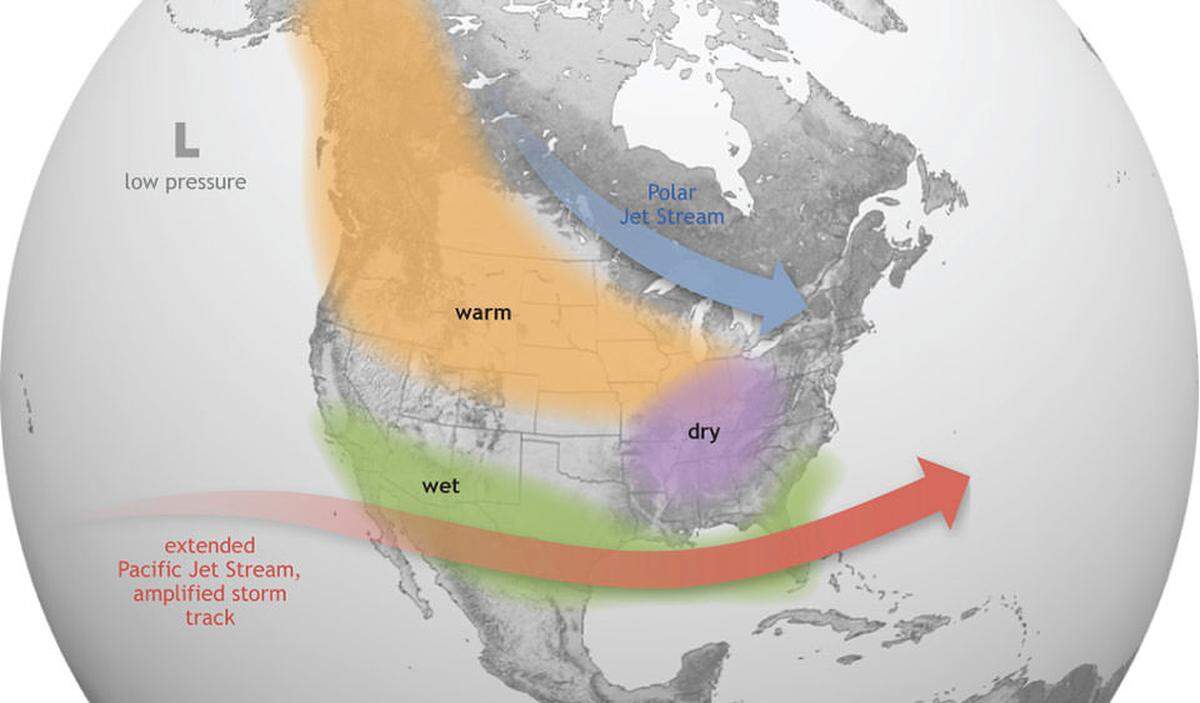
“El Niño — the warm phase of the El Niño-La Niña climate pattern — changes global atmospheric circulation in known ways, giving us an idea of potential upcoming weather and climate patterns,” NOAA stated in a news release. “A stronger El Niño means global temperature, rain and other patterns are more likely to reflect the expected El Niño impacts.”
How could a Super El Niño could impact WA?
According to the U.S. Department of Agriculture, a Super El Niño will likely exacerbate the warmer and drier conditions in the Pacific Northwest.
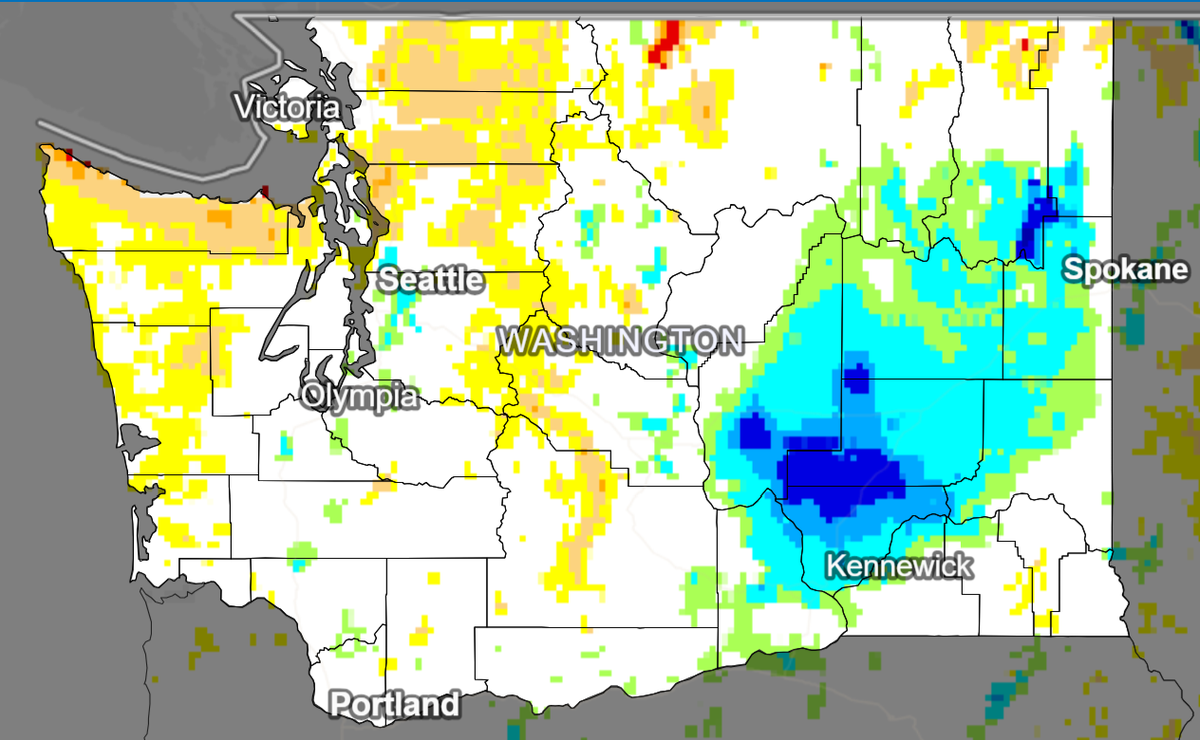
NOAA’s Short-Term Multi-Indicator Drought Index — which approximates drought conditions up to three months out — shows most of western Washington will get below-average rainfall while the Columbia Valley will likely see much more rain than average.
But the Super El Niño may be more bark than bite.
The Weather Channel, like NOAA, notes there is also a good chance El Niño, even a “super” one, won’t have such significant impacts on Washington or other areas of the U.S. this year. The Weather Channel states that the last two strong El Niños proved this by having very different outcomes than expected.
“Winter 2009-10, for example, was much colder than expected in the U.S. during a strong El Niño winter,” the Weather Channel states. “And there are indications this strong El Niño may be behaving like 2009-10, at least initially.”
The latest data shows that the current El Niño is less like the super El Niños of 2015-16 and of 1997-98, the Weather Channel adds.
This story was originally published December 29, 2023 at 11:48 AM.