
Absence rates in Tacoma Public Schools need improvement
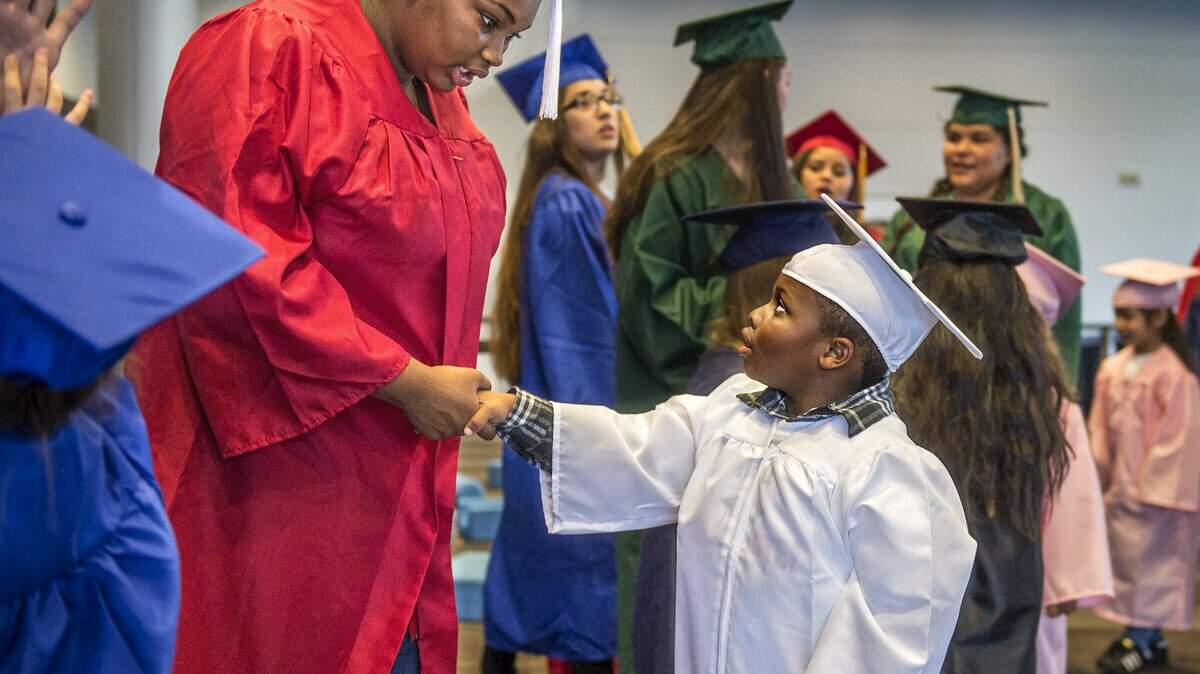
Last year, Tacoma Public Schools issued thousands of report cards — 28, 793 to be exact — but they also received one of their own from a coalition of more than 260 community partners who call themselves Graduate Tacoma.
Since this non-profit advocacy group began collecting data on student and school performance seven years ago, the district’s reputation went from being home of the “dropout factories” to a statewide model for education.
The transformation speaks to the power of accountability and goal setting, or as Graduate Tacoma says, “What gets measured, gets done.”
This year’s TPS report card is especially significant. It’s the first year Graduate Tacoma met its five-year-goal of increasing graduation rates by 50 percent. And, for the first time, the graduation gap between black and white students closed entirely.
“Ninety-two percent of black students graduated in the class of 2016 compared with 89 percent of white students.”
But instead of basking in its success, Graduate Tacoma is wisely keeping its focus on the district’s weak spots.
Truancy tops the list. In 2017, 28 percent of Tacoma public school students missed more than 10 percent of the school year. It’s a number that could stagnate the progress made by TPS.
Since 2014, chronic absences, defined as missing 18 or more days, have gone up in the district by 2 percent — a marginal increase at first glance, but one missed day of school for any student could mean a lost step in math, reading or science.
As any teacher will attest, the continuity of learning is easily interrupted. Students have a difficult time catching up and remain at a disadvantage. And the ramifications of missed school can be life-long. In addition to lost educational and career opportunities, truancy can lead to risky behavior and/or substance abuse.
And for those who believe the lines of poverty and color do not divide us still, the Graduate Tacoma report says otherwise. Students living in low-income households are 55 percent more likely to be chronically absent than more affluent peers. “In elementary school, students of color post as ‘chronically absent’ from 5 to 14 points more often than white students.”
The gap widens further in high school. By the time Tacoma students are seniors, an average of 54 percent of them are chronically absent. Chronic absence rates for black and Pacific Islander students have risen across the district in nearly every grade, on average 3 to 5 percent respectively.
Many of the reasons kids miss school are out of their control, but helping kids and their families understand the causes behind absenteeism is a smart first move. It’s why TPS is conducting, in their own words, a “full-court press” on social-emotional learning.
The problem of chronic absenteeism has tentacles too difficult to dislodge by educators alone. Unstable housing situations, dysfunctional family culture, untreated mental illness and substance abuse are all contributors.
But in an effort to reverse the upward trend, the district has implemented truancy boards and automated phone calls. They’ve given parents and guardians an absence tracker and sent “nudge” letters if a child misses more than 10 percent of school days.
So far, these efforts haven’t moved the dial enough. Tacoma schools, in collaboration with Graduate Tacoma, will now increase their efforts to strengthen the message of attendance awareness. Their philosophy can be summed up in one sentence: Early intervention is a better alternative than waiting for students to fail.
In 2013, Tacoma was one of six communities around the U.S. to receive funding for a program called The Whole Child Initiative, one specifically targeted on increasing positive emotional and social skills.
TPS is now working with the University of Washington Tacoma on phase two of this program, which includes getting kids to see the importance of attendance.
Think less stick and a lot more carrot.
The program helps kids see themselves as agents in their own success. They receive daily reminders that coming to school is not just for mom, dad, grandma or coach, but to become stronger, smarter and prepared for a future they create.
Tacoma School of the Arts Principal Renee Froembling believes accountability is key. At SOTA, students meet weekly with an assigned faculty member and their mentor groups. Other schools are following suit with an increased emphasis on advising.
School districts can hire the best teachers, implement the best curriculum and have state-of-the-art equipment and facilities, but if kids aren’t sitting in the classroom, no one receives a passing grade.
Here's hoping next year's report card looks even better.
This story was originally published May 5, 2018 at 5:00 PM with the headline "Absence rates in Tacoma Public Schools need improvement."