
Black Friday and Christmas can wait. Let’s enjoy autumn, and let the season ground us
Disorientation is the second theme of these past 18 months, after the much more alarming theme of a deadly plague. Yet I was still surprised to see suggestions for Christmas shopping in my Apple News feed on the very first day of autumn. I suspect this is only the beginning. After all, Black Friday now lasts most of the month of November, a concept as nonsensical as it sounds. Christmas, it seems, is spreading pandemic-like across the calendar.
The days are now growing shorter and colder, and the prospect of new variants and lingering COVID restrictions looms over us like a tidal wave. It is natural enough then to reach to the bright lights of Christmas and their festive joy. I think that would be a mistake. While pulling Christmas to its limits does no service to that holiday, my main objection is what this means for autumn, and for us.
One problem with distorting the seasons this year is that the seasons have served us well through COVID. With all the recent disruptions, it is apparent that much of our lives stood on artifice. The 40-hour workweek and seven-day cycle are constructs that we might often get on without. For those fortunate enough to work at home, the weekend has lost much of its meaning. We have experienced the confusion over what day it is because a Tuesday actually looks a lot like a Saturday, all else being equal.
But summer does not look like spring, and autumn does not look like winter, and that fact has grounded many of us when everything else is ungrounded. It is unsurprising then that gardening has had a renaissance in quarantine. A tomato vine marks time much more clearly than a business cycle. There has also been increased traffic to National Parks, where trees—which count life in centuries—help us take even the worst problems in stride. For all that nature’s seasons have given our sense of reality, it would be a grave betrayal to trade over our recent autumn for an early Christmas.
Each season has had its role during COVID, but perhaps none is more important now than autumn. The seasons together tell us an entire narrative about life, and, in that story, it is autumn that tells us about death. Our local orchards that only recently dipped with fruit are even now littered with the rot and vinegar of wind-falls. If you look up, as the poet Keats did, you will see the “barred clouds that bloom the dying day.” And if we can perceive that from autumn, Shakespeare tells us, then we might better love in this life: “This thou perceiv’st, which makes thy love more strong, To love that well which thou must leave ere long.”
Death is all around us, more than 600,000 deep. We Americans mostly avoid discussions of death. We fear it, of course, but it is often too uncomfortable to ponder it. Autumn reminds us that there are some truths that we cannot avoid. But even as the seasons warn us, they reassure us that this death will pass and there will be a new spring to follow, beauty born again. We should not skip all that for some tinseled trees.
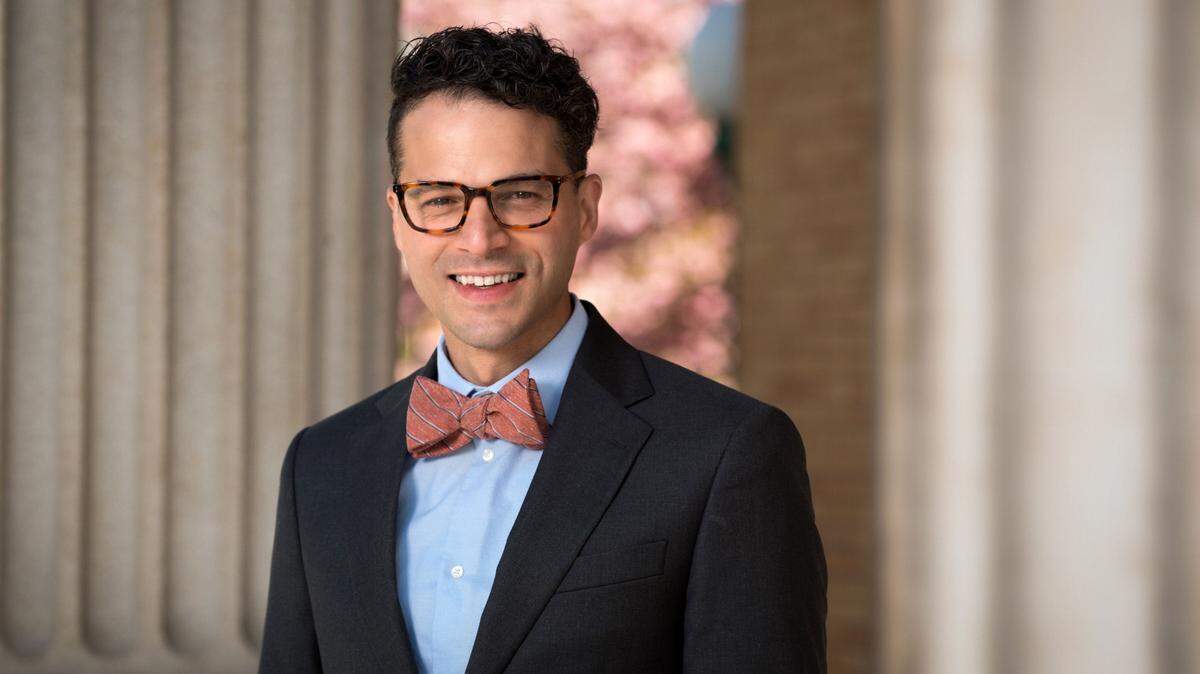
André M. Peñalver lives in Tacoma with his wife and children and moderately productive garden. He is a judge for Pierce County Superior Court.