
‘We don’t have time for games.’ Port regulations should cut fossil fuels, add green jobs
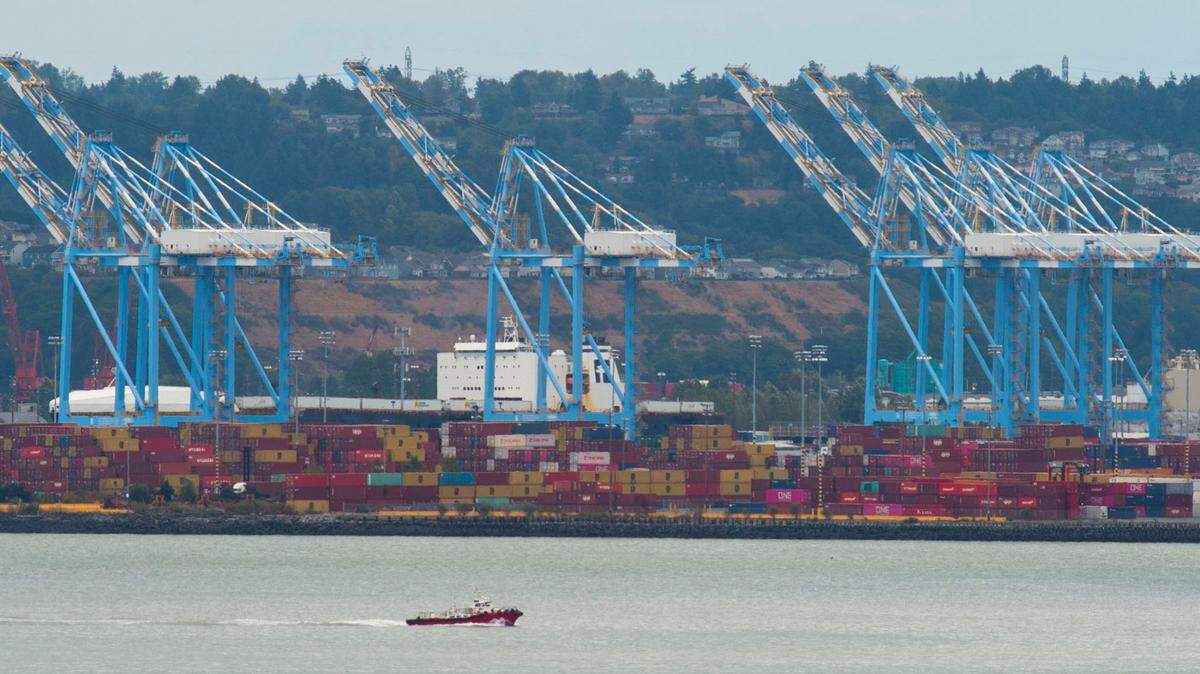
Tacoma is uniquely situated to be the West Coast’s newest economic hub for innovative, green technologies and high paying, clean industry jobs. But to do this, we need to make space in the city’s planning and land use policy, and specifically preserve physical space in the Port of Tacoma to allow this vision to take place. Currently, it’s space that’s being wasted on a half-decade long debate over protecting land for the fossil fuel industry.
Later this month, the Tacoma City Council is expected to take a vote that will decide what regulations on land use at the Port will look like, at least until the city’s full sub-area planning process is complete. Making the right decisions — like limiting residential encroachment and fossil fuel expansion — will mean opening the door for technology like green hydrogen fuel. These facilities are ideal for industrial and transportation usage, but are prohibited until the long-delayed regulation process is completed.
Land is the rarest and most valuable asset in the Port of Tacoma, but its industrial area has languished with some of the lowest job density of any manufacturing center in Washington, according to 2013-2014 data compiled by the Puget Sound Regional Council. Yet, instead of acting like a peer and partner of the Port of Seattle, which has goals in its Century Agenda of 100,000 new jobs while becoming the greenest port in North America, our local development discussion has been stunted by fossil fuel lobbying efforts.
Manufacturing businesses are attracted to Tacoma for its skilled labor force, carbon-free power and prime location to both domestic and export markets. Tacoma Public Utilities was also the first in the nation to offer an extremely cost competitive electrofuels rate for large energy users. What detracts from Tacoma is the uncertainty in our regulations and a lack of a plan for the port. By deciding to further invest in clean energy the city could have its pick of industry partners.
We know green technology is advancing rapidly and that Tacoma can either lead or get left behind. Initiatives like Maritime Blue have rejected the mindset that jobs and the environment have to be in conflict. Their business accelerator program is nurturing innovative new ideas for new markets, all with an eye to equity in their workforce. Unfortunately, fossil fuel diehards are hobbling progress like this in Tacoma by perpetuating a second-fiddle mindset in order to eke out what they know are the last profits from their old technologies.
Out of hundreds of businesses with interests in the Port, three fossil fuel companies have manipulated what should have been an objective land use policy conversation. You only need to look at comments from the last round of discussions around the Port sub-area plan to see this. While other businesses and grassroots groups argued for the benefits of a greener Port, the oil companies said nothing of the kind. Instead, they suggested that limiting their ability to expand fossil fuel facilities unchecked would create a disaster, and that they are in fact the solution to our environmental problems.
These are obvious delay tactics that have been disproved repeatedly in painstaking studies. An oil company’s goals are not and will never be about economic development for our community, only their own profits. While fossil fuel shareholders will never be concerned about our community’s health and future, our city council certainly has this responsibility.
A sustainable economy is the future of business, and the tired dichotomy of jobs versus environment is false. Tacoma’s resources allow a smaller carbon footprint, which is attracting fresh industries like green hydrogen just as billions of dollars from the federal Infrastructure Investment and Jobs Act are being made available for innovation. But these possibilities and discussions are currently being held hostage while fossil fuel lobbyists distract us from opportunities and prevent progress. They’ve manufactured opposition to community desires and disrupted the process for years, delaying passage of a broadly popular proposal and slowing our efforts to create a clean fuel future
The last community survey on the Tideflats Subarea Plan shows Tacoma residents have already said they want to focus on environmental justice and sustainable economic development. The city has a robust Climate Action Plan and tactical solutions like electrification and industrial symbiosis to reduce waste. Instead of giving solutions like these the space and resources that they deserve, we are wavering by spending resources to protect a dying industry.
We don’t have time for games anymore; economic, equity, and environmental issues are compounding in the city. When Tacoma has the chance to address these issues head on with one policy, why would our City Council not take decisive action? The people of Tacoma deserve a vibrant, clean, and healthy industrial center that looks to the future.
This month, our elected representatives have a choice:
They can vote against the expansion of oil companies in the Port while making room for clean innovative business, or they can pander to a dying industry that will leave Tacomans once again to clean up what they inevitably leave behind.
Melissa Malott is executive director of Citizens for a Healthy Bay. Chrissy Cooley currently serves as vice-chair of the Tacoma Public Utilities board and is employed as a program manager of water quality and protection at Tacoma-Pierce County Health Department. Views and opinions reflected in this op-ed are her own.
This story was originally published October 2, 2021 at 5:00 AM.