
Ranked choice got a bad rap in Pierce County. Here’s why WA voters deserve chance to try it
In our state, we believe every vote should count, no matter the election. But under our current electoral system, it’s not uncommon for certain communities to be routinely ignored and find themselves unable to elect candidates of their choice. Our shared commitment to democracy is why, this legislative session, we are proud to sponsor a bill that will lift the statewide ban on ranked-choice voting (RCV) and proportional representation — simple, proven upgrades to the way we vote today.
Today, millions of voters in states like Alaska and Maine, and in over 50 cities, including Salt Lake City, New York and Minneapolis have chosen to use ranked-choice voting. Voters there, just like voters here, are tired of having to choose between the lesser of two evils and want more options at the ballot box: that’s why they’ve upgraded their systems. Right now, Washington voters can’t make that same choice because of an effective ban at the state level.
Some readers will be familiar with the fact that we in Pierce County briefly used ranked-choice voting in one election cycle, back in 2008, before it was repealed. The repeal effort was fueled by a false, but widespread, rumor that one arguably-unqualified candidate — former Assessor Treasure Dale Washam — only won election because of ranked-choice voting. That rumor has been discredited. While the candidate in question was a gadfly, he was no Goodspaceguy, running on a platform of building a moonbase. Instead, he ran on a vague platform of “working for you,” and he got a larger share of the vote every year he ran before his election in 2008. In the end, he was the most popular candidate and was duly elected as the most-preferred candidate for 52% of voters.
The election of one gadfly in Pierce County over a decade ago is no reason to restrict the choices of voters all across Washington today. Unqualified candidates can and do get elected under any voting system. In fact, one problem with our current single-choice, zero-sum system is that it makes it more likely for extremists and gadflies to win elections. This is partially because candidates can use divide-and-conquer politics to exploit our Top Two primary and win despite being opposed by most voters. By empowering every voter with the ability to indicate not only their first choice, as they can under the current system, but also a second choice, third choice, and so on, localities can ensure every community has the power to elect their fair share of candidates.
That isn’t to say that Pierce County’s 2008 use of RCV didn’t have any challenges. We faced real logistical hurdles, mostly due to the use of early 2000s election technology and a lack of developed best practices for running RCV elections: it cost the county $1.6 million to conduct one RCV election and results took weeks to publish. But we now have a bill to help jurisdictions avoid these issues and set them up for success.
Today, costs have come way down (the entire state of Maine ran their first RCV election in 2018 for just over $100,000, 6% what Pierce County spent in 2008) and Washington State’s Office of Financial Management actually predicts most jurisdictions would save money from adopting RCV — potentially up to $25 million over the next decade. As for long delays in election reporting? With modern best practices, unofficial results from RCV elections can be available less than 24 hours after polls close, just like Washington voters are used to. Our bill incorporates the lessons learned from Pierce County, the proven solutions implemented across the country and the tools and techniques our auditors trust.
While the nation undergoes attacks on democracy through tactics like active voter suppression and voter roll purges, we can strengthen our democracy here in the Evergreen State. Research from thoroughly-nonpartisan organizations like the Hewlett Foundation, the Campaign Legal Center and New America all support ranked-choice voting. And our colleagues, Senator Rivers, a Republican, and Senator Das, a Democrat, are sponsoring their own a bi-partisan bill to use ranked-choice voting for Presidential primaries. One reason why so many are turning to ranked-choice voting as a solution is that it tends to reward issue-based campaigns rather than the mudslinging dirty politics that many of us are used to seeing on our televisions or timelines.
This isn’t just theoretical: looking at elections in places like New York, Minnesota, Utah, Maine, and California demonstrate that RCV’s benefits are real. You don’t need to support ranked-choice voting to support our bill - you just need to think that voters in places like Tacoma, Spokane and Vancouver are just as smart and capable of deciding for themselves as voters are in Utah, New York or Minnesota.
Our bill doesn’t mandate anything for any locality that remains skeptical. What it does do is give communities the choice to adopt a better voting system — if they want to.
The legislature can and should give our communities the tools to build more inclusive elections and the kind of multiracial democracy we all believe in.
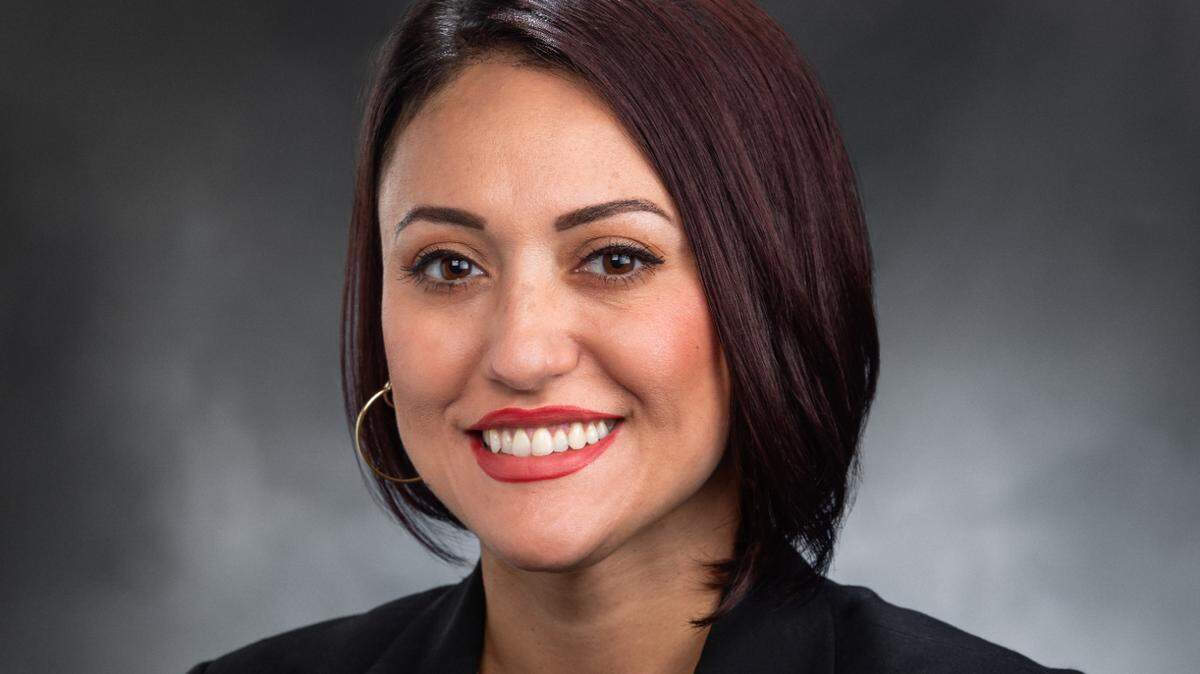
Newly appointed Senator Yasmin Trudeau is the first woman of color to serve the 27th Legislative district. Trudeau is the vice chair of the Senate Law and Justice Committee and also sits on the Human Services, Reentry and Rehabilitation and Housing and Local Government committees.
Senator T’wina Nobles represents Washington’s 28th Legislative District. Nobles is vice chair of the Early Learning and K-12 Education Committee as well as vice chair of the Higher Education and Workforce Development Committee. She also sits on the Transportation Committee.
This story was originally published February 4, 2022 at 5:00 AM.