
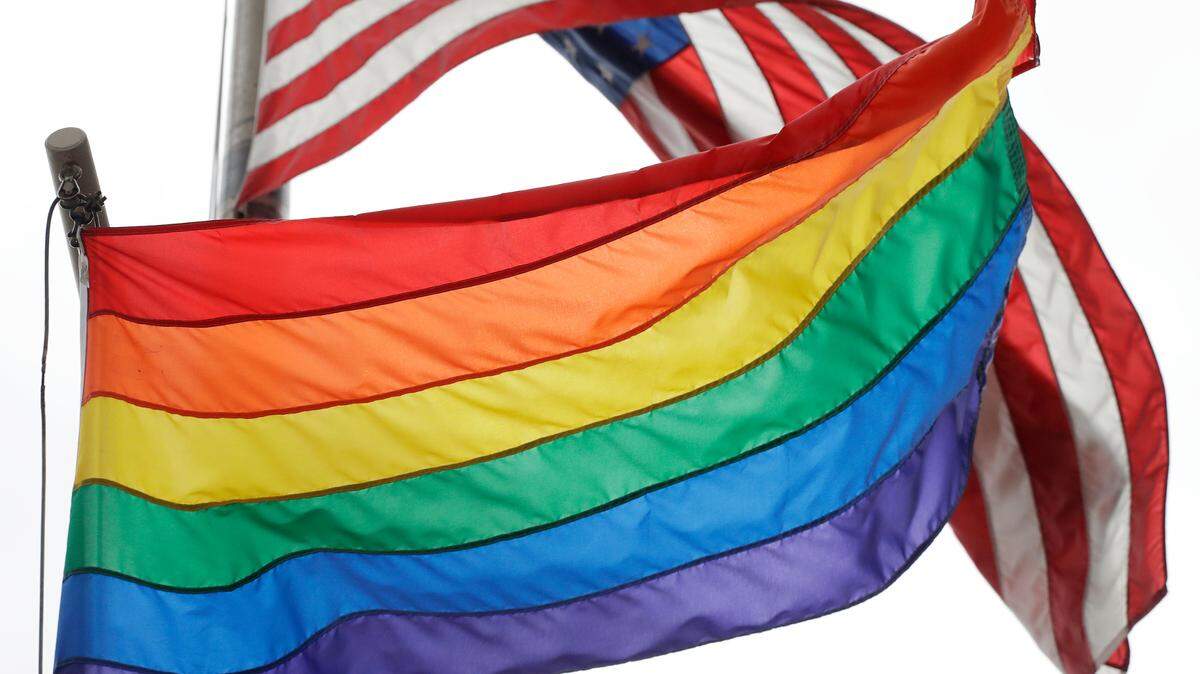
The Pride flag matters. As professors, we urge Dammeier to let it fly in Pierce County
We write as professors of communication and as PhDs who study how we persuade others through words and symbols. We also write as Pierce County residents, community members and as allies and friends of LGBTQ+ people living here and elsewhere.
Recently, The News Tribune’s Editorial Board argued Pierce County should fly the Pride flag at the County-City Building as part of Pride Month. The reason it will not? Republican Pierce County Council members and County Executive Bruce Dammeier do not unanimously support flying the Pride flag. They have also attempted to enact rules requiring a unanimous vote by the council to fly any “special flag” on county property.
So what? Some would (and have) argued it’s merely a flag and that Pierce County supports its LGBTQ+ members in other ways. Why not just let it go?
A flag is not merely a piece of fabric attached to a pole. If it were, people wouldn’t have such visceral reactions to setting one on fire or flying one upside down. Flags are symbols of histories, cultures and the people who make up those histories and cultures. A flag could represent a place where we imagine the good life. It could be a material instantiation of the freedoms our founders promised. It may provide, in the case of the Pride flag, a sense of inclusion and the pledge of full citizenship regardless of gender expression or sexual identity.
The County-City Building has flown other special flags in the past, including the MIA/POW flag and the 12th Man flag when the Seahawks won the Super Bowl in 2014. One flag honors people who fought for this country and may never have returned home; one honors a team’s victory. Both are important to how our community imagines itself. We don’t care to judge either of these flags or Pierce County’s decision to fly them. We do, though, argue that the Pride flag also honors and remembers those in our community who have fought for justice and equality in their own ways (including military service), and our community’s victories toward that justice.
Pierce County Republican council members’ refusal to support flying the Pride flag dishonors our LGBTQ+ friends and neighbors, devalues their contribution and visibility, and minimizes ongoing efforts toward equality and justice.
We need to recognize that LGBTQ+ neighbors are still fighting for rights: it was not until 2009 that the Matthew Shepard and James Byrd, Jr. Hate Crimes Prevention Act was signed into law (a decade after Shepard’s death). More recently, Obergefell v. Hodges furnished same sex couples the ability to marry. Just last year, Governor Jay Inslee issued an executive order recognizing June as Pride Month in Washington.
But the fight is still far from over. Florida’s “Don’t Say Gay” law is modeled on Hungary’s authoritarian crackdown on LGBTQ+ citizens. Arkansas and Texas are among 15 states that have or are considering restricting gender-affirming care for trans youth. When Pierce County flies the Pride flag, we affirm our community’s commitment to LGBTQ+ rights and recognition as equal citizens.
We urge Republican council members and Executive Dammeier to stand up to bigotry. To do the right thing. To fly the Pride flag above the County-City Building.
Amy Young is a professor and chair of the Department of Communication at Pacific Lutheran University. A recognized scholar in the field of Rhetoric, Young teaches students to orient their communication to help solve community problems and to become local and global citizens.
Justin Eckstein is an assistant professor in the Department of Communication at Pacific Lutheran University. An Early Career Award recipient from the Rhetoric & Communication Theory division of the National Communication Association and Jackson Fellow, Eckstein is interested in public deliberation and the ways we can reasonably resolve disagreements.