Tacoma’s proposed homeless camping ban would only create new hardships and headaches
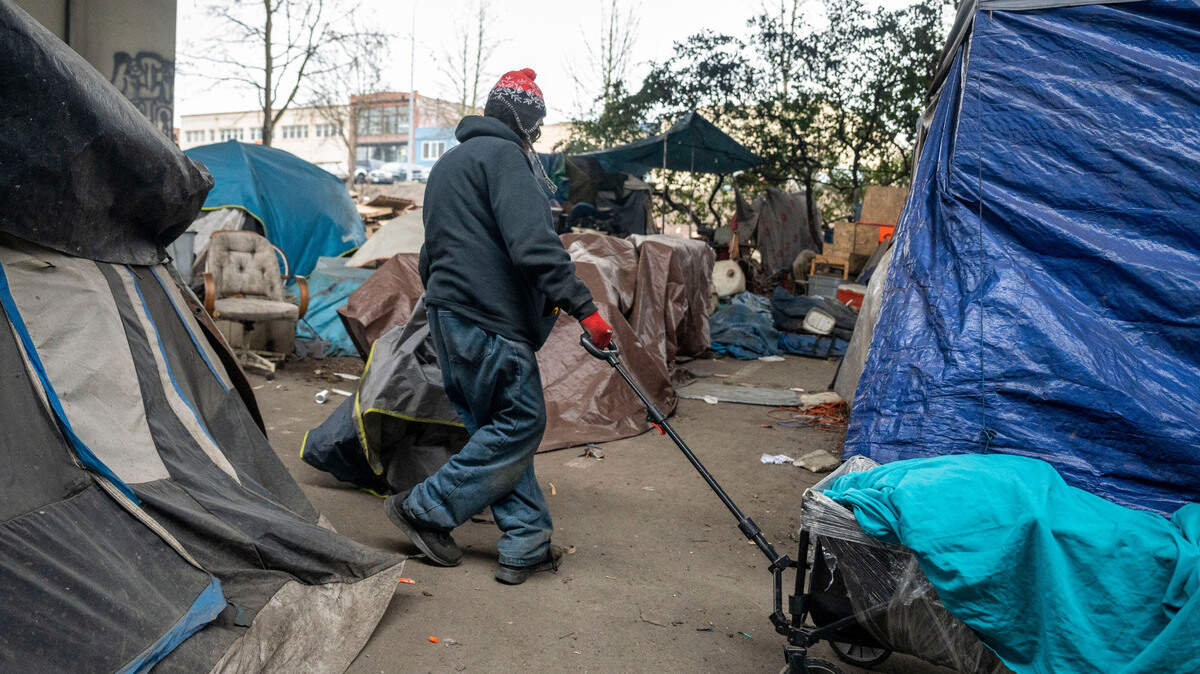
Tacoma City Council member John Hines is right: the city’s homeless encampments are an acute problem. They’re unsafe. They’re inhumane. They attract criminals who often prey on the unhoused. And the fact that we’ve created a world where so many people are forced to call them home is an utter failing we should all take time to reflect on. We can’t allow the status quo to continue.
But he’s wrong about one very important thing: the ordinance he announced this week, which would prohibit camping within 10 blocks of all six of Tacoma’s sanctioned emergency shelter sites, wouldn’t help the problem.
As written, the ordinance would likely do more harm than good. There’s no way around it, even if Hines’ motivation and compassion are genuine. The cold reality is that his proposal would simply push many people 10 blocks down the street, into more desperate situations and areas with fewer services — creating new problems, new hardships and new headaches along the way.
In a city press release issued late Thursday, Hines unveiled his proposal — which is slated to be discussed during Tuesday’s study session. In the release, Hines described the ordinance as “a starting point for broader conversations on some of our biggest challenges.” He echoed those sentiments earlier in the day during an interview with The News Tribune.
Basically — and I’m paraphrasing here — Hines said that trust in government is low. He worries that when a neighborhood welcomes a temporary emergency shelter site — like the one on Sixth and Orchard, not far from his home — existing unsanctioned encampments (or those that pop up nearby) detract from the success stories and blur public perception. Both factors, he believes, have made it harder for the city to get community buy-in as it seeks to increase the number of shelter options across the city. By making public camping off limits within 10 blocks of any sanctioned emergency shelter site, he hopes to demonstrate to people that welcoming services like shelters and tiny home villages is good for neighborhoods and that the city isn’t completely oblivious to the hardships for residents and business owners that unsanctioned encampments create.
Hines also hopes a ban on public camping in these areas — which would include much of downtown and Hilltop — would encourage more unhoused people to accept the shelters and services the city has to offer. Ultimately, he believes that building more housing and providing more shelter options are what will truly solve the problem.
In a world where any conversation surrounding homelessness is fraught with emotion and political pitfalls — particularly when it comes to encampments — there’s no doubt Hines deserves credit for sticking his neck out and pushing the envelope on a difficult issue that needs to be broached. During a meeting of the Tacoma-Pierce County Coalition to End Homelessness Friday morning, he gamely fielded tough questions from a tough crowd, likely providing a preview of the debate to come.
The ordinance’s unavoidable flaw, however, is the one question that Hines and the city still can’t answer — more than five years after declaring homelessness a public health emergency:
Where will people living in the encampments go?
They won’t disappear, we already know that, and for many the shelter options Tacoma offers are inadequate or inaccessible — for any number of complicated reasons. The new emergency shelter site at South 35th and Pacific Avenue won’t solve this, whenever it opens.
Luckily, there is a solution and a way to thread the needle — and it’s one even Hines acknowledged a need for. Eventually, he said, the city will likely require low-barrier sites where the hardest to help can safely set up camp until the city increases the kinds of shelter it has to offer and they’re ready to accept services. The sheer numbers — not to mention everything we’ve learned about why people decline existing shelter options — show this to be true.
So why not do that first? Or, at the very least create low-barrier sites in conjunction with any ban on public camping?
If we really want fewer unsafe, unsanctioned encampments — which is something all sides seem to agree on — do we really have a choice?
All that’s lacking is political will, just like it’s been from the start.
This story was originally published September 9, 2022 at 12:52 PM.