‘It’s a mess.’ As the ice storm hit Tacoma, homeless residents were left out in the cold
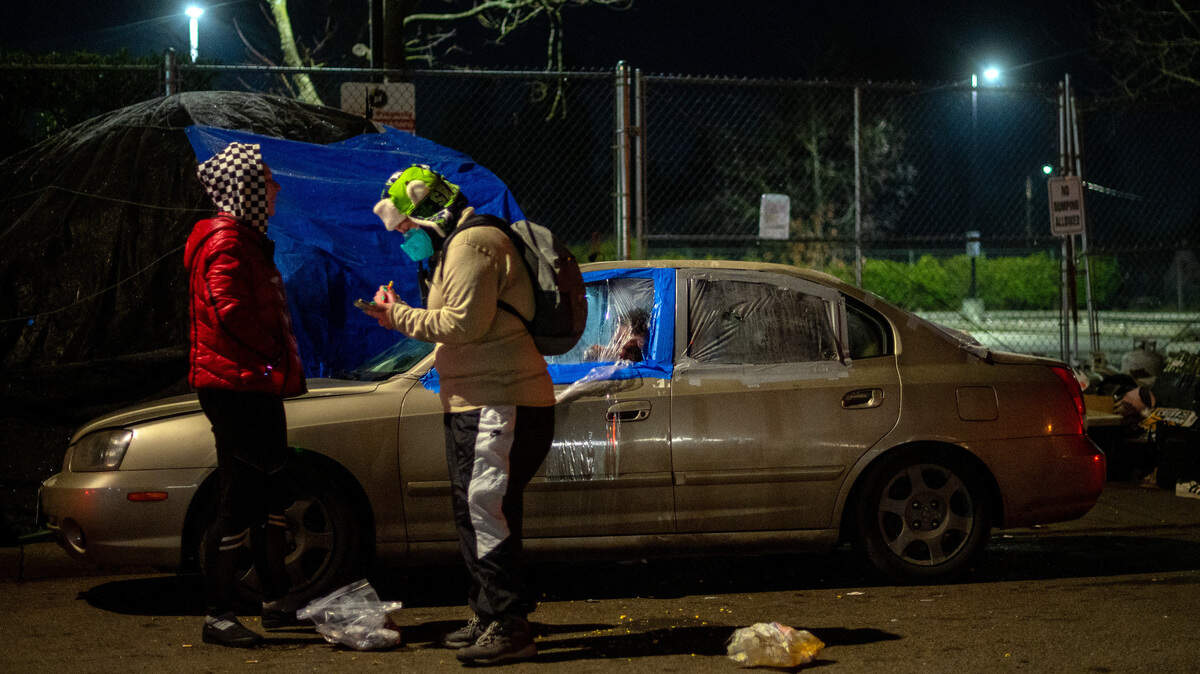
There’s cold, and then there’s dangerous cold. Tacoma and Pierce County have been wrestling with the latter.
Just as the forecasters predicted, an ice storm hit the region early Friday, with the frigid, unpredictable conditions causing a host of challenges, from power outages to road closures and widespread travel delays. Temperatures in the 20s mixed with what the National Weather Services described as “a complex mix of winter precipitation,” bringing much of the region to an icy standstill, at least temporarily.
It’s weather that tested even the well-prepared, as anyone who ventured outside Friday morning will tell you.
It’s also a storm that, in some cases, overwhelmed our area’s homelessness response efforts and our ability to keep people safe, according to local advocates.
That’s troubling, given the changing climate and the expected increase in extreme weather events in the future, whether we’re taking about heat waves or arctic blasts.
“It’s a mess,” said Tacoma Pierce County Coalition to End Homelessness member Rob Huff, shortly after participating in a Friday morning call to assess the situation outside. “Winter happens every year, but we continue to treat it like an emergency when it’s the most predictable emergency in the world.”
To soberly assess the local response to the most recent storm, let’s start with what went right in Tacoma. According to city spokesperson Megan Snow, millions of dollars in city investments have resulted in nearly 500 shelter beds being created over the last five years, in addition to 145 extra inclement weather shelter beds being made available this season. The city also planned to activate the Lighthouse Activity Center as a warming center during daytime hours, Snow said, even though it’s rarely been utilized by people experiencing homelessness during previous extreme weather events.
Now let’s look at what went wrong: According to Huff, despite the additional shelter beds — 66 of which went unused on Thursday night, based on data provided by the city — local outreach workers encountered difficulties finding open shelter space for people, including a number of families, in part because those beds are often reserved for specific populations, like single men and women. Meanwhile, the city confirmed that the Lighthouse Activity Center never opened Friday due to the icy conditions, which is about as foreseeable as it gets.
Asked about the city’s response to the ice storm, Snow stressed that homelessness is not a crisis Tacoma can address alone. The city is just one player in our region’s response, particularly during inclement weather, and it’s unfair to heap blame solely on Tacoma when resources outside of the city are few and far between, she said.
“When launching our strategy, the city discussed having an estimated 300 people living in encampments throughout our community; although we continue to work hard to open shelter and have flexed to add inclement weather capacity, the lack of shelter and resources throughout the county means that Tacoma also faces the burden of disproportionately providing services,” Snow wrote via email. “This results in a feeling and perception that the city is continually not providing adequate services, yet … to address homelessness it will take a combined effort and investment from everyone.”
Snow has an undeniable point. Currently, our local response to homelessness — and inclement weather events — relies on not just the city but also the county and a hodgepodge of community service providers, advocates and local volunteers. It’s the fragile, piecemeal system we’ve built over many years, and there’s no doubt the city bears the largest weight, whether that’s fair or not.
Still, as our homeless population grows and the regularity of extreme weather increases due to a changing climate, the most recent ice storm has demonstrated how critical it is for us to find a better way. We don’t need the tweaks and small improvements we’ve seen in recent years; we need wholesale change that acknowledges our current realities, before the next big storm or heatwave hits.
So what does that look like?
We need readily available places for people to go, across the county, especially at night when it’s cold. Any unused community center or gymnasium is a missed opportunity, and we need to stop relying so heavily on do-gooders, churches and well-meaning nonprofits to make it happen.
We need options for those living in vehicles, and options for those living in tents who are understandably reluctant to leave for fear of losing everything while they’re gone. Instead of throwing our hands up when people don’t accept the services that are available, we need to provide services people want.
We need safeguards that ensure that the resources that are supposed to be available actually are, including emergency plans that ensure essential shelter and warming center staff can actually get to work.
Most of all, we need all of this to be included in an established and appropriately funded countywide emergency response plan that can be activated on demand, instead of a mad scramble every time extreme weather hits.
Huff said he’s hoping Friday morning’s ice storm serves as an impetus to constructively work toward better solutions during future extreme weather. He appreciates the city and county’s efforts, but believes more can be done.
The truth is, the only other option is continued failure and suffering, and that’s unacceptable.
“When it gets to something like the weather we’re experiencing this week, it goes from being a serious challenge for the people who are outdoors to becoming a life-and-death situation,” Huff said.
“It’s my hope that we continue to get better, so that every time something like this happens, it’s not such a sky-is-falling emergency.”
This story was originally published December 23, 2022 at 4:43 PM.