Anger over WA assault weapon ban isn’t just about gun rights — it’s about selfishness | Opinion
On Tuesday morning, less than 48 hours after the close of the 2023 legislative session, reason and decency prevailed in Washington — at least for one shining moment.
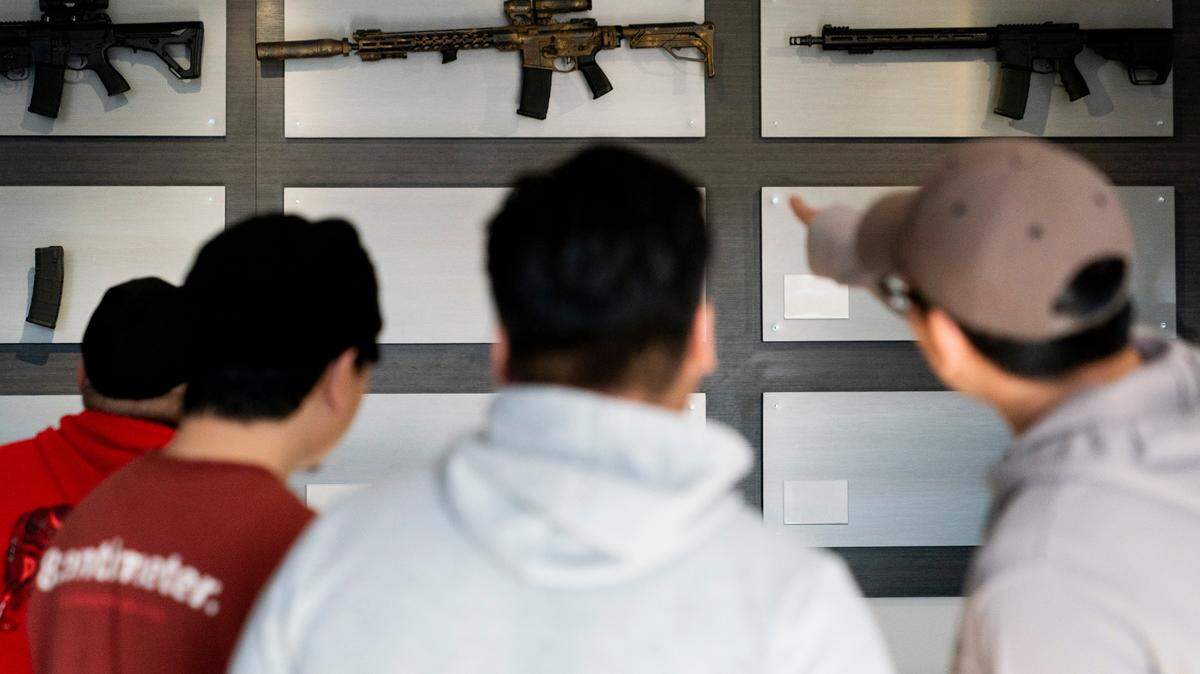
After years of failed attempts and squandered opportunities, the state did something it should have done long ago: banning the sale, manufacture, transfer and importation of more than 50 assault-style weapons, the kind of guns capable of quickly turning a violent crime into a mass murder.
Governor Jay Inslee, flanked by a team of beaming liberal lawmakers and supporters, signed the historic bill into law, making Washington the 10th state to implement such a ban, effectively immediately.
Of course, the flashbulb media event — which included the signing of two other contentious pieces of gun-related legislation — also fanned the flames of our long-simmering Second Amendment debate.
But you know what? Forget about our fractured politics for a moment and, instead, consider what Washington’s newest gun law will actually do. Just as important, contemplate the little it asks of citizens in return.
In light of the tragedies we’ve seen time and time again, is there anything radical about Washington’s ban on the sale of assault weapons? Of course not.
There’s just a litmus test: Either you believe your perceived individual freedoms outweigh the overall safety of society and our children, or you don’t. It’s that simple.
The state’s ban on assault weapons — which was quickly challenged in federal court, as expected, by the Bellevue-based Second Amendment Foundation — comes more than a decade after Sandy Hook, at a time when the U.S. is on a record pace for mass shootings in a single year. Despite this, the prospect of a national ban on assault-style weapons, like the one that was in effect between 1994 and 2004, seems as distant as ever.
At a private Christian school in Nashville last month, six people, including three children, were murdered by a shooter armed with assault-style rifles. It’s been less than a year since a gunman who legally purchased two assault rifles for his 18th birthday shot and killed 19 students and two teachers in Uvalde, Texas — and yet enacting common sense gun regulations has largely been left up to the states.
“These weapons of war, assault weapons, have no reason other than mass murder. … Their only purpose is to kill humans as rapidly as possible in large numbers,” Inslee said during Tuesday’s bill-signing ceremony, which made headlines across the country.
It’s amid this backdrop that opponents of Washington’s ban on assault weapons trot out the same tired arguments in response. Guns don’t kill people, they contend, people do — and besides, the only ones likely to be affected by any new gun regulation are law-abiding citizens. Criminals are criminals, after all, and no new regulation or restriction will solve all our problems. If someone has the will to kill, they can find a way to do it, no matter their weapon of choice.
Are there elements of truth to these arguments? Sure. Let’s get that out of the way now. For a mass shooting to happen, objectively, it takes someone to pull the trigger. And, yes, under the new law, responsible people looking to buy a weapon will have fewer options. There’s also little question that reducing gun deaths in America will take more than new regulations; without addressing the pain and despair that contribute to violence, you’re only halfway there.
But there’s also what the research and common sense tell us, and juxtaposed with the me-first objections from the right, what the contrast reveals about the battling priorities at stake in our national gun debate shouldn’t get lost in the noise.
While the data accumulated during the 10-year period when assault weapons were banned in the U.S. is mixed — and complicated, as it usually is, if not inconclusive — researchers generally agree on two points:
Americans were less likely to die during a mass shooting when assault weapons were banned, and among developed countries, the United States — with its lax laws and politicized cultural gun fetish — suffers from a much higher rate of gun deaths than most.
Logic tells us that access to guns — and the widespread availability of weapons like AK-47s — plays a part, acting as an accelerant. There are many ingredients in a tragedy. If you subtract one of them, even every other time, it saves people’s lives.
In some ways, the detractors are right: Washington’s ban on assault weapons is virtue signaling.
It’s a declaration that the health and safety of all of us are more important than someone’s selfish right to do whatever they want, regardless of the societal toll.
The Second Amendment gives American citizens the right to keep and bear arms. How we define that is up to us.
If banning assault-style weapons prevents the next shooting from becoming a massacre, it’s a small price to pay.
Clarification: The original version of this column described the capabilities of AK-47s in a way that could have been confusing or misleading. It has been updated for clarity.
This story was originally published April 26, 2023 at 5:00 AM.