Tacoma needs a new approach to historic preservation. Without one, we’ll all lose | Opinion
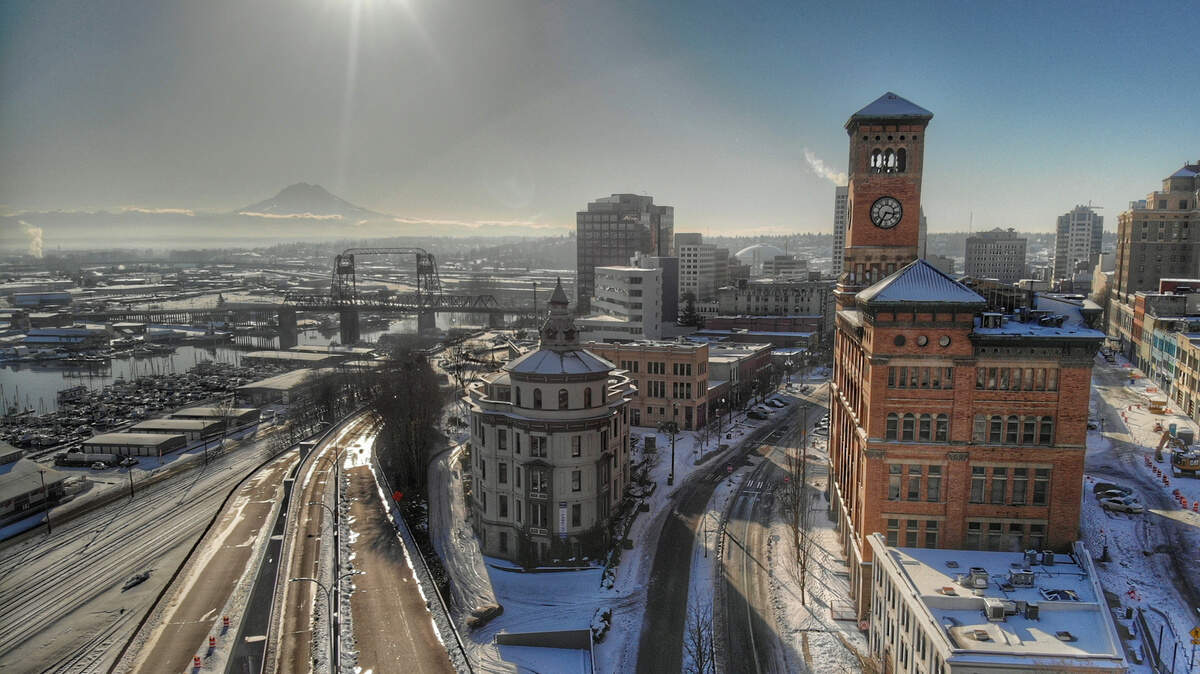
Historic preservation in Tacoma — or, rather, how we tend to think about historic preservation — is at a crossroads.
For decades, it’s been generally viewed as an effort to maintain the city’s character and unique sense of place. Through zoning, city code and review by Tacoma’s Landmarks and Planning commissions, it’s a way for citizens to have a voice in how Tacoma looks and feels in the future — a way for us all to decide what really matters, in a physical sense, as we grapple with the inevitability and necessity of change.
There’s a reason the city has embraced all of this over the years, largely with support from residents and local business owners. Done correctly, historic preservation can save iconic landmarks (big and small), improve the quality of life, unlock neighborhood potential and spur investments — much like what we’ve seen downtown with Union Station or what the city hopes to accomplish through the Old City Hall Historic District. It’s also a way for a city to maintain some modicum of control amid a larger landscape of free-market development. When historic preservation fails, we’ve seen the damage that can be done, whether it’s the demise of the Luzon building or the long list of lesser buildings that have been lost along the way (to say nothing of the teetering fate of Holy Rosary Church).
But there’s a catch, particularly of late. For all the good that it can accomplish, a growing number of people have come to view historic preservation as a strictly NIMBY pursuit.
Sometimes, the critics have legitimate reasons; the urgency of Tacoma’s housing crisis can’t be denied, and objections to new development can be callous, stubborn and tone-deaf — especially when compared to addressing issues like homelessness, the price of housing and long-standing racial disparities across the city. Historic preservation efforts can feel like thinly-veiled attempts by those who already have a comfortable footing in Tacoma to preserve parts of the city in amber, like the Jurassic Park mosquito.
Other times, the preservationists are simply an easy target; they’re villainized by an increasingly vocal and righteous band of housing and density advocates with little concern for what can be lost when we bend over backward for development and keep our fingers crossed.
All of this brings us to the present, and the crossroads I mentioned above.
Last week, the City Council made a decision that, while relatively minor, hints at a tension that’s long been simmering.
In bureaucratic terms, the council directed the city’s Planning Commission and its Landmarks Preservation Commission to determine whether a moratorium on Historic District nominations would be helpful while the city reviews its existing historic designation process as part of its 2024 Comprehensive Plan update. The vote was unanimous, 6 to 0. If imposed, the moratorium would not affect the nomination of properties to Tacoma’s Historic Register of Places.
In a more practical sense, what the decision really provides is a chance for the big, hanging questions to finally be asked — and answered — before it’s too late:
What is the ultimate goal of historic preservation?
What should it look like in the future?
And how can we make sure that the city’s preservation policy is compatible with our approach to Tacoma’s most pressing needs?
The answers to those questions won’t come easy. Emotions run hot, and groups like Historic Tacoma and the Washington Trust for Historic Preservation have already made their opposition to a moratorium clear. Both agencies submitted strongly worded letters in advance of last week’s Council vote.
Historic Tacoma communications and outreach director Michael Lafreniere told me, in no uncertain terms, that a moratorium is both unnecessary and counterproductive.
Most notably, Lafreniere said that enacting a moratorium on Historic District nominations would run contrary to Tacoma’s stated equity goals, since the vast majority of established districts are either downtown or in North Tacoma, and historically significant areas of South Tacoma and the Eastside have yet to be included.
“Those parts of the community … are neighborhoods not currently benefiting from the economic and tax benefits that other parts of the community are benefiting from because they’re Historic Districts,” Lafreniere said. “A moratorium only freezes in place a disparity and an inequity that I think we’d all like to see resolved.”
Lafreniere is right, at least in the short term.
But in the long run, the reality is unavoidable.
We either need to find a fresh way to approach historic preservation in a city facing unprecedented challenges, or these are battles preservationists will increasingly lose.
On Friday, I spoke to Reuben McKnight, Tacoma’s historic preservation officer. He explained the impetus for the city’s decision to consider a moratorium on Historic District nominations.
McKnight said that potential misalignments between Tacoma’s historic preservation policies and its other critical planning objectives came to light during the failed nomination of the College Park neighborhood, which earned the support of the Landmarks Preservation Committee but was later rejected by the Planning Commission, splitting two bodies designed to work together. This fracture led both commissions to call for a review and potential update to Tacoma’s Historic District designation process, for the sake of clarity and cohesion.
To facilitate this effort as part of the city’s 2024 Comprehensive Plan update, a moratorium could prove useful, McKnight said, noting that the Landmarks Preservation Commission and Planning Commission will seek public input as the decision is made
There’s currently no timeline for when a recommendation will be reached, he told The News Tribune. Tacoma is required to update its Comprehensive Plan by the end of next year.
Even more important, McKnight also discussed the broader picture, and his firm belief that it’s possible (and imperative) for Tacoma to embrace historic preservation policies as a vehicle for good.
Preservation is possible, he insisted, without conflicting with the undeniable need to make Tacoma more equitable and accessible.
“To boil it down to the simplest thing, for me, it’s about: Do we have the right tools in the toolkit to get the outcomes we want? And I think the answer is probably not,” McKnight said of the city’s current approach to Historic District designation. “The historic character of Tacoma is one of its major assets. … At the same time, (Historic District designations) also have an effect on people, so we need to be able to speak to the real concerns that are raised.”
“For instance, are we creating barriers to housing development or people being able to afford to live? How is the city delivering its preservation services equitably across the city? … Through the design review process, application fees and design standards, how well do these things actually achieve what we want them to achieve, in terms of protecting character?” McKnight continued.
“Or, is there room for movement there?”
The last comment is key, because here’s the thing, regardless of who’s ready to hear it:
There has to be room for movement — and a willingness on both sides to adapt historic preservation policy to new realities in Tacoma — because otherwise, we’ll get one without the other.
Historic character does matter. So does sense of place. As Tacoma changes around us, little pieces of our collective story are being lost every day. Bit by bit, the neighborhoods we once knew slowly become foreign and cookie-cutter, and without efforts to protect the city’s essence — including the architectural elements and unique neighborhoods that help to define it — we’ll wake up one day to a city that’s unrecognizable, and we’ll be worse off for allowing it to happen.
The challenge, of course, is figuring out how to strike a balance. The answer can’t include enacting roadblocks that prevent Tacoma from being a place everyone can enjoy and afford, because that’s an urgent objective far more important than any designation or individual building. At the same time, the value of historic preservation can’t be dismissed, because it’s real. There are things worth saving and preserving, and innovative ways to accomplish it, whether it’s through targeted city incentives, new approaches and definitions or policies that promote the adaptive reuse of materials when a historic building must be lost.
The only reason historic preservation and development are so often pitted as adversaries is because we insist on framing the conversation in archaic terms. We do so at our own peril.
It’s going to take creativity and cooperation.
It’s going to take being thoughtful and selective.
Most of all, it’s going to require a new approach — not more of the same.