It was known for chili. Now it smells like weed. Why cannabis boomed in Nalley Valley
Ryan Strand remembers how it was in the beginning.
In 2014, Washington’s cannabis industry was still in its infancy. Less than two years after voters made the state a pioneer in the legalization of recreational marijuana, including the sale and adult use of the drug, the landscape was all new.
Growers were taking on the more formal and legitimized title of “producers,” and joint-rollers and bag fillers were now “processors” and “manufacturers.” Upstart business hopefuls jockeyed for licenses awarded by lottery that year through the recently re-branded state Liquor and Cannabis Board, hoping to be among the first in Washington sanctioned to grow, package, transport and sell what, federally, was (and still is) a Schedule I controlled substance.
In hindsight, it’s easy to see what was happening: the engine of a brand new cannabis marketplace — and a soon-to-be billion-dollar sector of the state’s economy — was firing up.
Strand was there for it, from what he described this week as an “old, crappy building that used to make furniture.”
More specifically, he was in Tacoma’s Nalley Valley.
Now 35, Strand was part of a wave of early cannabis entrepreneurs who have effectively reshaped a historically industrial area that was long synonymous with chili and pickles — not to mention Tacoma’s storied blue-collar grit.
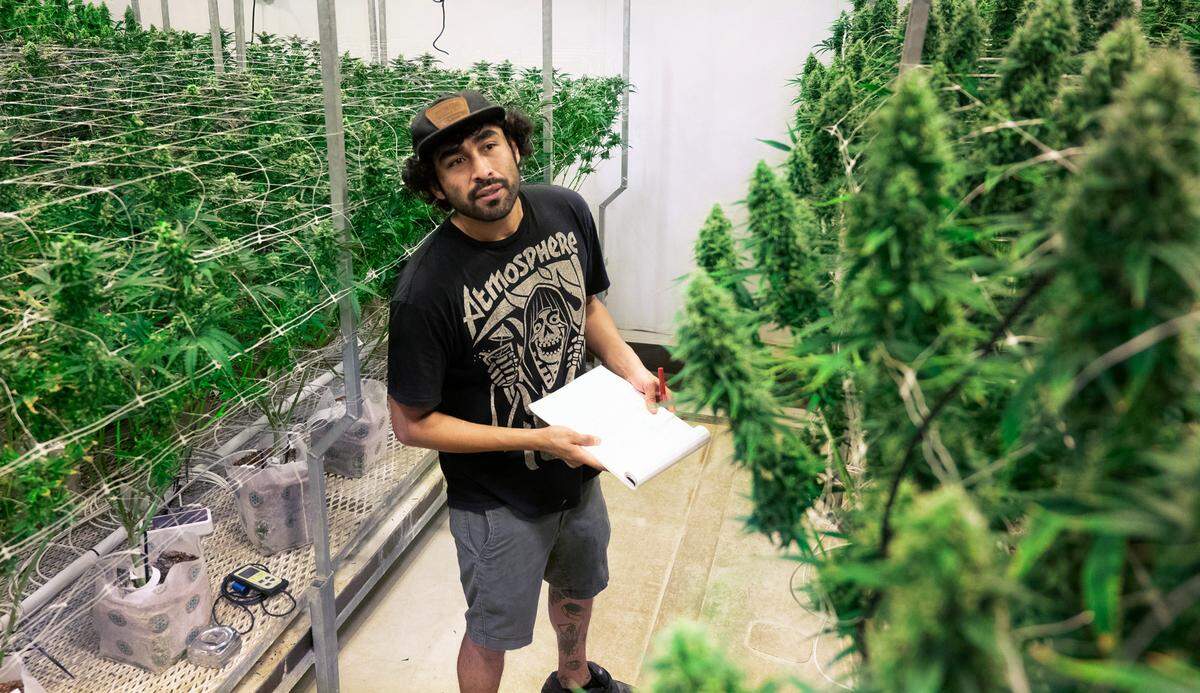
Today, Royal Tree Gardens — which Strand co-founded with a group of friends who cut their teeth in Washington’s medical marijuana marketplace — has roughly 25 employees spread across two Tacoma locations, he said, including one nearby in the tideflats.
In the Nalley Valley, Strand told me the company maintains roughly 8,000 square feet of cannabis cultivation space, and approximately another 7,000 square feet dedicated to light manufacturing – or what he described as the “drying, trimming and packaging” of his product.
The company will celebrate its 10th anniversary next year, Strand said, and he can’t help but marvel at how much the Nalley Valley has changed since his tier-two marijuana operation opened its doors.
“That’s kind of what drove me down to Tacoma, just trying to find a location that would meet our needs. Sure enough, we ended up in the Nalley Valley, which had been hit really hard in the early 2000s and early 2010s. There were a lot of vacant properties and a lot of rundown properties,” said Strand, whose background at the time was mostly in the Seattle area.
“Over the last 10 years, there’s been a huge changing of hands on these properties. I wouldn’t say the majority, but a good chunk of them have gone to cannabis production and processing,” he added.
“Our neighbor is a cannabis producer, and if I went and stood out on Center Street I could throw a ball at a handful of others.
“When we got down here, there weren’t very many.”
Cannabis grows in Nalley Valley
Strand isn’t alone in the Nalley Valley, and you don’t have to take his word for it.
It’s a reality that’s hard to miss thanks to the distinct smell of marijuana production — even if Washington’s legal weed industry remains mysterious to many average observers, in part because its urban farms and manufacturers are often located in nondescript buildings, hidden from the casual eye.
When it comes to what’s generally considered the Nalley Valley, a News Tribune analysis of active licenses awarded by the state Liquor and Cannabis Board found that more than half of Tacoma’s legal marijuana businesses are now operating there, between South Yakima and South Union Avenue east to west and Center Street and South Tacoma Way north to south.
Excluding cannabis retailers paints an even more distinct picture: As of this month, roughly two-thirds of Tacoma’s state-licensed cannabis producers and manufacturers are located in the Nalley Valley.
It’s a total of almost 50 of them, all concentrated in a relatively small area, sometimes two or three to a street.
At one address a lone, home to a 300,000-square-foot property recently purchased by a California-based investment group on the very same land where Nalley Fine Foods once stood — described by The News Tribune when it opened as a “cannabis incubator” — roughly 20 individual producers now operate.
According to Michael Sullivan, a well-known local historian, it could mark a new chapter for the Nalley Valley.
But for those steeped in the area’s rich history, it’s simply the latest evolution of a place that has almost always been in transition — all while remaining an integral part of Tacoma’s working-class identity, he said.
“It got a little empty … but in its day, it was a lively industrial area,” said Sullivan when asked about the Nalley Valley’s recent history and the nearly decade-long influx of cannabis entrepreneurs who arrived in the aftermath of statewide legalization.
“I think it’s a positive. It’s creating jobs and meaningful workplaces for people, and when we think about land use in the city, I think it’s a good placement,” Sullivan added.
“Overall, I’m encouraged.”
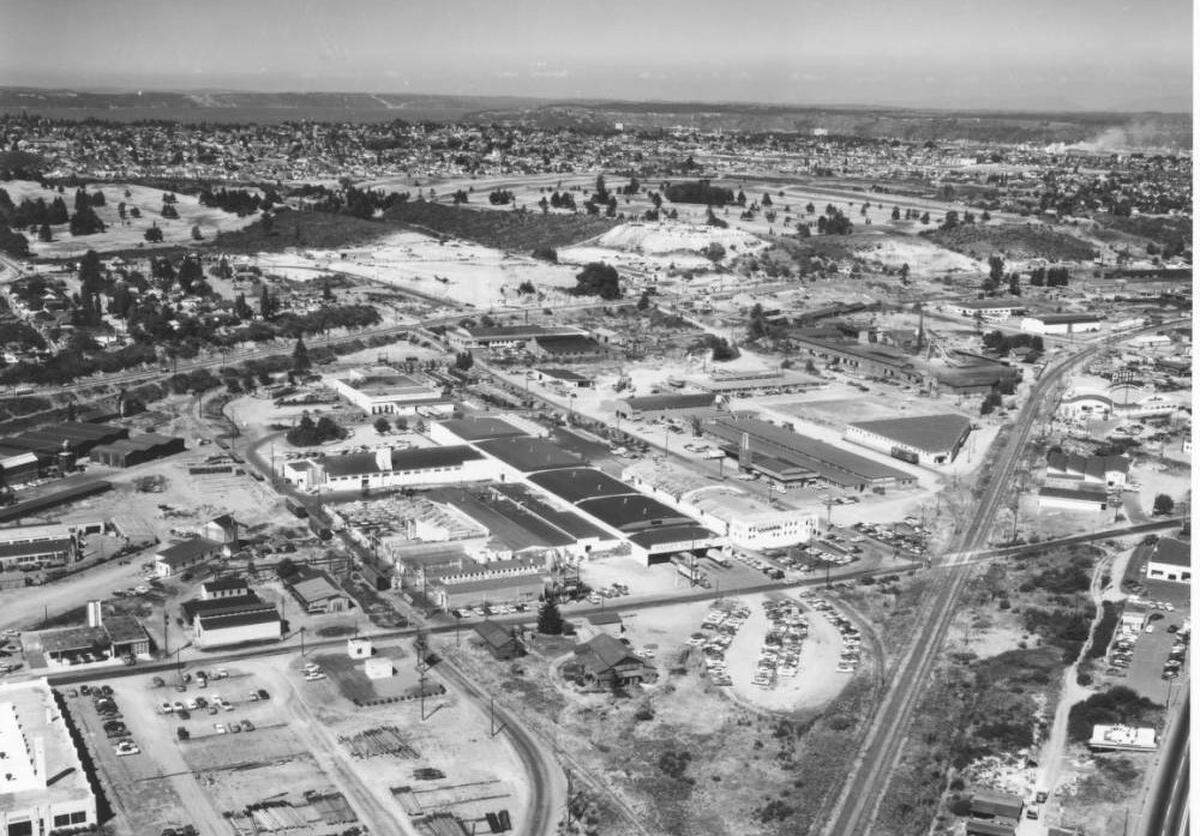
Chips, pickles and chili
It’s one of those American stories that has been burned into our collective psyche.
It starts with an immigrant — only 15 cents to his name, as the story goes, after arriving in New York from Croatia — and culminates with a decades-long run of commercial dominance, much of it stemming from years of hard work and what now seems like the simplest of culinary innovations: the potato chip.
We know him as Marcus Nalley, the man responsible for building a processed foods empire in a ravine that has helped to funnel fresh water from the plains into Commencement Bay since the beginning of time.
When he arrived in the United States in 1903, at the age of 13, he was still Marko Naranich, a name he would eventually abandon for one far easier to pronounce. By the time he reached adulthood, he had made his way to Tacoma and taken a job at the old Bonneville Hotel, eventually becoming master chef.
In 1918, Nalley started selling what he called “Saratoga Chips,” which he made by frying thin slices of potato, going door-to-door and grocery to grocery in an attempt to feed his growing family.
By the end of World War II, Nalley owned 22 acres in the valley that now colloquially bears his name, overseeing an operation that mass-produced everything from jarred pickles and canned chili to mayonnaise and cases of peanut butter.
At the height of Nalley’s reign – which spanned much of the 1940s and ‘50s — the company was the area’s largest employer. Its founder died in 1962, at the age of 72.
Subsequent decades saw Nalley’s empire slowly dismantled and sold off to the highest-bidding national conglomerate.
Today, Nalley chips are made elsewhere, and the pickle plant is gone, too. Chili production moved to Iowa more than a decade ago.
Nalley’s closed its last Tacoma plant in 2011, laying off its last 160 local employees.
Still, even after the storied company’s departure, according to Sullivan, there’s a reason so many Tacomans harbor a soft spot for the iconic Northwest brand that gave the Nalley Valley its modern name.
The distinct local geography has been home to countless other businesses over the years, from furniture and casket makers to roadside dive bars like Bob’s Java Jive. It also played a role in many of the city’s most well-known historical footnotes, including the deadly Tacoma Streetcar Disaster of July 4, 1900, Sullivan said.
But in his mind, Tacoma’s fondness for Nalley’s comes down to a few simple things:
The human senses and nostalgia.
“I think it was the taste and then the smell. I think Nalley’s was the aroma of Tacoma that people liked — it smelled like potato chips, or pickles or whatever,” Sullivan said.
“There’s a certain romantic quality to it,” he continued “It’s memory and taste, and there’s a close association between the two things.”
Zoning and banking
Why has the emerging cannabis industry taken a strong foothold in the Nalley Valley — and other historic industrial areas across the region, including in King and Thurston counties?
The reasons are simple, and largely twofold, according to Joseph DuPuis, the co-founder and co-owner of Doc & Yeti Urban Farms, a tier-two cannabis producer located in an old industrial area in Tumwater that produces roughly 1,200 pounds of flower every year.
For starters, mid- and large-scale grow operations require space — sometimes lots of it — and Washington state regulations strictly dictate where cannabis businesses can operate. Local land use and zoning policies can be even more stringent, DuPuis said.
Throw in the legally nebulous nature of the business and the federal banking obstacles that come with it — which effectively prevented most cannabis businesses from leasing newer warehouse spaces from owners still paying a mortgage to a mainstream lender, especially in the early days of legalization — and the mystery quickly dissolves.
It’s not so much that marijuana growers and cannabis product manufacturers prefer to do business from aging industrial districts, DuPuis told me.
More often, old industrial areas are the only place they can.
“Just like with everything in cannabis, it’s not so much that (industrial zones) are a perfect fit, it’s that we have very small portions on the map that we can conduct this business. … Ideally, a grower wants as much physical separation as possible. I know we would much prefer to be in an agricultural zone, but Thurston County doesn’t allow it,” said DuPuis.
“The Nalley Valley is obviously a very cannabis-friendly area, and I think it speaks to what’s happening in the world, and what’s happening in Tacoma,” he continued. “The old days of our lumber industry and our manufacturing power — those jobs are gone overseas, and those companies are no longer doing it locally — so in the absence of industry, the creation of the new cannabis industry was just a natural evolution, breathing new life into these aging, industrial zones.”
The marriage of cannabis and areas with a legacy of heavy industry can be awkward — and at times challenging — according to Andy Brassington, the owner of Evergreen Herbal in Seattle’s historic SoDo industrial district, and another person intimately familiar with the business.
SoDo has been a good location to operate a cannabis manufacturing company, Brassington said — which in the case of Evergreen Herbal involves using plant trimmings to make products like edibles — and he’s happy to be there.
At the same time, the recent spike in homelessness and crime have made it a lot harder, and as a board member of the Washington CanaBusiness Association, he said it’s a concern shared by plenty of other local pot entrepreneurs.
“The number one challenge is the unlawful encampments and the homelessness scourge – lots of criminal activity. Every city’s got stories; Seattle is legendary for how bad it is, and it’s bad,” Brassington said. “It’s not everybody, of course, but a small minority give a bad name to everybody else.”
According to Jim MacRae, a Washington-based data scientist who has tracked the state’s cannabis market since 2015, there are other hurdles and potential complications to contend with when cannabis companies consider opening up shop in aging industrial areas — some of them likely misunderstood or underappreciated by average cannabis consumers.
To grow marijuana safely, a licensed legal producer must closely monitor every step of the way — from the soil and the water to the clean air the plants depend on, all of which can be in short supply in areas known for diesel exhaust and heavy machinery, MacRae argued.
Meanwhile, a touch of mold or an infestation of spider mites can ruin an entire crop, and using the wrong pesticide at the wrong time can be just as devastating, he told me.
“An ethical producer, to do it right within an industrial setting, has to manage their inputs. That is their water, the medium in which they grow, and any juices they place on the plant – or in the water and soil. It’s fertilizers, pesticides, whatever,” MacRae said, underscoring what he views as a heightened potential for problems when a large number of cannabis growers and manufacturers are operating in close proximity.
“If you’re going to go into an old industrial area, I would say, ‘Know a little of the history. Know what was there’,” MacRae continued. “And if you’ve got a filthy neighbor … make sure you’re not mixing air and water.”
Weed’s future in Nalley Valley
Last week, Strand told me he’s happy with the decision his company made almost a decade ago, shortly after Washington legalized recreational marijuana in 2014.
Sure, the Nalley Valley isn’t a perfect location — like other cannabis growers operating in industrial areas, he described it largely as one of the few places he can do business.
But Royal Tree Gardens has emerged successful and sustainable after a tumultuous ten years, and considering how the state’s legal marijuana market has struggled to take shape during that time — claiming plenty of hopeful pot entrepreneurs along the way — there’s something to be said for that, Strand suggested.
Asked about the future, Stand indicated he’s not going anywhere. The legal pot business isn’t glamorous, he said, but he’s doing OK. He never expected it to be easy.
Like others employed in Washington’s legal cannabis industry, he told me he expects the coming years to be difficult, in large part due to factors like overproduction, taxes, what he described as state-level price suppression and restrictions on interstate sales.
Still, as long as there’s legal weed in Washington, Strand expects the Nalley Valley to produce its fair share of it, he said.
“I think those of us who are still left are probably here for the long run, “ Strand told me.
“I think it’s going to be a harder, more challenging market until we get some big changes at the state level … but I think there will be slow, internal growth among the established players, including in the Nalley Valley.”
News Tribune data journalism intern Olivia Palmer contributed to the reporting of this column.
This story was originally published September 18, 2023 at 5:00 AM.