‘Michael Jordan of handball’ lives in a small Pierce County town. He’s 85 — and legendary
Gordy Pfeifer has been called many things over the years — most of them superlatives.
While readers of today are unlikely to recognize his name, let alone the accolades Pfeifer collected over six decades playing a sport just as few are familiar with, none of it detracts from his storied career.
If anything, it’s part of what makes Pfeifer — a renowned handball player who won well over 100 regional and national titles and, on Oct. 14, will officially be inducted into the U.S. Handball Association Hall of Fame — so fascinating.
Fifty years ago? Pfeifer was a big deal, I discovered. Former News Tribune sports writer Stan Farber had no qualms about laying it on thick.
In 1972, Farber suggested Pfeifer, a multi-sport athlete from the University of Puget Sound who was already well on his way to becoming one of the most accomplished handball players of all time, had the resume and chops to be considered the Tacoma area’s “finest all-around athlete.”
Two years later, when Pfeifer joined the professional handball circuit along with 16 other top players from around the U.S., Farber doubled down, making it plain to TNT readers that the hometown hero was “generally acknowledged as Tacoma’s top all-around amateur athlete.”
So who is the legendary Gordy Pfeifer — the most celebrated and accomplished local athlete you’ve never heard of? You don’t have to travel far to find out.
Pfeifer, 85 and unassuming, resides in a fitting location — a nondescript suburban neighborhood in Fircrest. He has for a long time.
Last week, Pfeifer described his induction into the Handball Hall of Fame as “an honorable privilege.”.
His close friend, Bruce Young — one of many local handball players Pfeifer has befriended over the years and the man largely responsible for his succesful nomination — was more direct and succinct.
He described Pfeifer’s Hall of Fame nod as “about 25 years overdue.”
An all-time great
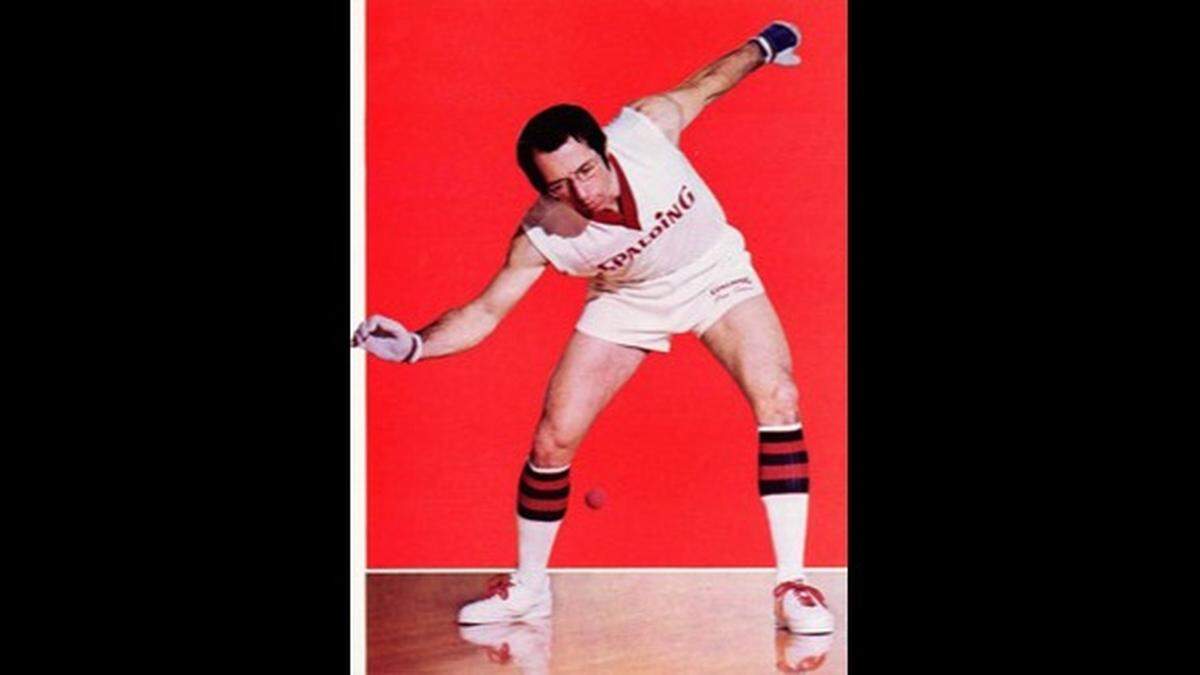
In the annals of handball, Pfeifer is known as an unorthodox and at times acrobatic player who helped revolutionize handball, one of the world’s oldest games played with a ball, which traces its roots back to ancient Egypt, Greece and Rome.
Similar to racquetball, professional handball matches take place on a court 20 feet wide and 40 feet long with walls 20 feet high. Most often played as a singles or doubles sport, matches are won when a player or team takes the best out of three, with games typically determined by the first to reach 21 points.
Pfeifer grew up in Pittsburgh and arrived in the Tacoma area via the Army when he was stationed at Fort Lewis. He was a late-comer to the sport, discovering it at 27 after spending his early post-military years chasing other athletic pursuits, like basketball, slow-pitch softball and baseball, including an invitation to try out for the Seattle Pilots.
Soon, handball would change his life and take him all over the world, he told me.
In 1969, as a solo player, Pfeifer won his first major national handball title, besting future Hall of Famer Bill Yambrick. He went on to notch many more career highlights, including winning the 1970 Canadian National Singles Championship.
Then Pfeifer won back-to-back U.S. National Invitational Singles titles over the next two years. In ‘72 he took down former child star and eventual handball Hall of Fame inductee Stuff Singer in 1971, in what he later described as his longest match to date, clocking in at more than three hours. In ‘72, Pfeifer bested the hard-charging and hard-living Paul Haber, the sport’s most recognizable and colorful figure, who three years earlier had been profiled in Sports Illustrated under the headline “A win for nicotine and booze.”
Pfeifer remembers it as a “hotly contested and close match.” For a time that year, he stood alone as the top-ranked player in the game.
He played professionally until the age of 42, with a game built on power and tenacity.
In interviews during the height of his career, Pfeifer, who also enjoyed a long, successful singles career, has often chalked up his victories to his elite right hand.
“I have a strong right hand. Some claim I hit the hardest ball in the game,” Pfeifer told The News Tribune in February 1972, with a subtle mix of humility and swagger.
“Some might hit harder,” Pfeifer continued, “but they can’t control the direction.”
“You have to combine power with finesse and strategy.”
Handball Hall of Fame induction
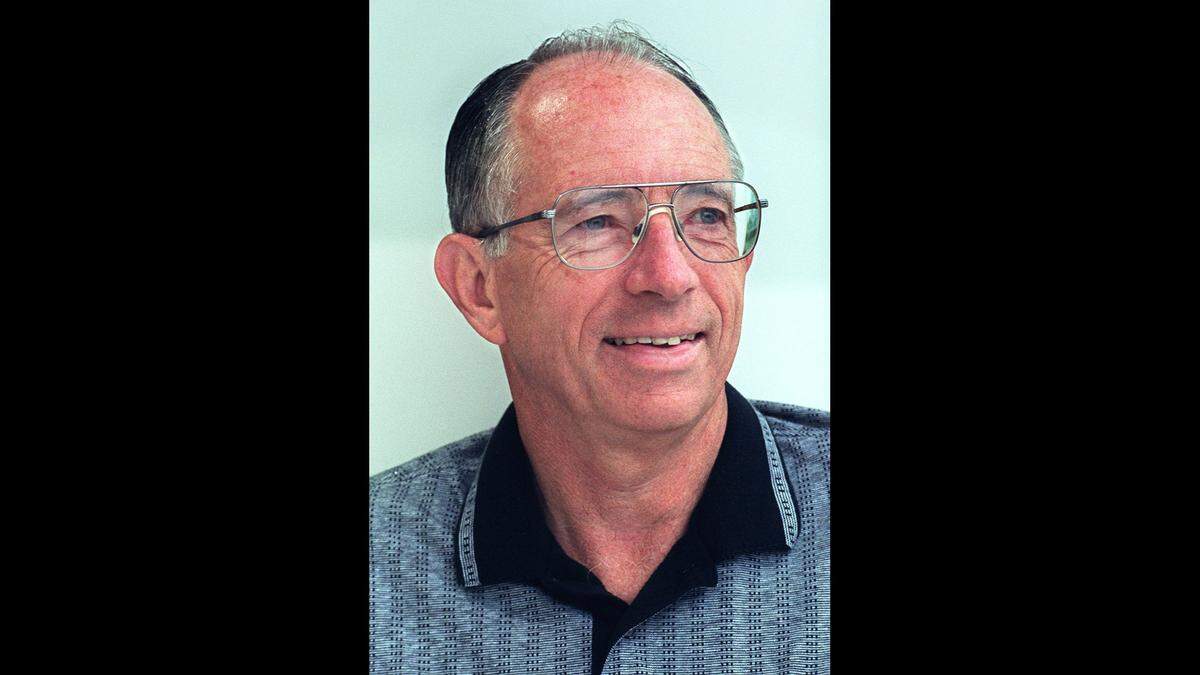
Pfeifer’s longtime doubles partner, Fred Lewis, was inducted into the U.S. Handball Association Hall of Fame in 1993.
For reasons that remain slightly mysterious, at least to Young — who has nominated his friend from Fircrest several times in the past — it took 30 more years for Pfeifer to get the recognition he equally deserved.
“At the height of the sport, (Pfeifer) became one of the best players in the world,” Young said. “He probably has the most focus and concentration and desire of any athlete I’ve ever seen in my life.”
“He’s like the Michael Jordan of handball,” Young added. “Handball requires a lot of persistence and athletic skill and determination, and Gordy is the epitome of all of it.”
According to U.S. Handball Association Executive Director Matthew Krueger, Pfeifer’s contributions to the sport are undeniable. He described his impact bluntly as “huge.”
Pfeifer’s style of play, meanwhile, was “tenacious,” Krueger said — which is what he’s known for, including by the other top players of his day.
“He certainly deserves to be honored as one of the game’s greatest players,” said Krueger, 50, who lives in Arizona, where the USHA headquarters is located.
“Gordy was Charlie Hustle. That’s what all of his peers referred to him as,” he added.
“He never quit.”
Not done yet
Today, Pfeifer no longer has the bushy sideburns he once wore. His mop of hair is gray and nearly gone, too.
From the Fircrest street outside his home, you’d have no idea that a champion resides in what appears to be an average split-level —or that just down the stairs hides a regulation-size handball court, complete with a huge glass wall and sparkling hardwood, which Pfeifer had built shortly after his family moved in.
The truth is, Pfeifer has never gotten the full respect he deserves, not that he appears bothered by the anonymity.
He seems strikingly at ease with the contrast between his illustrious handball career and the otherwise modest life he’s led, which has included serving as an ambassador for the game at local YMCAs and the Tacoma Elks Club, where he first took up the game for little more than exercise.
Pfeifer told me last week he was thrilled and excited when he heard he’d officially been inducted into the U.S. Handball Association Hall of Fame earlier this year.
He was also quick to mention one important thing: he’s not finished yet.
While his aching knees sometimes give him grief, he has no intention of giving up the sport he loves anytime soon, he told me.
“To be honest,” Pfeifer said when asked about his game, revealing a spark of the competitive fire that made him one of the all-time greats, “there’s not much difference.”
“I can still play.”
This story was originally published October 2, 2023 at 5:00 AM.