
There’s no Speaker. Congress is gridlocked. There’s blame to go around — to a point | Opinion
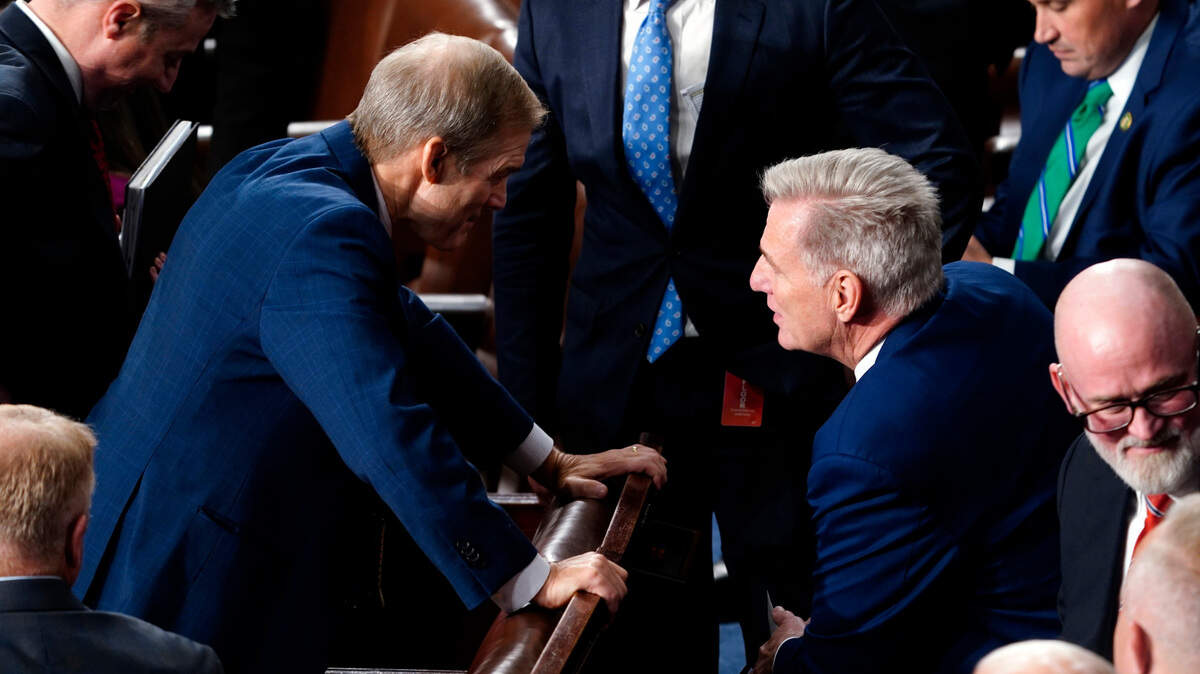
Congress is a gridlocked mess. Again. The House is without a Speaker. The next potential government shutdown looms on November 17. Every year Congress is supposed to adopt a budget, and then 12 appropriations bills to fund specific programs within that budget. That hasn’t happened since 1997.
Instead, Congress has become addicted to last-minute spending bills, usually in the form of a continuing resolution. These efforts accomplish little other than keeping the government open, and sometimes they can’t manage that.
It doesn’t have to be this way, even in a divided government. Just look at our history in Washington state.
Since Trump came to define the Republican Party, Washington has been a one-party state. But from World War II until 2018, elections produced a divided government in Washington state — a situation in which each party controlled at least one house of the legislature, or the Governor’s office — 22 times. Three times elections resulted in a 49-49 tie in the state House, forcing the two parties to share power. From 2012 to 2017 the state Senate was governed by a coalition of Republicans and moderate Democrats. I served in the House during a time of divided government.
Washington’s legislature often needs a special session to get its work done, but to my knowledge legislators have never failed to pass a state budget and there has never been a state government shutdown.
I served on the King County Council from 1994 to 2001. During that time there was a 7-6 Republican majority on the Council and a Democratic County Executive.
For those wondering how such a thing was possible in now super-liberal King County, this was pre-Trump, and even pre-Tea Party. Back then suburban voters elected moderate Republicans. But even the Council’s seven Republicans rarely all agreed on anything, and with a Democratic Executive, everything, absolutely everything, had to be bipartisan.
We always passed our budget on time, and we were even able to meet all the state’s deadlines for the implementation of the Growth Management Act.
In Olympia, and the King County Courthouse, Republican and Democratic leaders would negotiate, compromise and reach agreements. Quite often, the more ideological members of both parties, including members of the majority, would vote no. It was common to see bipartisan votes on major issues.
I remember Republican Speaker Clyde Ballard defying some of the very conservative members of his caucus, many of whom were elected in the 1994 Republican landslide, to pass a compromise state budget that liberal Democratic Governor Mike Lowry would sign.
Congress has always been more partisan than state and local government, but it didn’t used to be this bad. Data from the Pew Research Center indicates that “Democrats and Republicans are farther apart ideologically than at any time in the last 50 years.” The last three Republican Speakers have been forced out of office by far-right Freedom Caucus members of their own party, and Speaker Kevin McCarthy was deposed specifically because he compromised with Democrats to keep the government open.
Both parties deserve some blame for the polarization of our politics, but the House Republicans are by far the biggest problem. Republicans in the House have fostered a culture in which their most extreme members demand things that are not politically, or sometimes legally, possible — and then turn on their leadership when those things don’t happen.
For instance, Democrats are never going to agree to the massive spending cuts conservatives demand, and the House can’t shut down the investigations of Donald Trump. These demands often come from Republican base voters, but it is up to political leaders to manage the passions of their partisans, not throw gas on the fire.
Unfortunately, there is no magic structural reform that is going to solve this. Only the voters can fix it. When voters, particularly Republican primary voters, begin valuing compromise and good government over partisanship and gridlock, politicians will change their behavior.
Until then, we need Republican leaders willing to say no to their extremist colleagues, even if it costs them their jobs.
There is no sign of such leadership on the horizon.
Chris Vance is a former Republican state legislator, King County Council member and State Party Chairman who left the GOP in 2017.
This story was originally published October 18, 2023 at 5:00 AM.