
Kroger and Albertsons want to merge. We work there. This is all about greed | Opinion
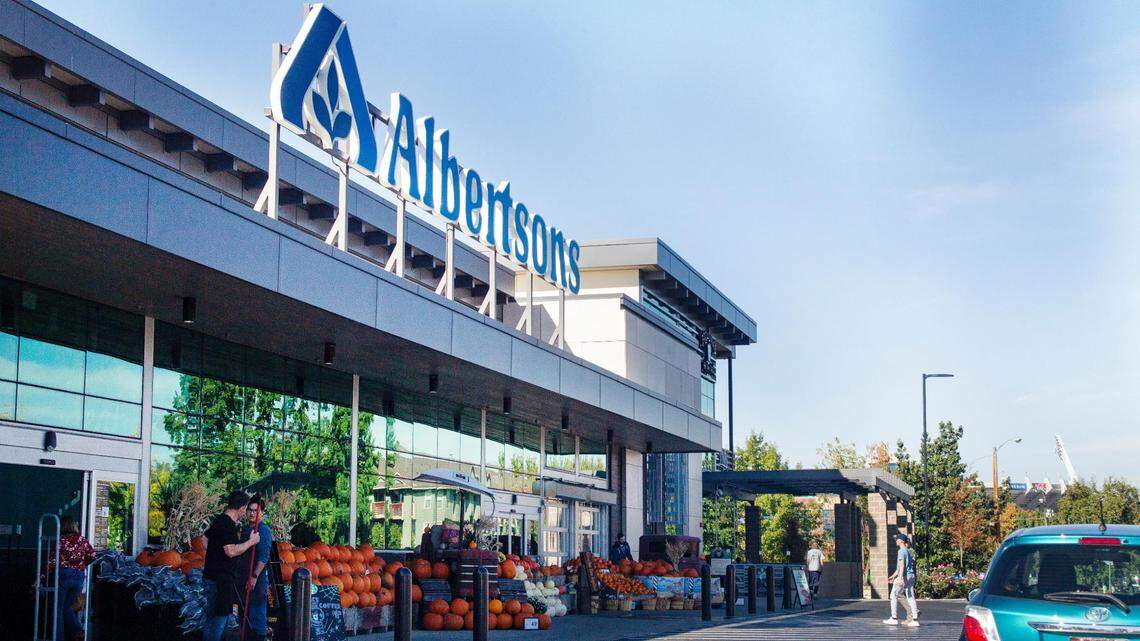
Chances are you are one of the more than a million people in the Pacific Northwest who do your grocery shopping or get your prescriptions filled at a local Safeway, Albertsons, Haggen, Fred Meyer or QFC store.
We are two of the more than 35,000 grocery store workers from across the region who work at these stores owned by the Kroger or Albertsons corporations. And we are deeply concerned about the proposed mega-merger of the two corporations, including the impacts that, if approved, it would have on workers and customers.
When the multi-millionaire CEOs of these billion-dollar companies tell us we have nothing to worry about with their proposed merger, we think they’re wrong.
There’s plenty to worry about.
For starters, if Kroger and Albertsons are allowed to merge, there’s a good chance that prices will increase and wages will decrease because competition will be stripped away. Our economy does better when suppliers, producers, shoppers and workers have more choices — including where we buy and sell our products and where we seek employment.
Competition makes companies work harder to earn our loyalty. With at least two companies, if we don’t like the price they charge for a loaf of bread or a can of soup, we can go to their competitor across town. If workers aren’t satisfied with how our employer treats us, we have the freedom to go work at the other employer to apply our skills in the same industry.
Consumer choice and employee mobility are two cornerstones of American capitalism. But these two cornerstones are seriously threatened by the proposed mega-merger that’s now under review by the Federal Trade Commission.
OK — enough on the economics lesson.
Why is this merger a personal concern to each of us as grocery store workers?
Here’s the bottom line: We are extremely bothered and fearful of the harm for coworkers, our stores, our customers and our communities if this mega-merger is allowed to proceed. Workers at hundreds of grocery stores, and more than a million shoppers in Washington, would be harmed by closed stores, higher prices, reduced food choices and a monopoly on goods and the labor market.
In the case of Albertsons, we can tell you that earlier this year, after months of legal challenges, a small group of wealthy investors pocketed the better part of a $4 billion shareholder payout. That money could have been better spent dropping your food prices, raising our wages and investing in safer and better-staffed stores.
While we lost the battle to keep that money in Albertsons — and invest it in our community — unionized local grocery workers are still waging the much-larger effort to get the Federal Trade Commission to protect consumers and workers alike and deny the proposed merger.
In the case of Fred Meyer, and Kroger stores generally, we feel short-staffed —and many of us are doing the job of two or three people as a result. You can see this as you wait in the check-out line or are asked to volunteer your labor by going through the self-check lane.
Grocery companies chalk this up to a shortage of workers, but we can tell you firsthand that many Kroger workers are asking for more hours but are refused.
If workers who wanted more hours were given more hours, a lot of the staffing shortages would be resolved.
Unfortunately, those hours are hard to come by and some of us must travel to work at another store in another town to pick up another shift to try and make ends meet.
Instead of better staffing and better customer service, these corporations seem fixated on higher profits. When Albertsons and Kroger choose greed over lower prices, million-dollar payouts over safer stores and profits over people, it’s an indication of their priorities.
More to the point: It’s not right.
For the sake of consumers across the nation — and workers like the two of us, who serve them every day — we say stop the merger.
This story was originally published December 13, 2023 at 5:00 AM.